

 English
 عربى
عربى 简体中文
简体中文
Home / News / Industry News / High Impact Polystyrene (HIPS) for Thermoforming: Properties and Machine Guide

When a packaging converter receives its first order for HIPS trays, the excitement usually fades after the first forming cycle. The material may crack along a deep draw, or the sheet may sag before the mold closes. This is not a material problem. High impact polystyrene is well understood; the real issue is that the machine, the heating profile, and the tooling were never matched to the rubber-modified structure of HIPS.
Before you commit capital to a new HIPS line or troubleshoot an existing one, it helps to separate material behavior from equipment capability. In this guide I will explain what HIPS actually is, which properties drive the forming outcome, and how to match those properties with the right thermoforming machine material selection for your production.
High impact polystyrene is a modified version of general-purpose polystyrene (GPPS). It consists of a continuous polystyrene matrix with dispersed polybutadiene rubber particles. The rubber phase absorbs impact energy and prevents cracks from propagating through the brittle polystyrene chains. This is why HIPS is far tougher than GPPS while retaining the stiffness, dimensional stability, and ease of thermoforming that make PS so popular in packaging.
Manufacturers typically add between 5% and 15% rubber by weight. The final product is translucent, white, or colored depending on the application. For thermoforming, what matters is that HIPS has a broad processing window. It can be formed with vacuum alone, positive pressure, or positive-and-negative pressure, and it works with both thin and thick sheet.
Any purchasing decision for HIPS sheet or HIPS molding equipment should start with a short list of material properties. These are the values that determine whether your current machine can handle the material without expensive modifications.
| Property | HIPS | GPPS | PP |
|---|---|---|---|
| Impact strength | Good, high | Low | Moderate |
| Melt flow index (g/10 min) | 4-15 | 5-10 | 5-20 |
| Forming temperature | 150-190°C | 130-170°C | 160-200°C |
| Shrinkage | 0.4-0.7% | 0.5-0.8% | 1.5-2.5% |
| Moisture absorption | Low | Low | Very low |
The table simplifies a complex field, but it highlights the key points. HIPS has a lower forming temperature than PP, which means you can use lower heater settings and shorter cycle times. It also has lower shrinkage than PP, so your mold design can be more accurate with less trial and error. The moderate melt flow of HIPS allows it to fill a multi-cavity mold evenly without glassy flow marks.
Once you know the material behavior, machine selection becomes a matter of matching three variables: heating capacity, forming pressure, and sheet handling.
Because HIPS has a narrow softening range, your thermoformer needs a stable multizone heat control. A machine with independently controlled top and bottom heating zones and fast response times will prevent localized sagging. If you are running thin sheets, look for a machine with a lower-positioned heating element to minimize radiant overshoot.
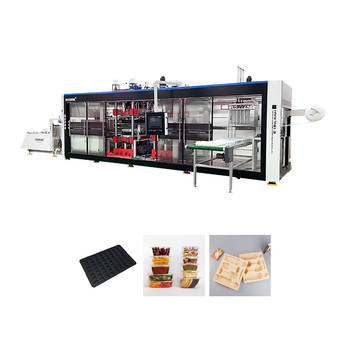
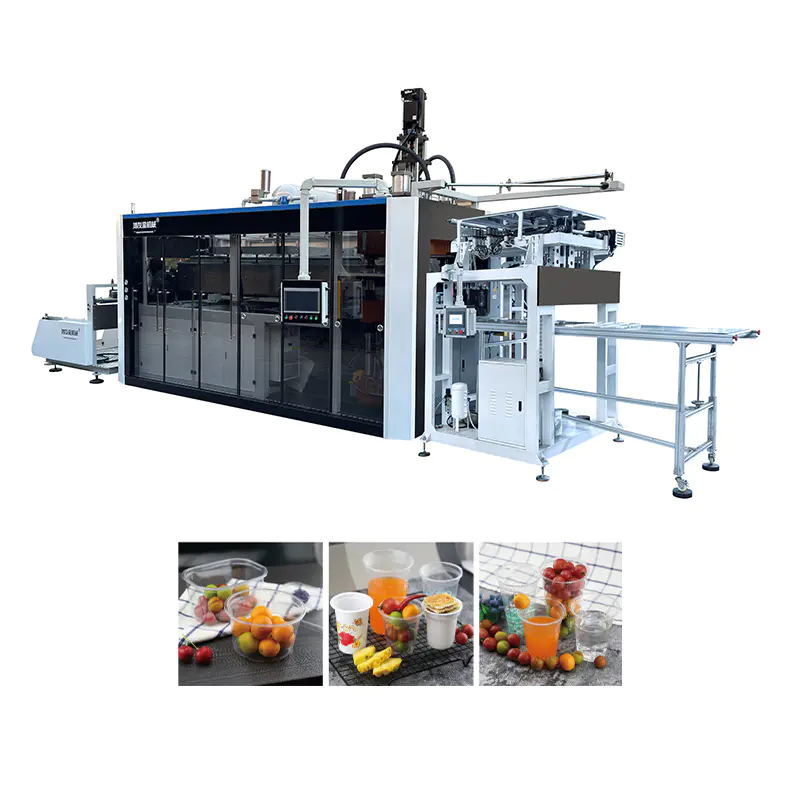
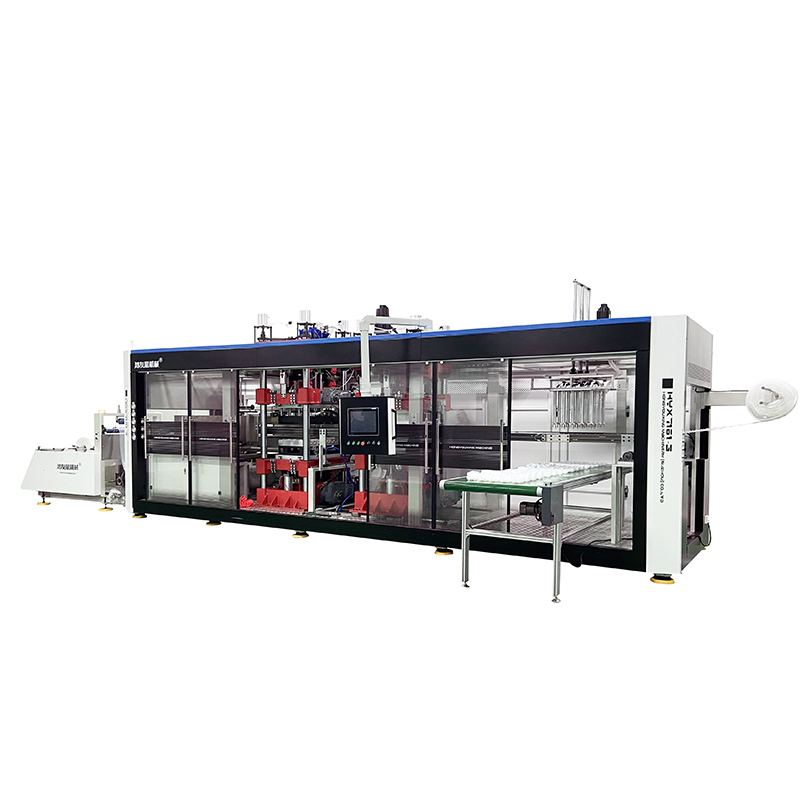
HIPS is usually vacuum-formed, but for high-detail parts such as package inserts and trays with ribbed geometries, positive pressure improves definition. A HYX7161 fully automatic positive and negative pressure thermoforming machine gives you three stations for forming, cutting, and stacking. This three-station layout is a practical match for HIPS because it lets you run a full cycle with minimal manual handling, and the positive-and-negative pressure mode handles both shallow lids and deep cup shapes.
 Fully Automatic 3-Station Thermoforming Machine for Positive and Negative Pressure FormingThis machine supports three-station forming, cutting, and stacking with servo stretching, suitable for HIPS packaging including trays, lids, and cups. Its intelligent temperature control and quick mold change improve efficiency for high-detail parts.View Product →
For HIPS sheet between 0.2 mm and 2 mm, a standard vacuum former is enough. For thick HIPS sheets above 3 mm, you need a heavy-gauge machine with more powerful heaters and a longer cooling phase. The choice between a thin-sheet and a thick-sheet former should be made before you buy, not after your first sagging trial run.
Not every thermoforming operation buys finished HIPS sheet. Many converters prefer to extrude their own sheet for greater control over color, thickness tolerance, and cost. When you enter the extrusion side, the equipment choice changes. You need an extruder that can handle HIPS's low bulk density and its tendency to form a high melt strength at moderate temperatures.
A PP/PS/PE single screw plastic sheet extruder is a practical option when you process HIPS alongside polypropylene and polyethylene. The single screw design keeps maintenance simple, while the downstream roll stack can be adjusted to produce HIPS sheets with consistent thickness. If you do not yet have a sheet line, adding an inline crusher for edge trim and scrap recovery can reduce material losses by a measurable margin over a full production year.
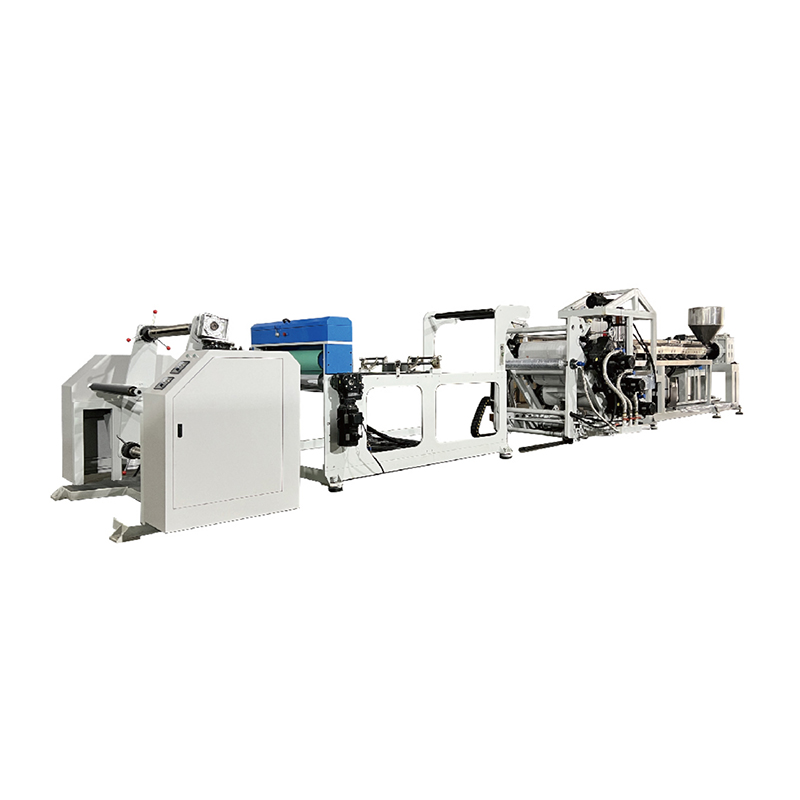 Single Screw Plastic Sheet Extruder for HIPS, PP, PS, and PE MaterialsThis extruder processes HIPS alongside PP, PS, and PE, producing sheets with adjustable thickness. Single-screw design simplifies maintenance, and an inline crusher can be added to reduce material losses from edge trim.View Product →
HIPS is forgiving, but it is not a free pass for poorly designed tools. Because the material has a low shrinkage rate, aluminum molds work well for producing large runs with tight tolerances. Aluminum conducts heat rapidly, which helps in both heating and cooling phases. A thermoforming aluminum mold used with HIPS can produce clean undercuts and crisp rib details when the draft angle and vent holes are correctly placed.
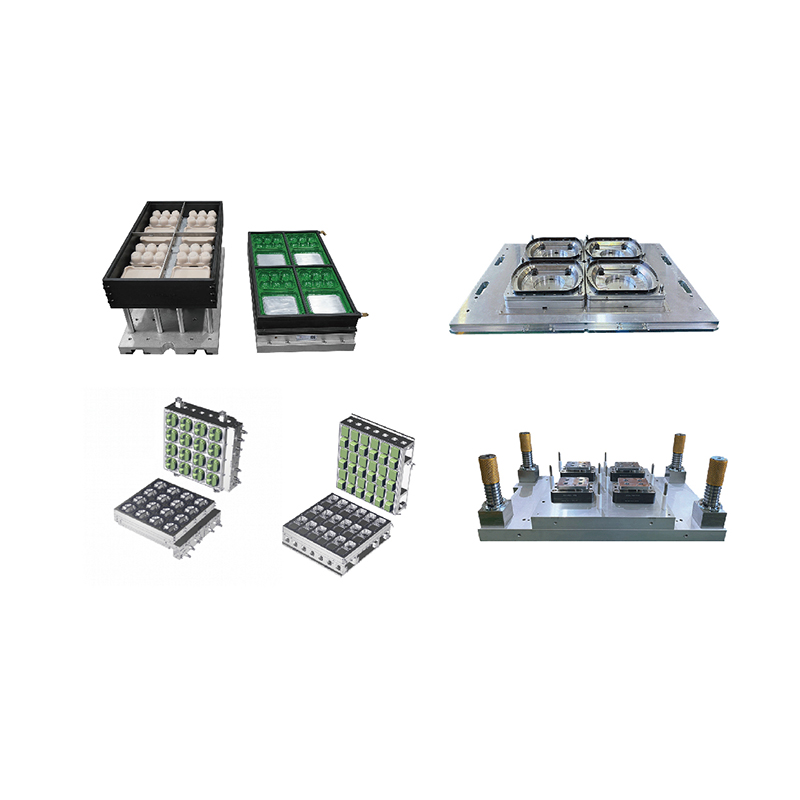 Positive and Negative Pressure Aluminum Mould for Thermoforming HIPS Cups and LidsAluminum mould with positive and negative pressure control and internal cooling circuits, suitable for HIPS cup and lid production. It ensures consistent wall thickness and surface detail, with replaceable inserts for easy draw depth adjustments.View Product →
For cup and lid production, a dedicated cup mold must be designed for the forming and cutting stages together. If you switch materials frequently, the mold should include easily replaceable inserts so you can adjust the draw depth without building a new tool.
From dairy cups to consumer electronics packaging, HIPS covers a broad range of applications. The key to selecting the right forming line is to identify the dominant property your product needs. For trays that must withstand shipping and stacking, impact strength is the priority. For cosmetic and electronic vacuum packaging that needs to look flawless on a shelf, surface gloss and dimensional accuracy are more important. In each case, the same HIPS material can be formed on different machines, but the best results come when you match the machine to the dominant property.
For most HIPS grades, a forming temperature of 170°C to 190°C works well. Do not go too low or you will see cold cracking; too high and the sheet will droop before the mold closes.
Yes. Vacuum forming is the most common process for HIPS. However, if you need sharp corners or deep draws, a combination of positive pressure and vacuum will give better definition and reduce thinning in the corners.
After cooling, HIPS shrinks about 0.4% to 0.7%. This is low enough that you can hold tight tolerances on most trays, but you should still vent the mold and use consistent cycle times.
Yes. HIPS works well for thick-sheet applications such as product trays, panels, and automotive interior parts. You just need a heavy-gauge machine with sufficient heating power and a slower cooling cycle to prevent warping.
HIPS is one of the most patient materials in the thermoforming world. It tolerates a wide process window, but it still respects the laws of heat transfer and pressure. The difference between a smooth run and a morning full of rejections is usually the depth of the analysis before you order your full automatic vacuum forming machine or adjust your current tooling. Match the material, the machine, and the mold to the product you intend to sell, and HIPS will pay for itself in output and consistency.

 +8618621972598
  +8613917961988
  [email protected]
 No. 565, Xinchuan Road, Xinta Community, Lili Town, Wujiang District, Suzhou City, China
 Copyright © 2024 Thermoforming Machine/Plastic Cup Machine All Rights Reserved.Custom Automatic Vacuum Thermoforming Plastic Machine Manufacturers