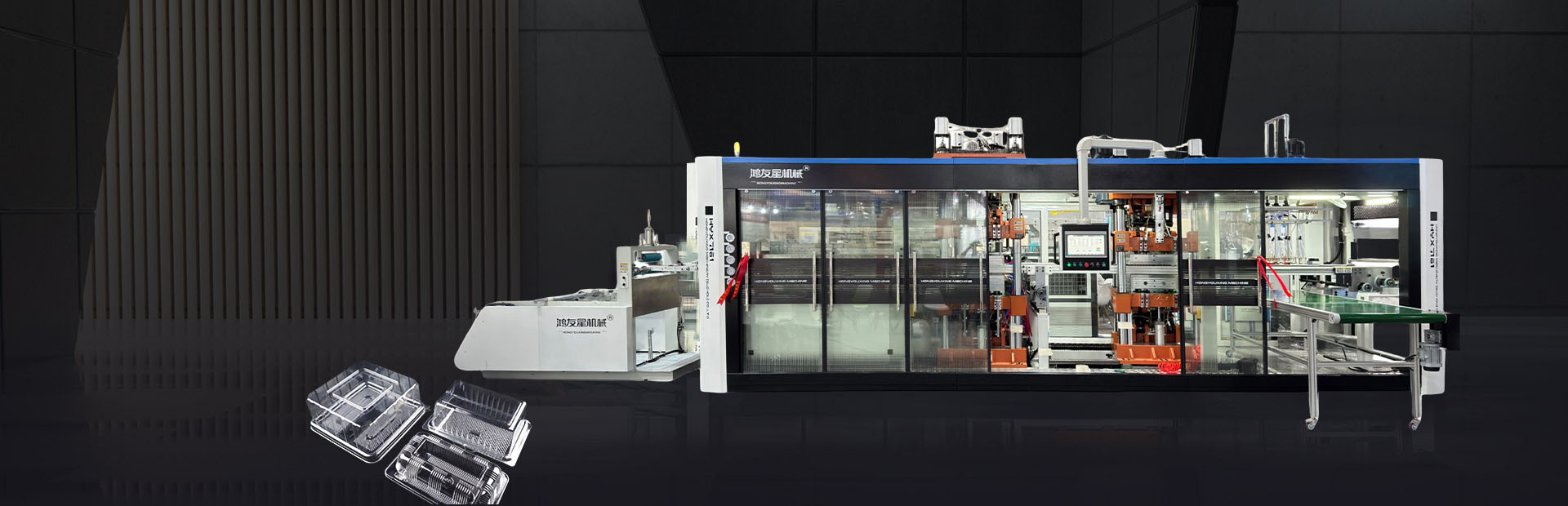
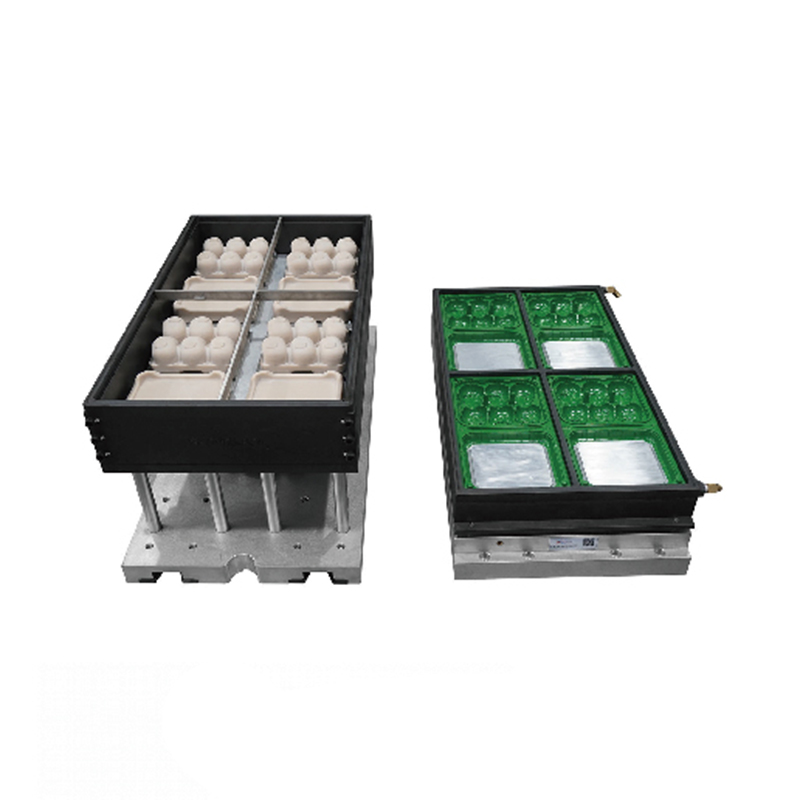
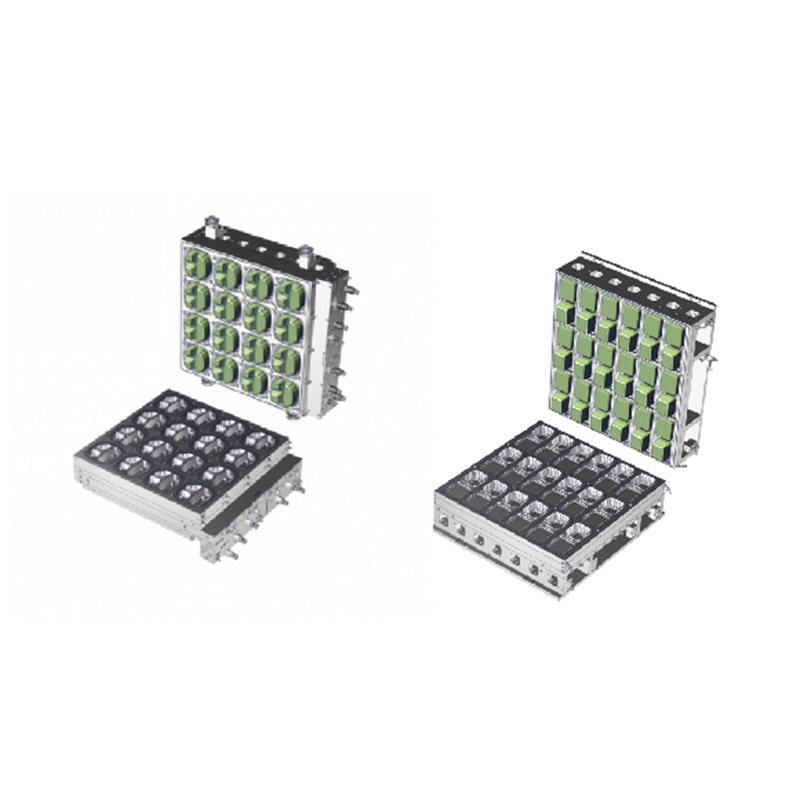
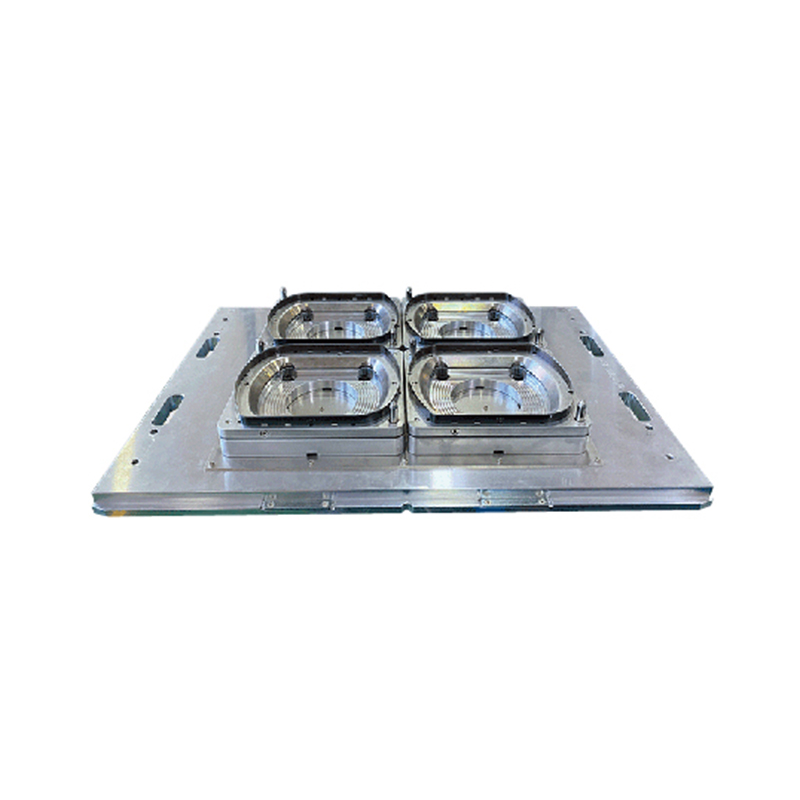
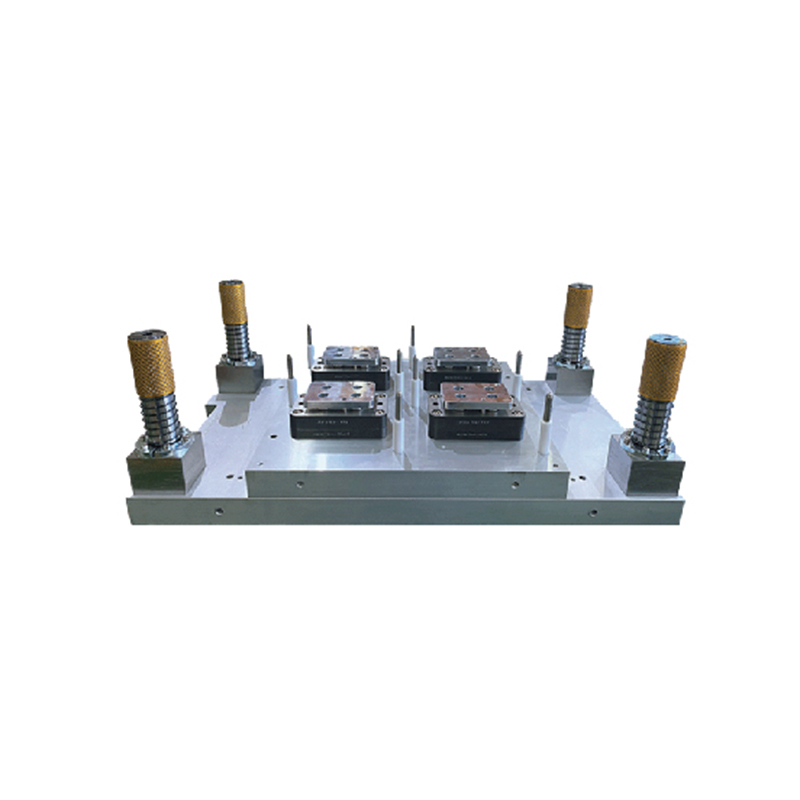
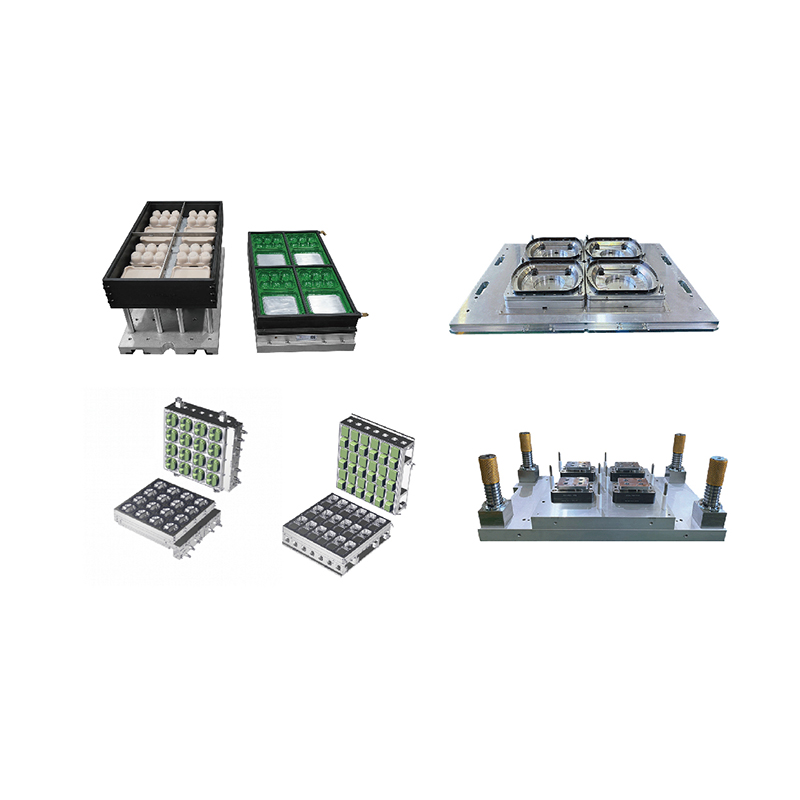
Positive And Negative Pressure Thermoforming Aluminum Mould
In the thermoforming industry of plastic product molds, aluminum alloy materials are commonly used. Conventional vacuum aluminum molds have positive and negative pressure thermoforming molds with cold water and gas flowing inside.
The Positive and Negative Pressure Thermoforming Aluminum Mould is built for the thermoforming segment of plastic product manufacturing, an area of tooling where aluminum alloy is the material of choice because of its thermal conductivity and workability. In place of a conventional vacuum-only aluminum tool, this mould combines a positive and negative pressure design with internal cold water and gas flow passages, so that air pressure on both sides of the heated plastic sheet can be actively managed throughout the forming cycle rather than relying on suction alone.
It is intended for production settings where consistent wall thickness, defined surface detail and controlled cycle time are required when forming rigid or semi-rigid plastic sheet into parts such as automotive interior components, appliance housings, medical device enclosures and packaging containers. The built-in cooling circuit and gas distribution channels work together to stabilize mould temperature and limit sheet deformation during forming, which supports repeatable part accuracy across successive production runs.
Product Introducing:
How Positive and Negative Pressure Control Shapes the Forming Cycle
The mould manages the plastic sheet from both sides during forming instead of relying on vacuum alone. Positive pressure is applied to press the softened sheet firmly against the mould surface, while negative pressure draws out the air trapped between the sheet and the cavity. Coordinating the two actions helps the sheet follow fine surface detail and reduces the chance of thin spots or trapped air pockets in the finished part.
Integrated Cooling Circuit and Gas Flow Channel Layout
Cold water circulation Internal water channels draw heat away from the mould body, shortening the time needed for each part to reach a stable temperature before demoulding.
Gas flow distribution Internal gas passages spread air evenly across the mould surface during forming, which helps limit surface bubbles and localized defects.
Reduced shrinkage and warping Even, controlled cooling limits the deformation and shrinkage that can occur when a sheet cools unevenly across the cavity.
Aluminum Alloy Construction and Machining Precision
The mould body is made from an aluminum alloy selected for its thermal conductivity, workability and resistance to corrosion. These properties give the tooling the strength and stiffness needed for repeated cycling while helping it resist thermal distortion and surface wear over time. The mould cavity and cooling passages are produced on precision machining equipment, which keeps the mating surfaces between the mould and the plastic sheet consistent from part to part and supports a stable surface finish on the moulded product.
Installation, Handling and Maintenance Recommendations
Confirm that the mould mounting dimensions and cooling and gas line connectors match the thermoforming machine before installation.
Check that water and gas line fittings are fully seated and free of leaks prior to the first production cycle after installation.
Inspect internal cooling channels periodically for scale or sediment buildup, which can reduce cooling efficiency over time.
Clean the mould cavity surface on a regular schedule to prevent residue from plastic sheet material from affecting part finish.
Examine high-contact areas of the cavity for surface wear during routine maintenance intervals.
Store the mould in a dry, temperature-controlled area when it is not in production use, to help protect the cavity surface and internal channels.
Typical Application Fields for This Mould
Positive and negative pressure aluminum thermoforming tooling of this type is generally suited to applications where surface detail and dimensional consistency both matter.
The table below places positive and negative pressure aluminum tooling alongside other common thermoforming mould approaches to illustrate how the pressure method generally relates to typical forming characteristics.
Mould type
Typical material
Pressure method
General forming characteristic
Vacuum-only aluminum mould
Aluminum alloy
Negative pressure only
Suitable for simpler geometries with moderate surface detail
Positive pressure only mould
Aluminum alloy
Positive pressure only
Improved sheet contact on shallow forms, less effective on deep draws
Positive and negative pressure aluminum mould
Aluminum alloy
Combined positive and negative pressure
Supports finer surface detail and more consistent wall thickness on complex forms
Steel thermoforming mould
Tool steel
Varies by design
Higher tooling mass and generally longer lead time, often used for very high-volume runs
Frequently Asked Questions
Q1: What does the positive and negative pressure design actually do during forming?
It manages air pressure on both sides of the heated plastic sheet at once. Positive pressure presses the sheet against the mould surface while negative pressure removes trapped air, which together help the sheet follow the cavity detail more closely than a single-pressure process.
Q2: Why is aluminum alloy used for this type of mould instead of steel?
Aluminum alloy offers strong thermal conductivity, which helps the mould heat and cool more quickly than steel tooling. This is generally favorable for cycle time in thermoforming, though steel tooling may still be selected for certain very high-volume or high-wear production scenarios.
Q3: How does the internal cooling system affect part quality?
The internal cold water circuit removes heat from the mould more evenly, which helps limit shrinkage and warping in the formed sheet. More even cooling generally supports more consistent dimensions across a production run.
Q4: What routine maintenance does this type of mould typically require?
Common maintenance practices include checking cooling channels for buildup, keeping the cavity surface clean of plastic residue, inspecting high-contact areas for wear, and storing the mould in a dry, controlled environment when it is not in use.
Q5: Which types of plastic parts is this mould generally suited for?
It is generally suited to parts that require defined surface detail and consistent wall thickness, such as automotive interior components, appliance housings, medical device enclosures and packaging containers.
Q6: How does this mould differ from a conventional vacuum-only aluminum mould?
A vacuum-only mould relies solely on negative pressure to draw the sheet into the cavity. This mould adds a positive pressure stage on top of that, which can improve sheet contact and detail reproduction on more complex forms.
When a thermoforming line receives an order for auto engine bay liners, microwaveable food containers, or electronic housings, the first question is not about tooling or cycle tim...
U.S. Client Praise for Our Thermoforming Machine
An engineer from our U.S. client praised our thermoforming machine for its high stability and performance during operational testi...
A lidding line stops because a packaging tray flange is 0.4 mm out of pitch. An automotive interior panel fails its assembly audit because a locating hole drifts 0.3 mm. In both c...




 English
 عربى
عربى 简体中文
简体中文



 +8618621972598
  +8613917961988
 No. 565, Xinchuan Road, Xinta Community, Lili Town, Wujiang District, Suzhou City, China