

 English
 عربى
عربى 简体中文
简体中文
Home / News / Industry News / Heavy Gauge Thermoforming Explained: Process, Materials, and Buying Guide

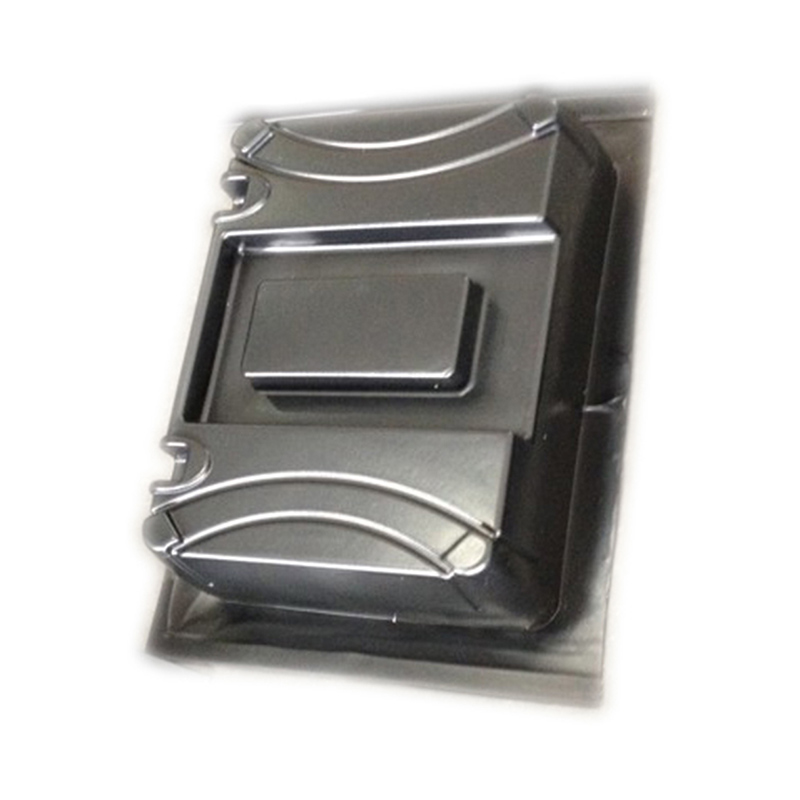
For large, load-bearing plastic parts, heavy gauge thermoforming is often the most practical path to production. It forms thick thermoplastic sheets - usually between 3 mm and 11 mm - into single-piece products that stay rigid under impact, heat, and repeated use. The biggest advantage is not the material itself but the system around it: low-cost aluminum tooling and cycle times measured in minutes rather than the weeks needed for injection molds. Below we look at what heavy gauge thermoforming is, which materials work, and how to choose the equipment that fits your part geometry.
Heavy gauge thermoforming is the process of heating a thick plastic sheet until it is pliable and then forcing it over or into a mold with vacuum or compressed air. The sheet is not fed from a roll; it is a separate, cut-to-size piece that is clamped in a frame. Practical thickness ranges from about 2 mm up to 0.45 inches (roughly 11 mm). The process stops once the sheet has cooled and set, so the final part keeps the thickness and rigidity of the original sheet.
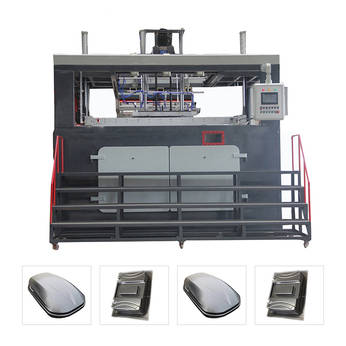
This process is used for structural parts such as vehicle trim, machine guards, medical housings, and reusable crates. Because the sheet is thick, the finished part carries real mechanical strength. For a manufacturer setting up an in-house line, a thick sheet vacuum thermoforming machine is the foundation you need to cut sheets, heat them evenly, and form them in a repeatable cycle.
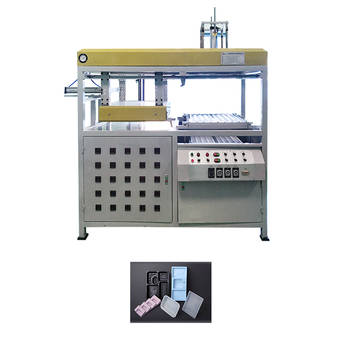
 Thick Sheet Vacuum Thermoforming Machine for Heavy-Gauge PartsThis machine is built for forming thick plastic sheets into durable parts like automotive interior components and industrial housings. Its stable frame and hydraulic-driven mould platform support precise, repeatable cycles for structural products.View Product →
The label "gauge" simply describes sheet thickness, and the difference changes your entire equipment and cost structure. Thin gauge thermoforming uses roll-fed film up to about 1.5 mm and is built around speed and volume. Heavy gauge uses cut sheets and is built around detail and durability.
| Criterion | Thin gauge | Heavy gauge |
|---|---|---|
| Typical thickness | 0.25-1.5 mm | 2-11 mm |
| Material form | Roll-fed film | Cut sheets |
| Machine type | In-line automatic | Shuttle or rotary |
| Main applications | Packaging and blisters | Housings and structural parts |
| Tooling cost | Low to moderate | Low compared with injection |
If your product needs to bear a load, survive handling, or last for years, choose heavy gauge. If you are packing high volumes of small articles, stay with thin gauge.
There are three main forming techniques used in heavy gauge work: vacuum forming, pressure forming, and twin-sheet forming.
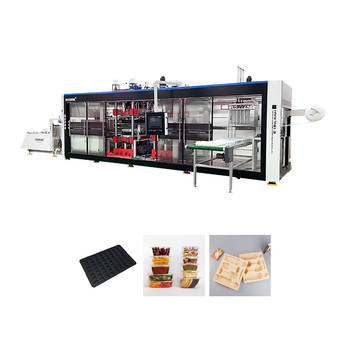
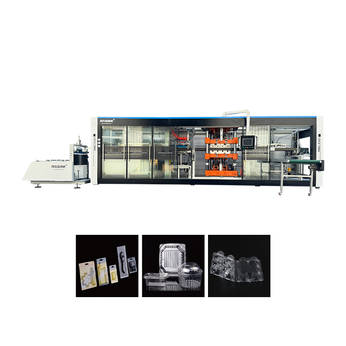
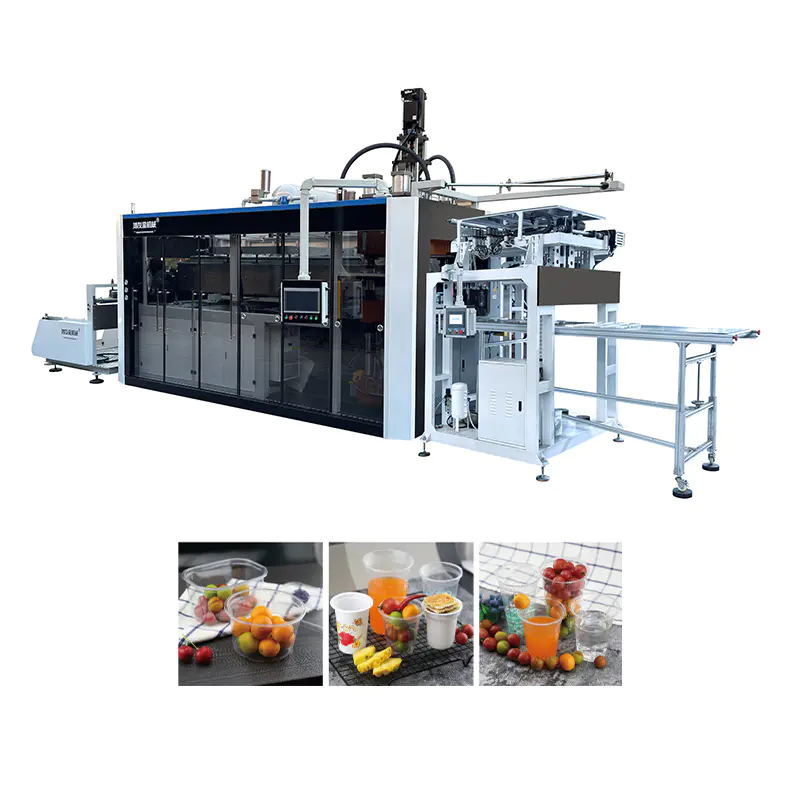
A modern positive and negative pressure machine combines vacuum and compressed air in one tool, which gives you the flexibility to run both deep draws and fine details. The HYX7185 fully automatic positive and negative pressure thermoforming machine is an example of this layout, using multiple stations to form, trim, and stack in one continuous line.
Not every plastic can be formed in thick sheet. The material needs high melt strength and a wide softening window so the sheet stretches without sagging or tearing.
Choose the material first, then set the heating parameters around its specific thermal behavior. A resin that tends to drip during heating is not a heavy gauge candidate unless the oven temperature is tightly controlled.
Heavy gauge parts are found wherever a plastic component needs to cover, enclose, or support a mechanism. Automotive interiors, medical device housings, electronics enclosures, appliance bodies, and returnable packaging are the most common categories.
The decision to use heavy gauge usually comes down to three questions: Does the part need to resist impact? Does it need to hold its shape when the product is assembled? Is the look important enough to justify a better surface finish? If the answer is yes to any of them, heavy gauge is the right process. This is especially true for automotive and industrial components, where automotive parts vacuum packaging lines combine forming with downstream handling to keep the supply chain efficient.
Mold quality is the biggest factor in whether a heavy gauge part forms consistently. Aluminum is the standard mold material because it conducts heat rapidly and machines cleanly at a lower cost than steel. The main geometry rules are:
With aluminum tooling, a first article can be produced in a few weeks. A thermoforming aluminum mold is designed to match the exact geometry of the part, which keeps shrinkage under control and gives you a repeatable cycle.
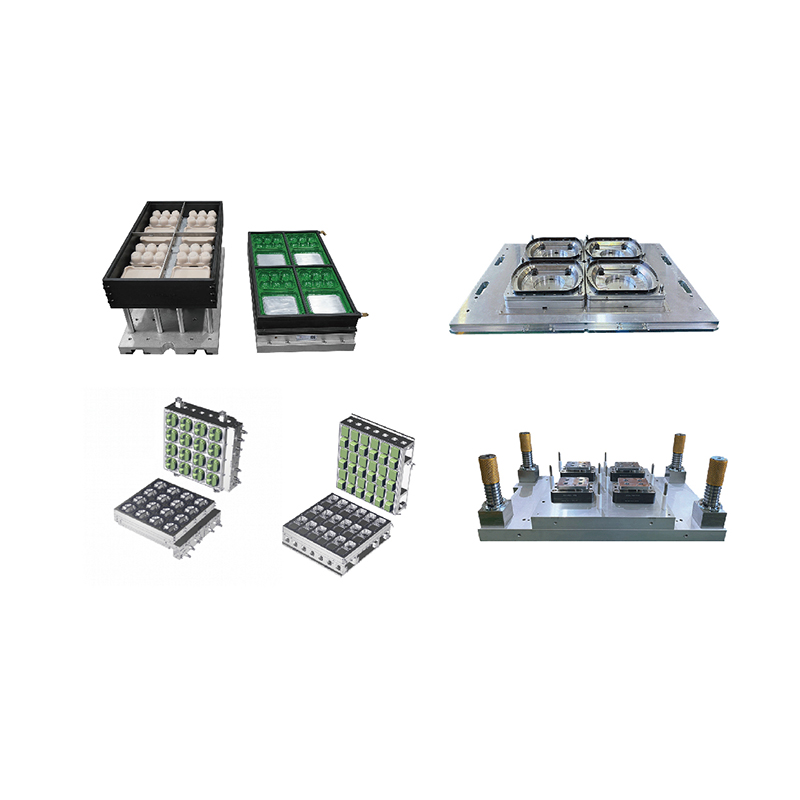 Positive and Negative Pressure Aluminum Mold with Cooling CircuitsThis aluminum mold uses both positive and negative pressure to shape plastic sheet, with built-in cooling and gas channels. It helps maintain consistent wall thickness and detail for rigid parts such as appliance housings and medical enclosures.View Product →
Start with the part size and the forming pressure you need. A large, shallow part can be made on a single-station machine with vacuum-only. A deep or detailed part benefits from a shuttle-type or rotary machine with positive and negative pressure. Check the bed dimensions against your largest sheet, and make sure the heating array can reach the target temperature for your material without hot spots.
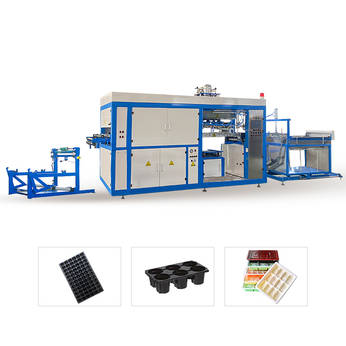
Single-station machines are simple and low-cost, but they force you to load, heat, form, and strip in one position. Shuttle-type machines move the sheet through separate stations so the forming time overlaps with cooling and stripping. The practical outcome is a shorter cycle for the same part. This comparison is explained in the article about single-station vs shuttle heavy gauge thermoforming machines. If you are producing medium or high volumes, a 3-station or 4-station positive and negative pressure line will usually pay for itself in labor and scrap savings.
The correct machine is the one that matches your part size, material, and volume - not the one with the longest feature list.
Heavy gauge usually means sheets from about 2 mm up to 11 mm. Below that range, manufacturers use roll-fed thin gauge film for packaging applications.
Tooling cost and lead time. An aluminum mold costs a fraction of a steel injection mold, and you can go from drawing to first article in a couple of weeks instead of several months.
Undercuts and holes are normally not formed directly in the sheet. They are created later by trimming, punching, or CNC machining. Inline cutting stations handle this step for high-volume production.
That depends on part size and volume. A vacuum-only single station machine suits simple, shallow parts. For deep draws and fine detail, choose a positive and negative pressure machine with shuttle or multi-station design.

 +8618621972598
  +8613917961988
  [email protected]
 No. 565, Xinchuan Road, Xinta Community, Lili Town, Wujiang District, Suzhou City, China
 Copyright © 2024 Thermoforming Machine/Plastic Cup Machine All Rights Reserved.Custom Automatic Vacuum Thermoforming Plastic Machine Manufacturers