

 English
 عربى
عربى 简体中文
简体中文
Home / News / Industry News / Common Thermoforming Defects: Causes, Solutions, and How to Prevent Them

A production run of thermoformed trays is underway, and the operator pulls the third part from the mold. The corners are so thin they are almost transparent, and a webbed fold bridges two cavities. By the end of the shift, rejected parts have eaten a measurable share of the day's output.
The short answer first: most common thermoforming defects come from five sources:
Identify which one is responsible, and most quality issues can be corrected without redesigning the mold.
The table below maps the defects covered in this guide, the symptoms that identify them, and the first corrective action to try.
| Defect | Visible Symptom | Primary Cause Group | First Corrective Action |
|---|---|---|---|
| Webbing / Bridging | Folded excess material between cavities | Overheating, uneven heating | Reduce heat, adjust heater zoning |
| Thin corners | Weak, translucent corner walls | Slow vacuum, sheet cools early | Speed up vacuum, add pressure |
| Warpage | Part twists or bows after cooling | Uneven cooling, mold temperature spread | Balance mold temperature, extend cooling |
| Blisters / Bubbles | Raised bubbles on the formed surface | Moisture in sheet, overheating | Pre-dry material, reduce heater output |
| Poor detail reproduction | Faint ribs, text, or contours | Low pressure, blocked vent holes | Check vacuum, clean mold vents |
| Pinholes | Tiny holes at deep-draw areas | Trapped air or contamination | Improve venting, screen material |
| Drag marks | Scratches or glossy streaks | Rough mold surface, missing draft | Polish mold, add draft angle |
| Uneven wall thickness | Thick and thin zones across the part | Uneven heating, sag profile | Tune heater zones, control sag |
In production practice, most defect investigations start at the heater, because sheet temperature controls how evenly the material stretches.
Webbing appears as folds of excess material that bridge across corners or between cavities. It forms where the sheet is hotter than its surroundings and does not contact the mold early enough, leaving loose material to fold instead of being drawn against the tool.
Operators often cause this by raising heater output to shorten cycle time. The better fix is to lower heat in the bridging zones, reduce the top heater bank, or use pressurized pre-stretch so the sheet enters the cavity in a controlled way.
When a sheet stays at temperature too long, gravity pulls the center down. The thinned center can touch the mold or lower heater before forming starts, causing premature cooling and drag marks. Reduce heating time, lower the top-to-bottom heater ratio, or use a sag sensor on large formats.
Moisture is the classic cause. Hygroscopic materials such as PET, ABS, and PC absorb humidity that vaporizes as bubbles when the sheet heats. Dry the material to the supplier's recommended moisture level and verify dryer performance before changing mold or machine settings.
Rule of thumb Most rectangular trays and cups form best when center zones are slightly hotter than the edges. Edge overheating is the usual cause of webbing and uneven wall thickness.
When the heating profile is stable and defects remain, the forming force itself is the next suspect.
Corners are the last place the sheet touches the mold, so they stretch the most and cool the fastest. If vacuum draws slowly, the corner area solidifies before reaching the tool surface, leaving thin, structurally weak walls. Widen vacuum lines and increase tank capacity to shorten drawdown, and use pressure forming to push hot material into corners before it freezes.
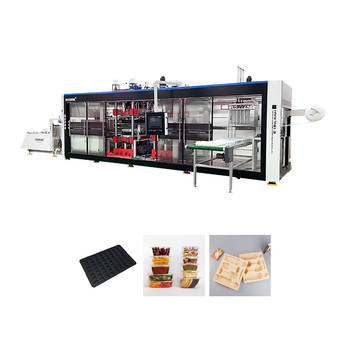
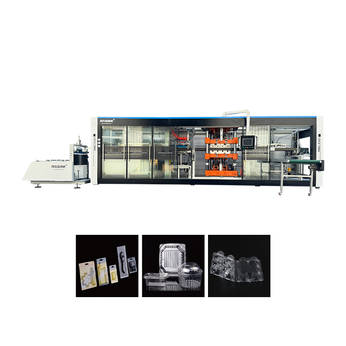
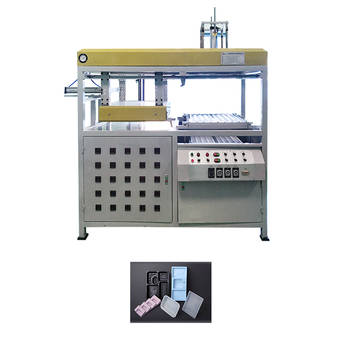
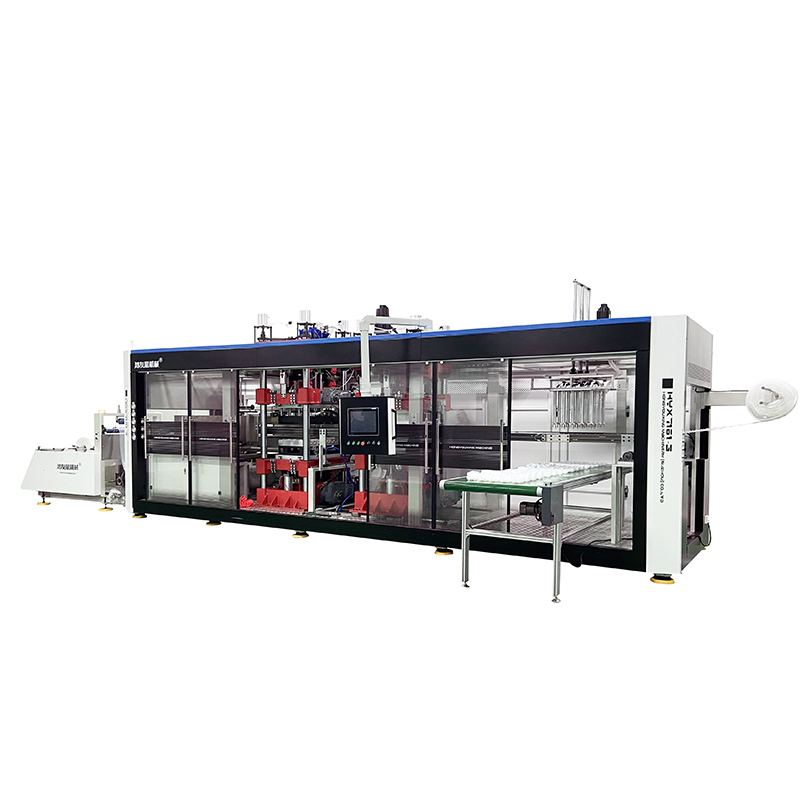
HYX-7161 Three-Station Positive-Negative Pressure Thermoforming MachineThis machine combines vacuum and positive pressure forming with servo stretching and intelligent temperature control, addressing thin corners and deep tray geometry issues discussed in the adjacent text.View Product →
This is why many packaging producers move to positive-negative pressure forming: combined vacuum draw and compressed air from a pressure box reproduce fine geometry that vacuum alone cannot hold, especially on deep trays and thin materials.
Faint text, ribs, or contours usually mean vacuum is lost or arriving late. Common causes are a weak vacuum pump, leaking mold seals, undersized lines, or blocked vent holes. Measure drawdown time first, then clean every vent and confirm the pressure box seal holds the rated pressure.
Pinholes are tiny punctures at the deepest draw points, created when trapped air cannot escape or small contaminant particles burn during heating. Aggressive draw ratios make them worse. Add micro-grooves and vent holes, screen incoming sheet, and reduce the draw ratio with plug assist.
Even with a clean heating profile and fast vacuum, the material and the mold can undo previous process gains.
Warpage results from uneven cooling: thick sections hold heat longer, and the shrinkage difference twists or bows the part. Control mold temperature with a recirculating water unit, extend the cooling stage, and use cooling fixtures to hold large parts flat while they cool.
Scratches and glossy streaks appear where the sheet slides against a rough mold, a missing draft angle, or a sharp edge. Polish the forming surface, keep at least 1 to 2° of draft on vertical walls, add a small radius to each edge, and keep the tool clean.
Sticking traces to undercuts, excessive vacuum, an over-smooth mold face, or uneven release agent. No process adjustment fixes an undercut, so check the part design first. Then reduce vacuum hold time, add air eject features, and apply release agent in a thin, even coat.
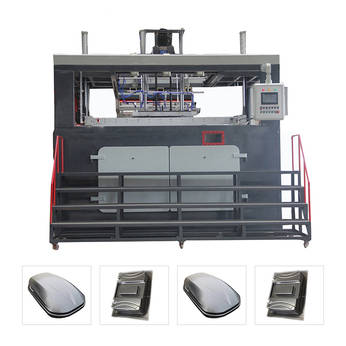
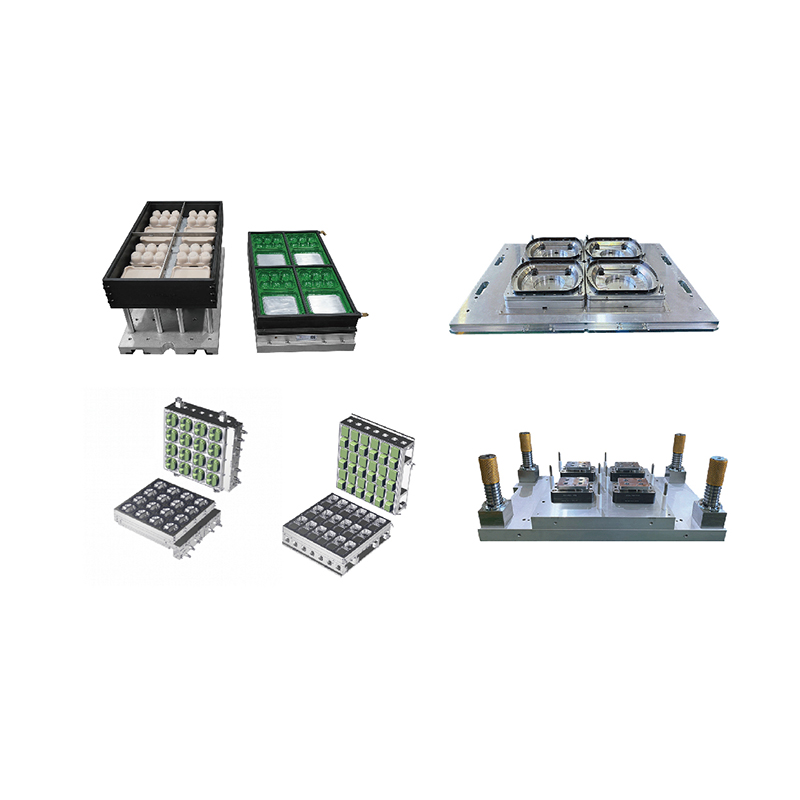 Positive-Negative Pressure Thermoforming Aluminum Mold with CoolingThis aluminum mold features internal cold water and gas flow passages, enabling active pressure control on both sides of the sheet for better wall thickness and surface detail, directly relevant to demolding and tooling quality concerns.View Product →
Tooling quality controls how much heating and vacuum adjustments can accomplish. Aluminum molds with a heat-treated structure, polished forming surfaces, and accurately placed vacuum holes are the reliable foundation for defect-free forming.
When a new defect appears, follow the same sequence every time and change one variable at a time.
Many of these checks become unnecessary with a structured preventive maintenance routine that keeps heaters, vacuum systems, and molds in their normal operating range.
These are the questions operators and process engineers ask most often when defects start showing up.
Webbing is usually the first defect operators encounter because it is tied directly to heater zoning and appears with almost every material. It is also one of the easiest defects to correct by adjusting the heating profile.
Corners receive the most stretched material and lose temperature fastest, so the sheet cools before it is pressed fully into the corner. Faster vacuum drawdown and pressure-assisted forming are the most effective remedies.
Warpage stops when cooling is even. Balance mold temperatures, extend the cooling stage, and hold large parts in a cooling fixture. Do not eject parts before they reach a stable temperature.
Mold design influences nearly every defect category. Draft angle, edge radius, vent placement, surface finish, and cooling channels determine how much heating and vacuum adjustments can compensate. A well-designed mold widens the entire forming window.
There comes a point where process tuning is no longer enough. If the machine cannot supply enough independent heating zones, vacuum capacity, platen force, or forming pressure, defects will keep returning regardless of material and tooling care.
Equipment choice sets the limits of what can be fixed. A thermoformer with separate heater control, a high-capacity vacuum system, and consistent automatic cycling gives the process engineer the variables needed to solve most of the defects described above.
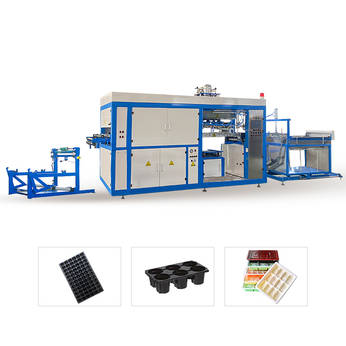
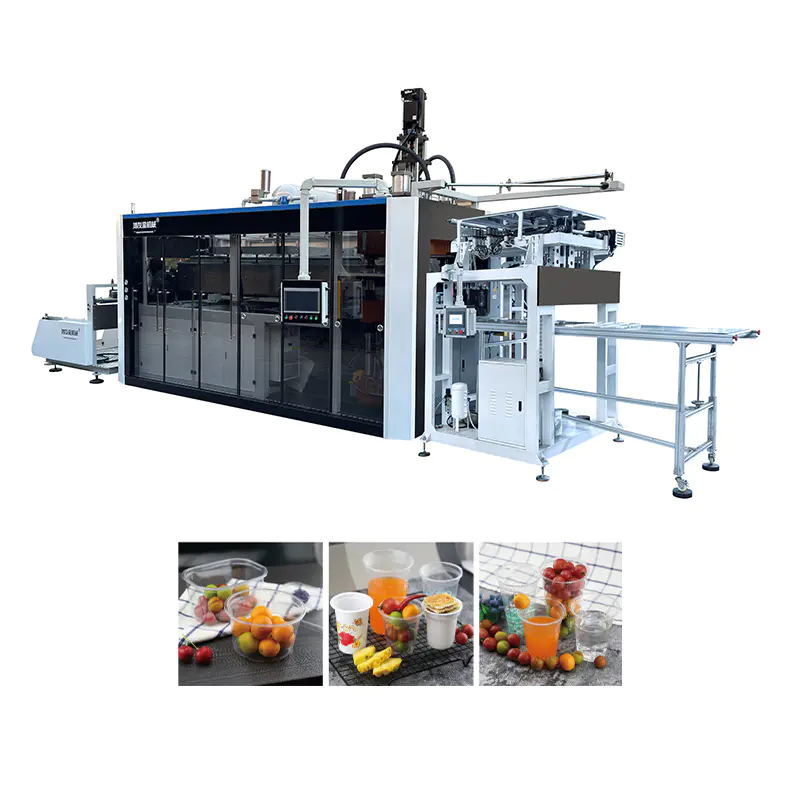
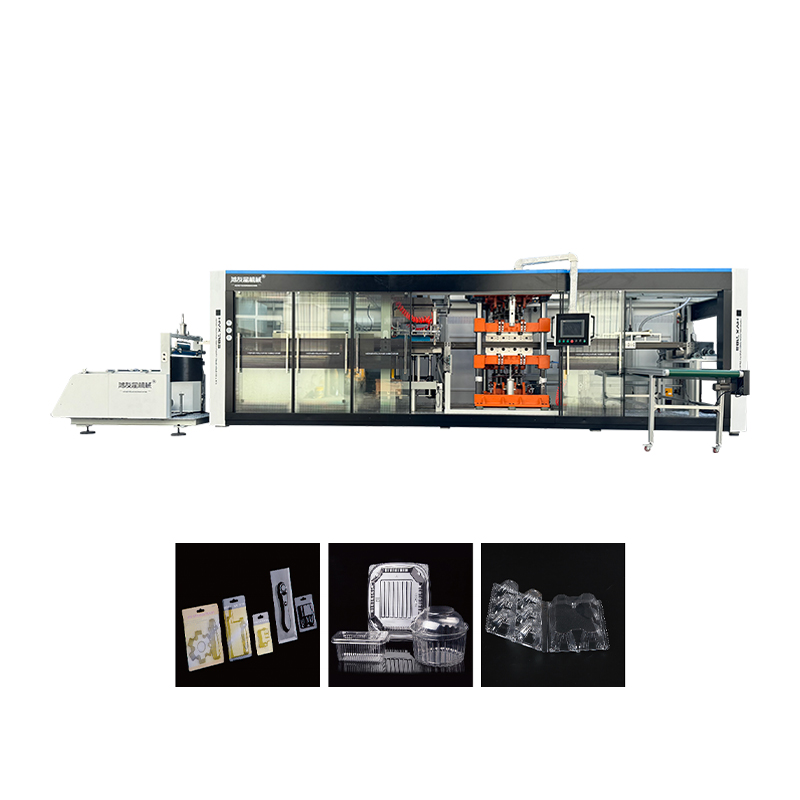 Fully Automatic Vacuum Forming Machine with Cutting and StackingThis integrated machine combines servo feeding, vacuum forming, cutting, stacking and conveying, with separate heater control and PLC automation, offering the adjustable process variables needed to reduce defects like thin corners and warpage.View Product →
When you evaluate a new line, compare thermoforming machine specifications against the defects you have been fighting. The right machine makes thin corners, poor detail, and warpage significantly easier to control.
Common thermoforming defects are predictable, traceable, and manageable. Start with the heater and the material, verify the forming force, then inspect the tooling. When a defect repeats across every material and setting, the machine itself has become the process limit.

 +8618621972598
  +8613917961988
  [email protected]
 No. 565, Xinchuan Road, Xinta Community, Lili Town, Wujiang District, Suzhou City, China
 Copyright © 2024 Thermoforming Machine/Plastic Cup Machine All Rights Reserved.Custom Automatic Vacuum Thermoforming Plastic Machine Manufacturers