

 English
 عربى
عربى 简体中文
简体中文
Home / News / Industry News / Thermoforming Tooling: How Mold Material and Design Drive Part Quality and Cost

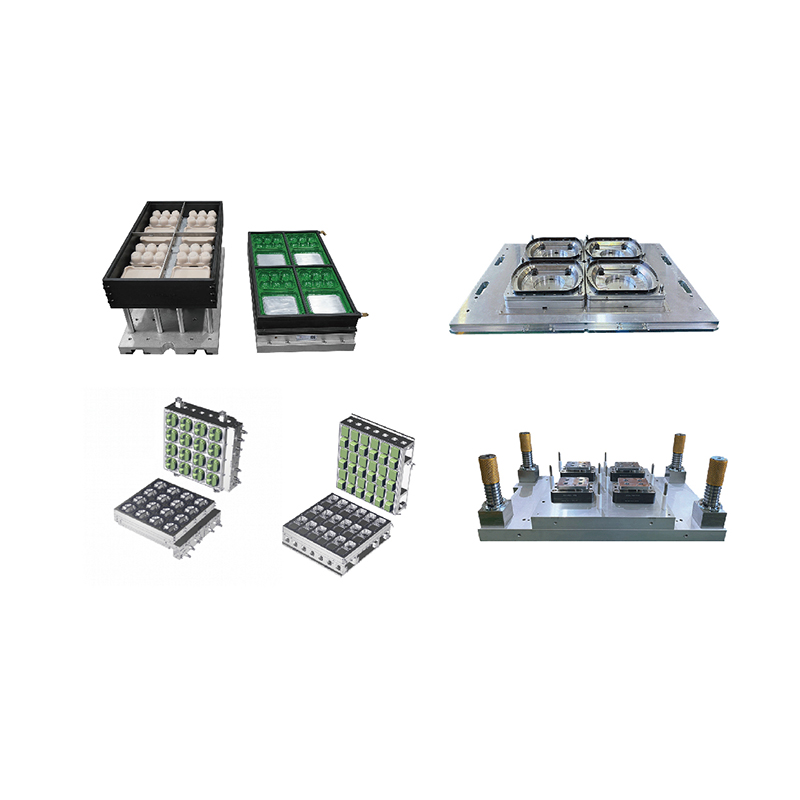
When you plan a thermoforming line, the tooling is where your product quality is decided. A mold that is too thin, too rough, or poorly vented will show up on every single part. The good news is that with the right material and design, tooling can become a reliable asset instead of a constant source of trouble. This guide explains the key decisions in thermoforming tooling, from material choice to design details, so you can avoid common pitfalls and make a sound investment.
Thermoforming tooling includes the molds that shape heated plastic sheet and the dies that trim or cut the finished part. In practice, the same tooling set may include a forming mold, a trimming die, and a punching unit. The forming mold controls contour, surface texture, and wall distribution. The trimming die defines the final edge and any holes. For products such as cups, lids, or industrial trays, the quality of these tools is what turns a good machine into a profitable production line.
The importance of tooling goes beyond the shape. It affects cycle time, scrap rate, and even machine uptime. A well-designed aluminum mold conducts heat evenly, releases the part cleanly, and keeps its dimensions through thousands of cycles. That is why we always advise customers to treat tooling as a deliberate purchasing decision, not an afterthought. As described in thermoforming molds indispensable for industrial manufacturing, the mold is the core medium between your machine and your product. With more than three decades of tooling design experience, we have seen how small changes in draft angle or cooling layout can make a huge difference in daily output.
The material you choose depends on run length, geometry, and tolerance needs. For high-volume production, machined aluminum is the standard. It has high thermal conductivity, so the sheet heats uniformly and the part cools faster. It also machines to tight tolerances, which matters for thin-gauge products. In our production units, we use thermoforming aluminum mold for parts that demand precision and repeatability.
 Positive and Negative Pressure Thermoforming Aluminum MouldThis aluminum mould combines positive and negative pressure with internal cooling and gas channels, offering controlled forming for rigid and semi-rigid plastic parts. It is suitable for production runs requiring consistent wall thickness and surface detail, making it a practical choice for precision thermoforming applications.View Product →
Cast aluminum is a cost-effective option for simpler shapes and lower volumes. It has a slightly lower thermal conductivity than machined aluminum, and the surface can be more porous, but it is often the right choice when budget is tight. Prototype tooling can be made from epoxy, composite, or 3D-printed materials. They are fine for validating a design, but they wear quickly and cannot hold the same tolerances as aluminum.
When comparing materials, consider the total cost of ownership, not just the initial price. A machined aluminum mold costs more up front, but it can run hundreds of thousands of cycles with proper care. A cast mold may be cheaper, but it may need replacement sooner. For a long-term project, the aluminum investment often pays for itself through lower downtime and consistent quality.
Tooling performance is not only about material; it is also about geometry. Four design details matter most: draft angle, radius, cooling channels, and vent placement.
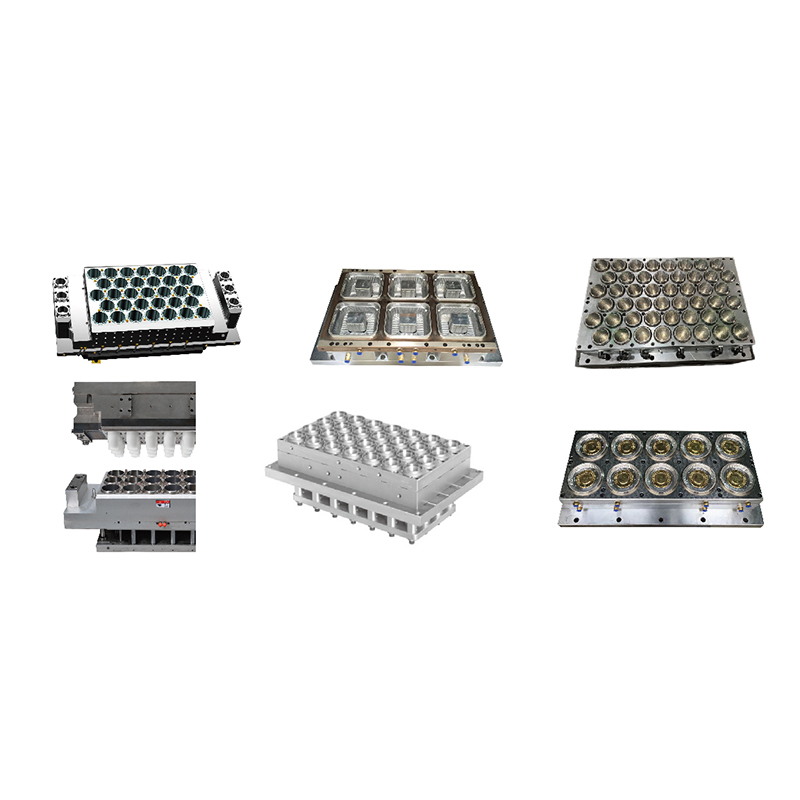 Thermoforming Mould Set for Cups, Plates, Containers, Boxes, and LidsThis mould series covers tooling for forming and in-mold cutting of plastic cups, plates, containers, boxes, and lids. Precision CNC machining and wear-resistant steel blades support repeatable output, which is essential for food and medical packaging where part accuracy and efficiency matter.View Product → designs, cooling layout is balanced against vent positions to keep wall thickness uniform.
These factors interact with the sheet temperature and forming pressure. A tool designed without considering the machine's heating profile will struggle to produce stable parts. Since we manufacture both the machine and the tooling, we can match them at the engineering stage.
Different products require different tooling characteristics. For round containers such as cups, bowls, and lids, the forming tool must support deep drawing and uniform wall thickness. For those applications, the mold surface finish and cooling arrangement are critical. In contrast, flat trays and industrial panels need a tool that handles large surface areas without overheating.
For cut-to-length parts, the trimming die is part of the tooling set. When your product requires holes, notches, or a precise outline, a thermoforming punching mold gives you clean edges and repeatable dimensions. This is especially important for products like fruit packaging boxes, where the lid and base must fit together. See fruit packaging box application, where the tooling contributes to the final assembly quality.
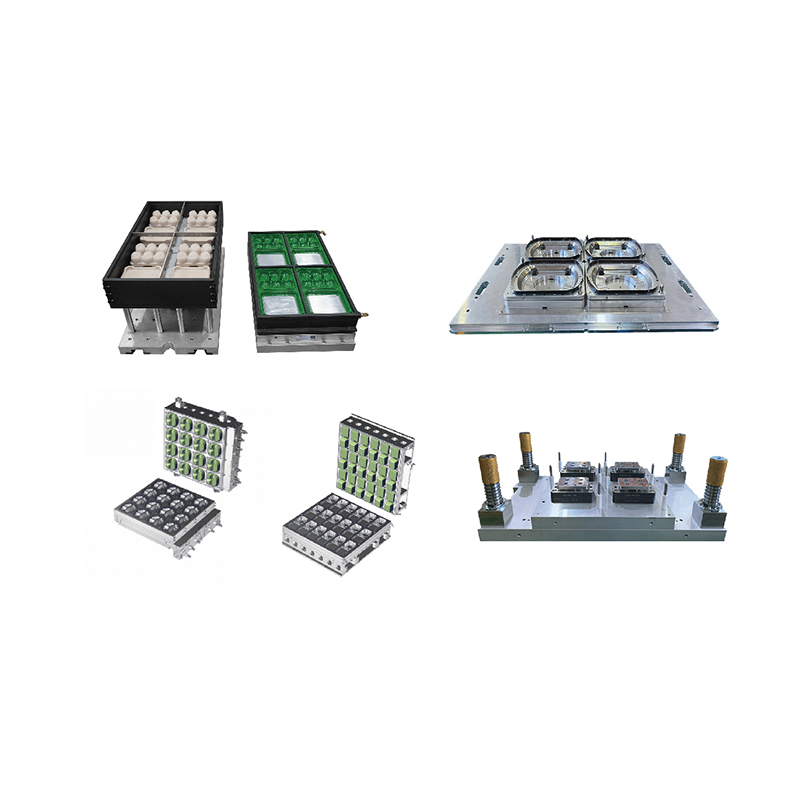 High-Speed Punching Mold for Berry Packaging BoxesDesigned for high-speed thermoforming of blueberry and strawberry boxes, this punching mold features side holes for ventilation and is built for durability. It ensures clean cutouts and consistent dimensions, which help achieve proper lid and base fit in fruit packaging applications.View Product →
For thick-gauge industrial trays, heavy-gauge tooling must have robust support and pressure channels. This is a different world from thin-gauge packaging. The machine configuration also matters: positive-negative pressure machines allow pre-blowing and plug assist, which reduces the demands on the tool but still requires correct draft and radius.
A tool's real cost is measured over its total cycles. If a mold lasts 500,000 cycles, its cost per part is one fraction of a mold that fails after 50,000. Tooling life depends on material, design, maintenance, and the plastic being formed. Aluminum molds can last many cycles if they are stored properly and cleaned regularly.
The main causes of tool failure are corrosion from condensed moisture, damaged vacuum holes, and surface wear from abrasive additives in the plastic. A simple maintenance routine includes: checking vacuum holes before every shift, wiping the forming surface, and applying a rust preventative when the tool is not in use.
In our factory, we inspect every mold before it leaves the plant. We also offer guidance on how to adjust the machine heating profile and timing so the tool is not stressed beyond its design. This approach has helped customers reduce scrap and extend tool life, even in high-output cup and tray production.
A: For production runs of tens of thousands or more, machined aluminum is the best all-around choice. Cast aluminum is acceptable for lower volumes and simple contours. Prototype materials like composite are only for design validation.
A: There is no fixed number because it depends on material, thickness, and processing conditions. A well-maintained machined aluminum mold can easily run a few hundred thousand cycles. Replace the mold when wall thickness tolerances or surface quality no longer meet your spec.
A: Yes, with adjustments. Different materials have different shrink rates and melt temperatures. For example, PP shrinks more than PS or PE, so the mold needs slightly larger clearances to avoid sticking. Always test with your actual plastic grade.
A: Uneven thickness usually comes from uneven heating, poor draft, or a cooling channel layout that causes local hot or cold spots. It can also happen when the vacuum holes are not placed in the deepest areas. A tool designed together with the machine parameters will minimize this issue.
A: Ordering from the machine manufacturer can be safer because the tool is engineered together with the machine's heating, pressure, and timing parameters. This reduces compatibility issues and speeds up commissioning. Our engineer team can also provide installation and training support.

 +8618621972598
  +8613917961988
  [email protected]
 No. 565, Xinchuan Road, Xinta Community, Lili Town, Wujiang District, Suzhou City, China
 Copyright © 2024 Thermoforming Machine/Plastic Cup Machine All Rights Reserved.Custom Automatic Vacuum Thermoforming Plastic Machine Manufacturers