

 English
 عربى
 简体中文

Home / News / Industry News / Thermoforming Applications: Process, Industries, and Equipment Buying Guide

When a production manager sees the tooling quote for a new plastic tray, the first question is usually not about the machine itself. It is about whether the part can be formed reliably at the target volume, with the right wall distribution, and without stretching the budget beyond the project plan. Thermoforming answers that question in a wide range of industrial applications. The process works by heating a thermoplastic sheet to a pliable state, forcing it over or into a mold with vacuum, pressure, or mechanical action, then trimming the cooled part to size. Its practical value lies in the fact that tooling is simpler and cheaper than injection molding, while still producing strong, lightweight, and repeatable parts.
For buyers, the important point is not to start with one specific machine. It is to start with the application, meaning part size, material grade, thickness, production volume, and required precision. Those factors determine whether a vacuum former, pressure former, or positive/negative former is the better fit.
| Industry | Typical Parts | Sheet Thickness | Primary Concern |
|---|---|---|---|
| Automotive | Dashboards, door panels, bumper skins, wheel arch liners | 1.5-6 mm | Impact resistance, dimensional stability |
| Medical | Device blisters, trays, packaging, surgical packs | 0.25-1.5 mm | Cleanliness, precision, barrier properties |
| Electronics | Blisters, trays, insulators, covers | 0.25-1.5 mm | Static control, detail definition |
| Food Packaging | Cups, lids, trays, clamshells | 0.30-1.2 mm | Food safety, high output, wall uniformity |
| Consumer Goods | Containers, household items, toys | 0.40-1.5 mm | Surface quality, cost per part |
| Industrial Equipment | Guards, housings, liners, material handling trays | 1.5-8 mm | Strength, rigidity, durability |
The common thread across these industries is the ability to turn a flat sheet into a contoured part with relatively low tooling investment. In automotive, the parts often demand a heavier gauge. In medical packaging, cleanliness and repeatability dominate. In food packaging, output speed and material compatibility are the critical variables.
For any specific line, the application page can give you a more concrete view. If you are evaluating primary packaging for automotive components, the automotive parts vacuum packaging page is a useful reference for the types of parts that are commonly handled.
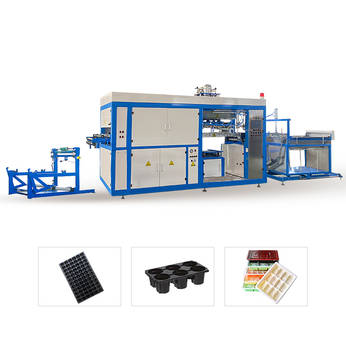
Vacuum forming is the most widely used method. It draws a heated sheet down onto a single-sided mold. It is fast, economical, and well suited for parts with generous radii, moderate depth, and no undercuts. It works well for thick sheets and simpler geometries such as covers, trays, and large panels.
Pressure forming adds compressed air on the non-mold side. This increases the force pushing the material against the mold, which means sharper corners, more detailed texture, and tighter dimensional control. It is the better choice when the part has fine features or a high-end cosmetic finish.
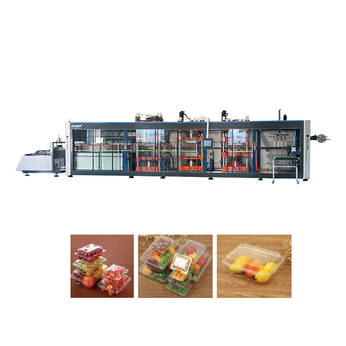
Positive and negative pressure forming combines both approaches. It is common for thin-wall cups, lids, and trays where wall distribution and surface detail matter. In a 3-station machine, the sheet is heated, formed, and trimmed in a continuous cycle. By controlling both vacuum and air pressure, the material follows the tool more closely. This matters for parts that need crisp ribs, logos, or precise sealing flanges.
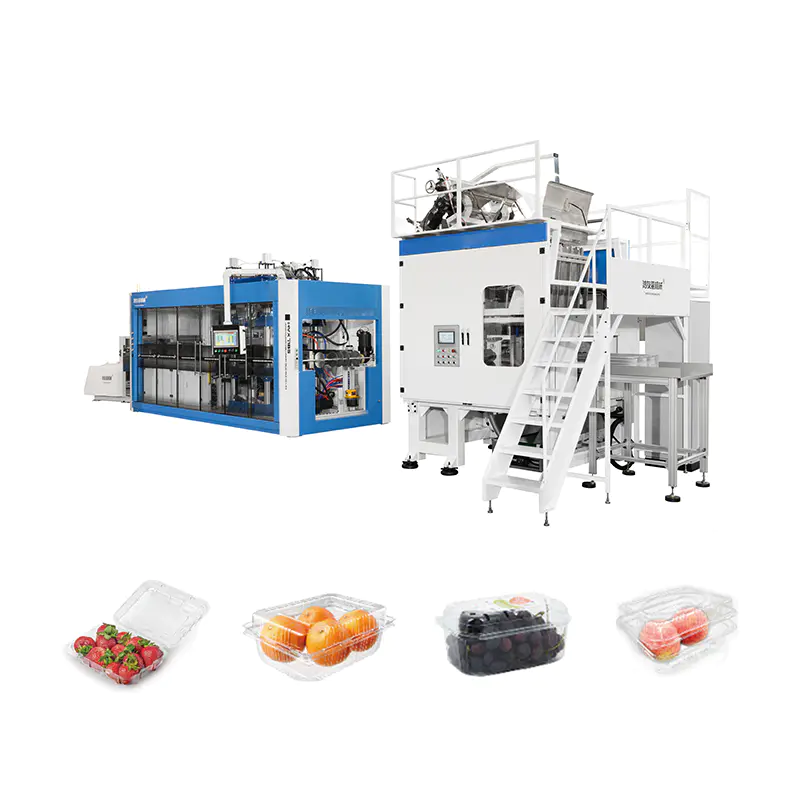
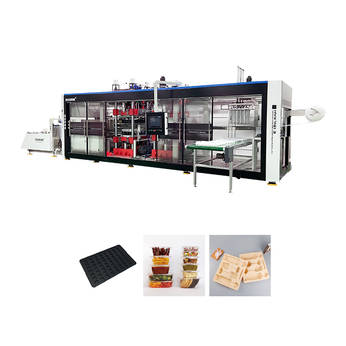
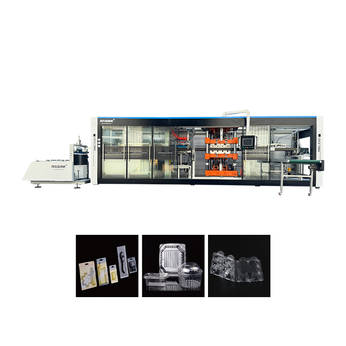
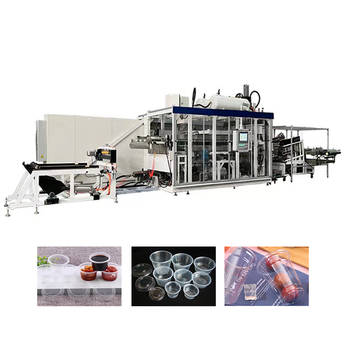
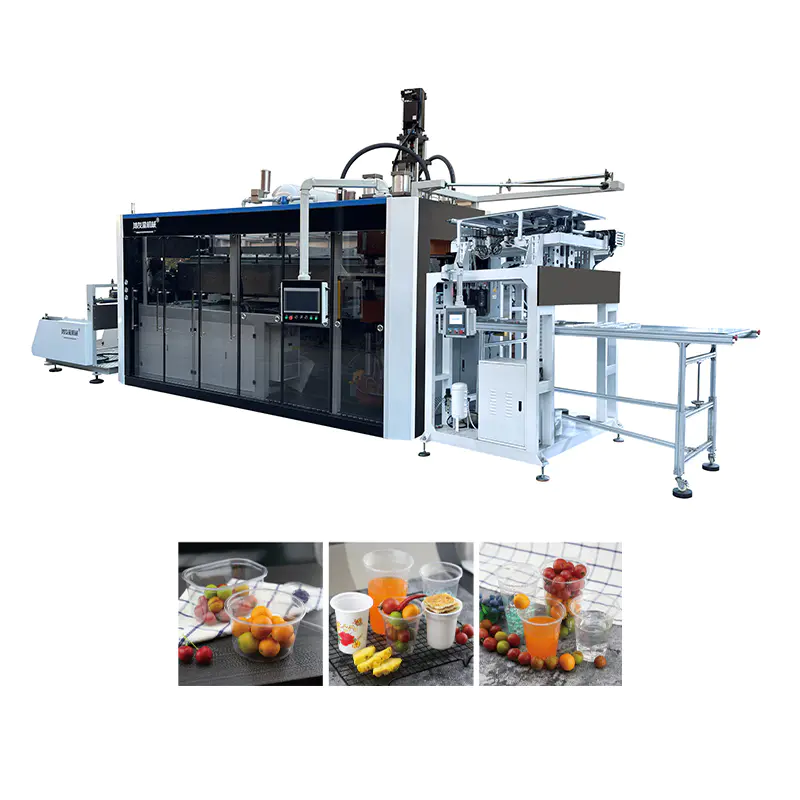
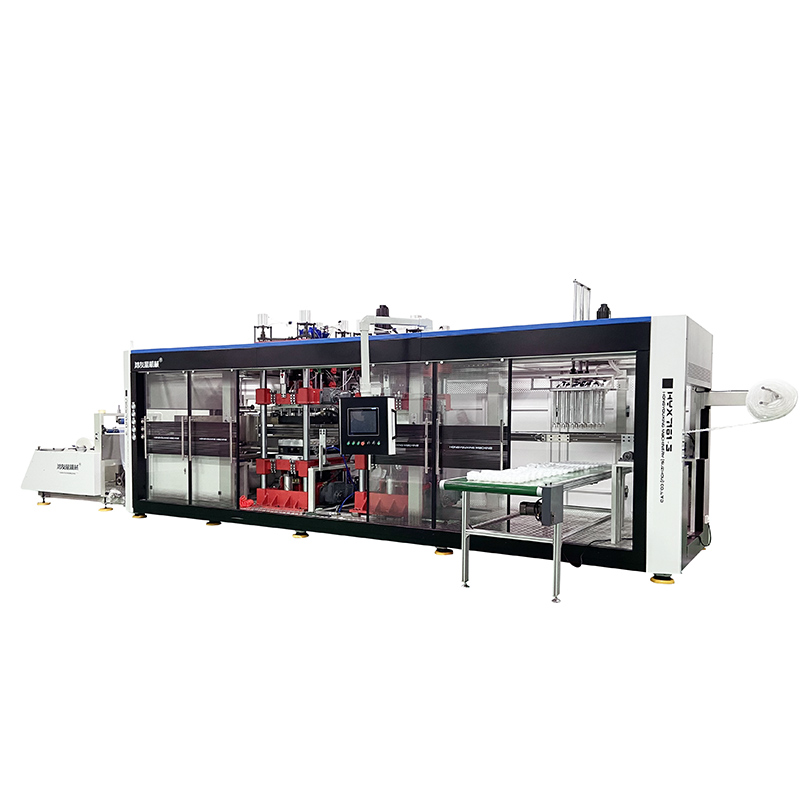
For high-output cup and container production, a fully automatic positive and negative pressure 3-station thermoforming machine offers a balanced combination of speed, definition, and material efficiency. When the trimming step needs its own dedicated station, a 4-station version can further optimize cycle time. If you want to understand how the pressure integration affects thin-wall definition, see this discussion of positive and negative pressure integration for thin-wall parts.
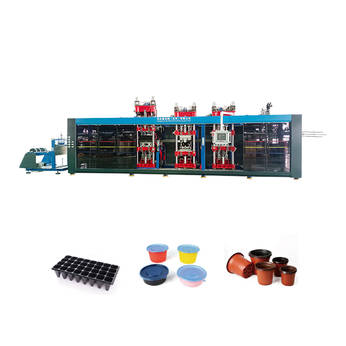
Fully Automatic 3-Station Thermoforming Machine for Cups and ContainersThis three-station machine combines heating, forming, cutting, and stacking with servo stretching for deep parts, offering quick mold changes and energy-saving temperature control for high-output production.View Product →The dividing line between thin and heavy gauge is usually around 1.5 mm, but the practical difference is in how the material behaves during heating and cooling.
Thin-gauge forming uses sheets from roughly 0.25 mm to 1.5 mm. It is the territory of blisters, cups, trays, and food packaging. The challenge is to heat the sheet evenly without sagging and to form quickly before the material cools. High-speed machines with servo-driven indexing are typical.
Heavy-gauge forming uses sheets above 1.5 mm, sometimes up to 8 mm or more. It is the territory of industrial components, automotive panels, machine guards, and interior trim. The sheet is rigid, so heating takes longer and the forming pressure must be higher. Uniform wall thickness becomes more difficult because the material stretches unevenly around corners.
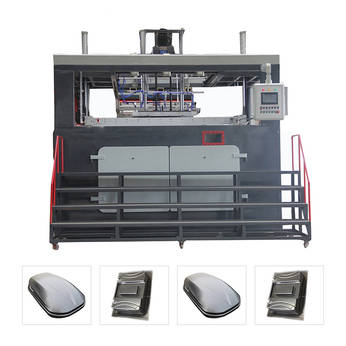
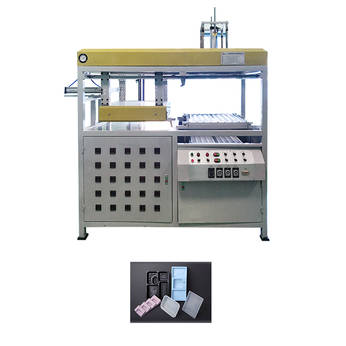
Selecting the right machine for heavy-gauge work is not just about size. Heating zone layout, clamping force, and the ability to run a slow cycle without uneven cooling are all decisive. A thick sheet vacuum thermoforming machine is designed for these conditions, making it suitable for deep draws and heavy parts that need consistent thickness and low internal stress.
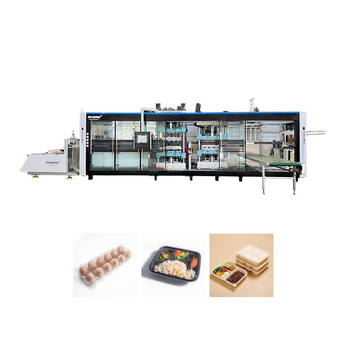
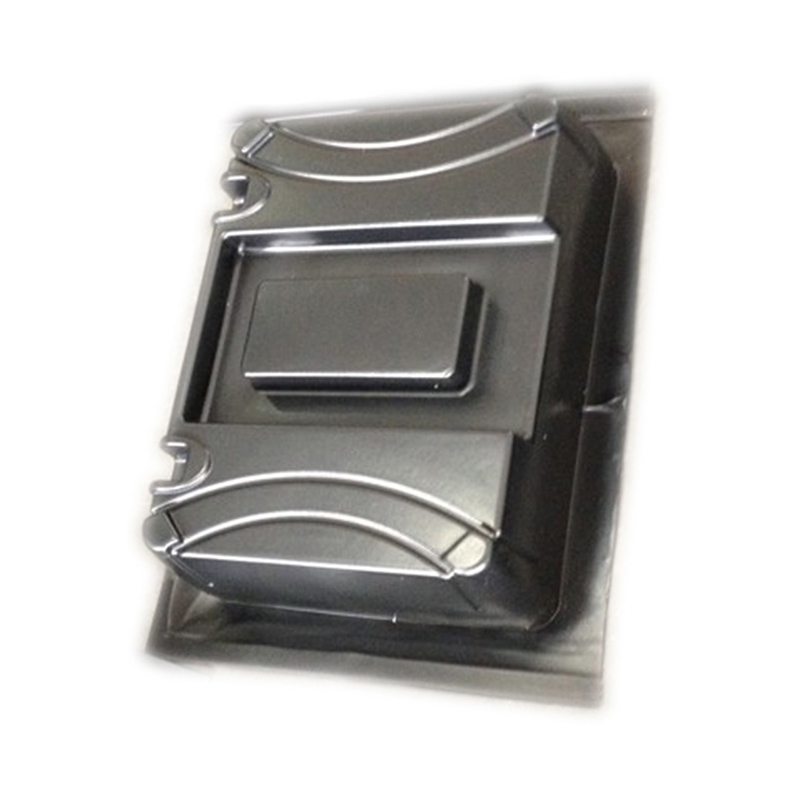 Thick Sheet Vacuum Thermoforming Machine for Heavy-Gauge PartsDesigned for heavy-gauge forming, this machine provides stable frames, hydraulic-driven mold platforms, adjustable pressing frames, and effective cooling to produce deep draws with consistent thickness and low stress.View Product →
Tooling is often the largest single cost item in a thermoforming project. It determines cycle time, part accuracy, and the range of shapes you can produce. The mold must conduct heat efficiently so the formed part cools at a controlled rate.
Aluminum molds are the standard choice for production runs. They offer good thermal conductivity, machinability, and durability. The mold can be fabricated from solid aluminum or cast, depending on the part complexity and volume. In many cases, an aluminum mold delivers the best balance of cycle time and cost for medium and high volumes.
If you need a mold for a specific cup, bowl, or lid shape, the design can be matched to your forming machine. A thermoforming aluminum mold is also relevant when you need to produce multiple cavity layouts to raise output without compromising part-to-part consistency.
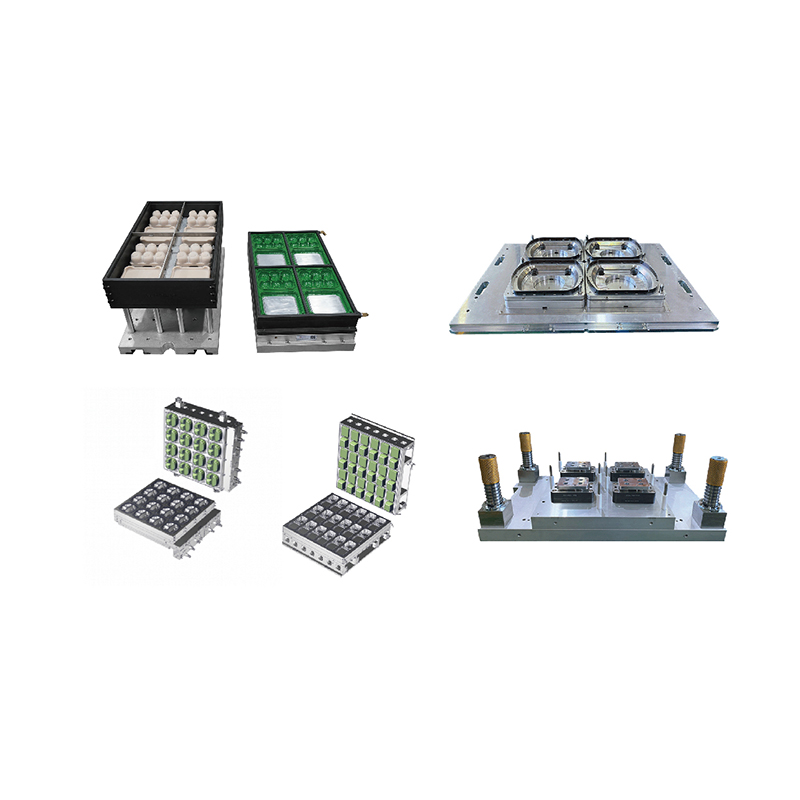 Aluminum Mould with Positive and Negative Pressure ControlThis aluminum tool integrates positive and negative pressure with internal cooling and gas passages, enabling precise forming of rigid sheets into detailed parts while maintaining repeatable accuracy across runs.View Product →
Beyond the main mold, trimming and punching tooling have a direct effect on final part quality and scrap levels. For example, a punching mold that combines forming and cutting in one step reduces handling and increases accuracy.
If you are in the position of selecting thermoforming equipment, the key is to match the machine to the process window you actually need, not to the largest spec sheet you can find. The following questions are worth raising with any machine supplier.
This sets the entire machine architecture. Heating power, clamping mechanism, and forming pressure are all determined by whether you run 0.3 mm film or 6 mm sheet.
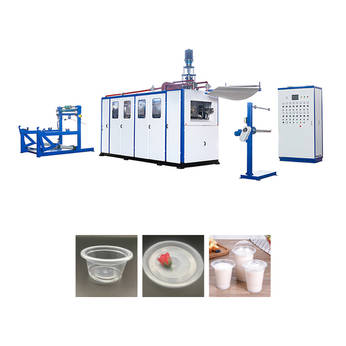
Heating, forming, trimming, and stacking can be separate stations or combined. A 3-station machine is often the practical default for cups and trays. A 4-station machine adds a dedicated trimming station, which reduces cycle time and improves edge quality.
Many production lines need in-line scrap recycling, sheet extrusion, or automatic counting. If you plan to run a complete factory line, look for a supplier that can deliver auxiliary equipment as part of the same system.
Servo-driven indexing, PLC-based temperature control, and repeatable pressure settings all affect how quickly you can switch between products. If you run frequent changeovers, you need a machine that keeps setup time low.
Beyond the machine itself, think about the total cost of ownership. Tooling, energy consumption, scrap rate, and maintenance all contribute to the cost per part. Buying a machine that cannot grow with your product line may seem economical up front but can become expensive when production volumes change.

 +8618621972598
 +8613917961988
 [email protected]
 No. 565, Xinchuan Road, Xinta Community, Lili Town, Wujiang District, Suzhou City, China
Copyright © 2024 Thermoforming Machine/Plastic Cup Machine All Rights Reserved.Custom Automatic Vacuum Thermoforming Plastic Machine Manufacturers