

 English
 عربى
 简体中文

Home / News / Industry News / Manual vs Automated Forming Processes: How to Choose the Right Machine

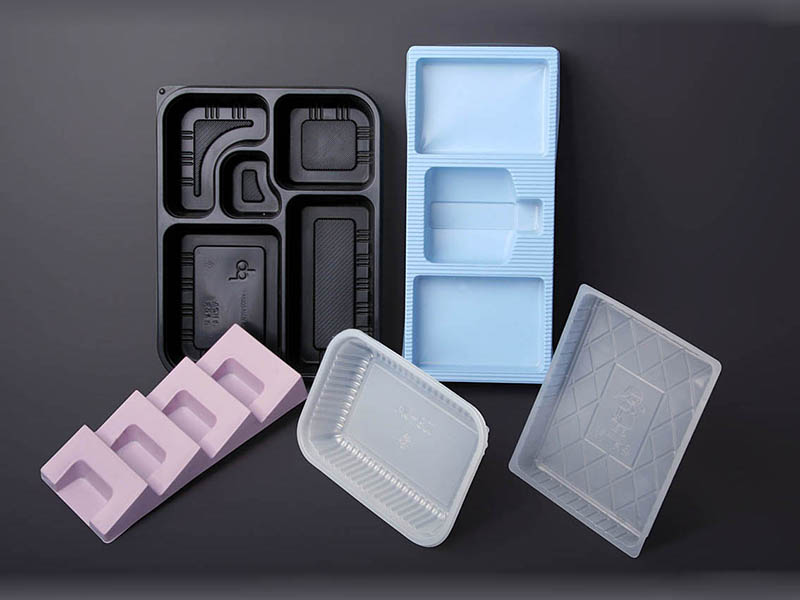
A plant forming 300 thick-gauge ABS trays a week and a plant running 40,000 PET lids a day are both thermoforming, yet the answer to the manual versus automated question sits at opposite ends of the scale for each of them. One needs an operator's hands and eyes to absorb material variation and short runs. The other needs a machine that repeats the same 12-second cycle twenty thousand times without drifting.
Here is the short answer before the detail. Manual and semi-automatic forming stays cheaper while volumes are low, the part mix changes weekly, and operators are available and affordable. Fully automatic forming takes over once a stable part family runs long enough that labor, scrap and inconsistency cost more each month than the machine payment would.
Automation is usually sold as speed, and speed is the least interesting part of the package. What a fully automatic line really changes is how many variables an operator no longer has to manage. Sheet indexing, heating time, forming pressure, trimming and stacking all run from one stored recipe. On a manual station, every one of those steps is a human decision, repeated a few hundred times per shift, in whatever rhythm the operator can hold.
None of this arrives free. An automatic line costs several times a manual station, and it demands in-line punching or trimming tooling, more floor space, clean and stable compressed air, reliable power, and a maintenance team comfortable with PLCs and servo drives. Where those conditions are missing, a new automatic machine can sit idle while the old manual station keeps producing.
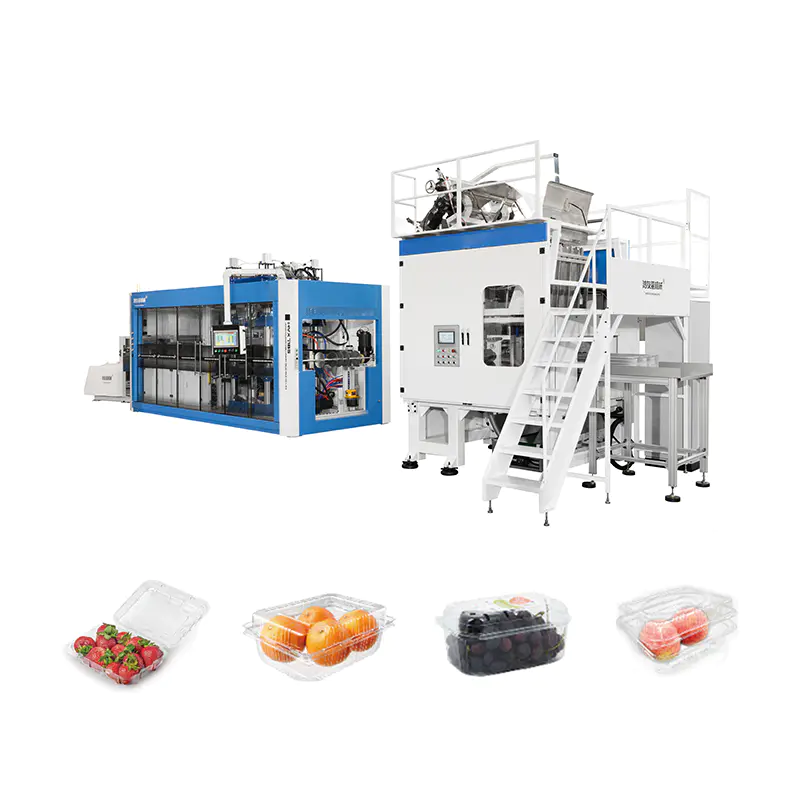
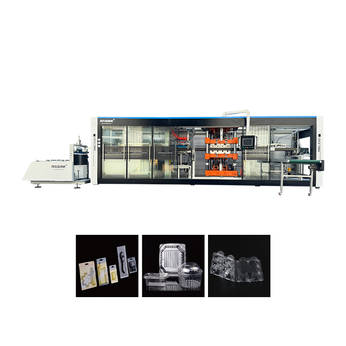
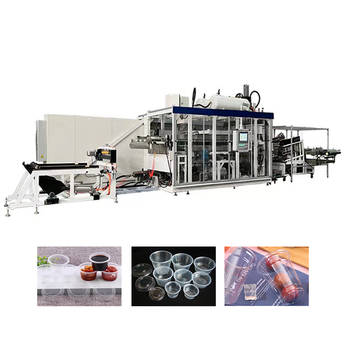
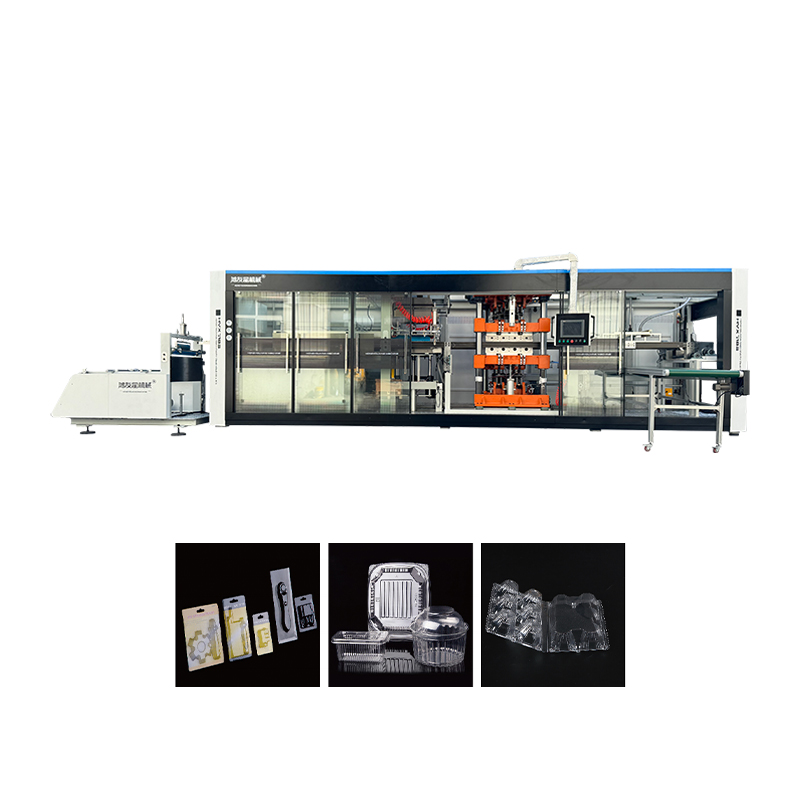 Full Automatic Forming, Cutting and Stacking Vacuum Forming MachineView this fully automatic vacuum forming line when reliable power, air, and PLC maintenance support make automated forming, cutting, and stacking viable for small-output production.View Product →
Manual equipment is not a beginner's tool. It is a different cost structure, and it stays competitive whenever one of these conditions applies:
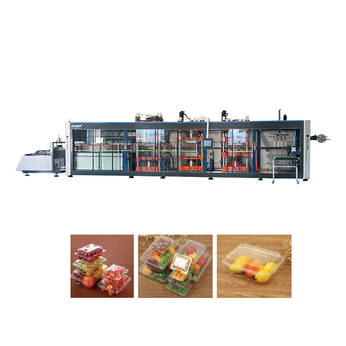
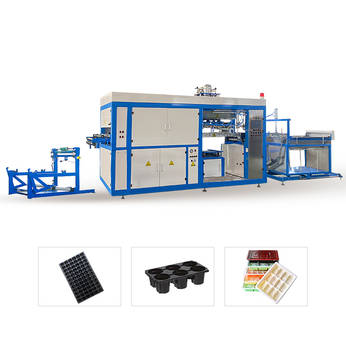
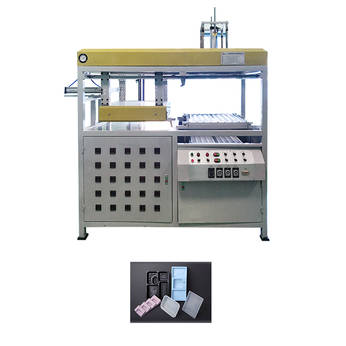
Manual Vacuum Forming Machine for Samples and Small-Batch PackagingUseful for micro-volume sample and small-batch work where flexible operation and low automation cost matter, though output and quality depend on the operator.View Product →
State the trade-off plainly: output depends on the person at the machine, and quality shifts when that person changes shift.
Buyers comparing a manual and an automatic quotation usually compare purchase price, footprint and rated output. The numbers that decide the outcome sit elsewhere.
Most plants do not jump from manual to fully automatic in one step. They climb one rung at a time, and the output gap between those rungs is wider than most quotations suggest.
| Criterion | Manual | Semi-automatic | Fully automatic |
|---|---|---|---|
| Sheet feeding | Hand-fed sheet by sheet | Operator loads, clamps and indexes automatically | Automatic roll or sheet feeder with constant tension |
| Heating control | Timed by eye and experience | Timer plus temperature controller | PLC recipe with zone control and locked parameters |
| Forming method | Vacuum only, single chamber | Vacuum with optional pressure assist | Positive and negative pressure with plug assist |
| Trimming | Off-line press or hand trimming | Separate trim press after forming | In-line punching or horizontal trimming in the same cycle |
| Indicative output | 30–80 parts per hour | 100–350 parts per hour | 500–2,000+ parts per hour |
| Operators per shift | 2–4 | 1–2 | 0.5–1 |
| Scrap expectation | 5–10% | 4–7% | 2–4% |
| Best fit | Prototypes, thick-gauge one-offs, short runs | Mixed orders, small cup and tray runs, growing plants | One stable part family: cups, lids, trays, high-volume packaging |
If you are weighing the two lower rungs, a closer comparison of manual and semi-automatic vacuum forming machines breaks down the labor and changeover differences in more detail.
Work through these steps in order, because each one can end the discussion early.
Where repeating volume is high and one part family dominates, a multi-station machine that separates forming, cutting and stacking usually outperforms a single-station automatic machine on total cost per part.
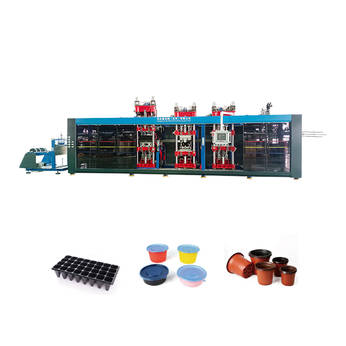
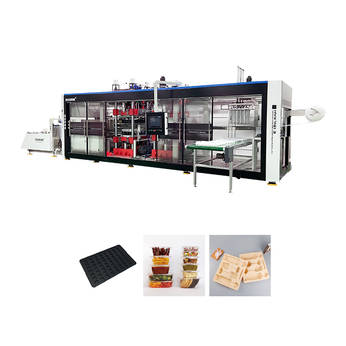
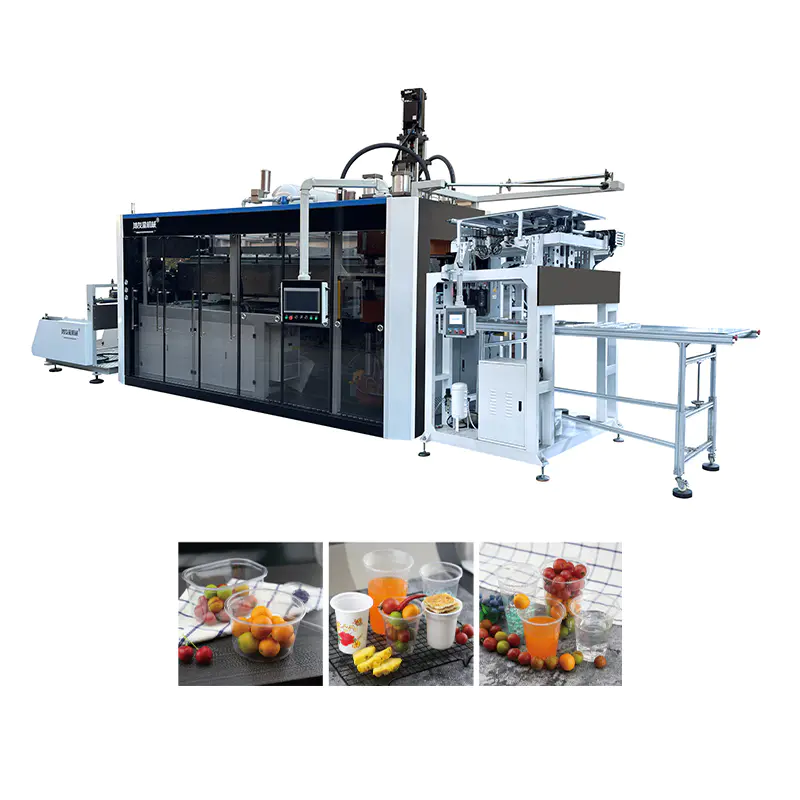
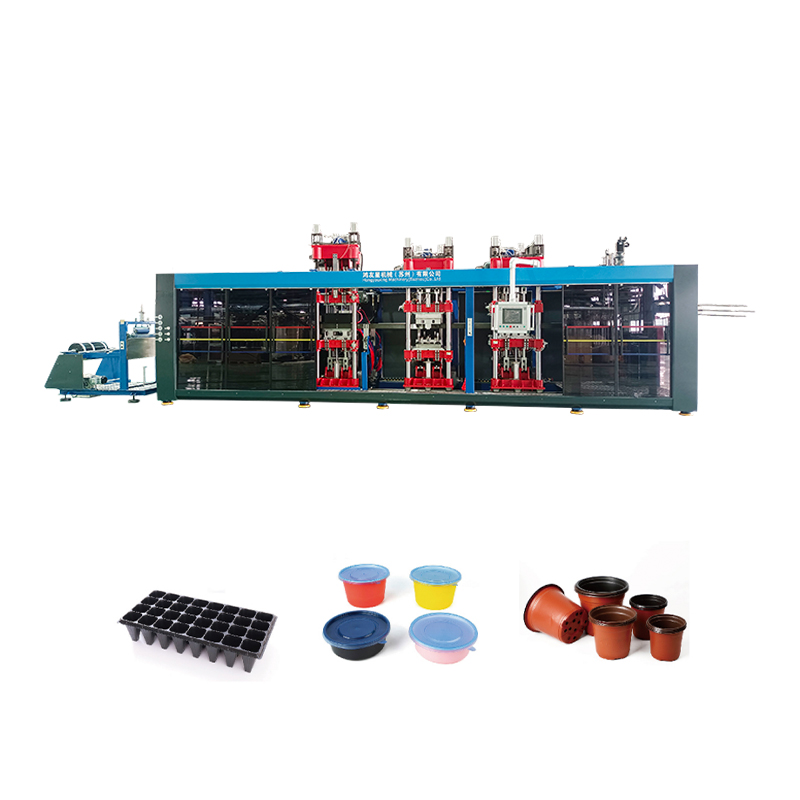 HYX-7161 Four-Station Automatic Thermoforming Machine for Forming, Cutting, StackingFor high-volume, one-family production, this four-station machine combines heating, forming, punching, stacking, and counting, reducing handling before finished parts leave the line.View Product →
Aluminum molds suit short and medium runs and cool quickly. Cup molds are built for high-cavity repetition. Punching molds combine forming and cutting so the automatic line delivers a finished part instead of a skeleton to be trimmed later.
Once forming is automatic, the rest of the line has to keep up: a rim roller for cup and lid edges, an in-line crusher returning skeleton scrap to the extruder, a sheet extruder, and a rewinding frame. Skipping these steps pushes manual handling back into a process that was automated to remove it.
Tolerance expectations differ by market as well. A part destined for electronic vacuum packaging tolerates less dimensional drift than a disposable fruit tray, and that gap is decided by mold design and heating control far more than by machine size.
The first month decides whether automation pays off. Installation quality, operator training and spare-part speed matter more than a specification advantage of a few cycles per minute.
On thin-gauge packaging parts, expect roughly 30 to 80 parts per hour with one operator, because loading, heating and unloading happen in sequence and at human pace. Thick-gauge parts are far slower, often only a handful per hour.
There is no universal number, but the break-even usually appears when one stable part family runs above roughly 300 to 500 parts per hour across two shifts, and when labor, scrap and overtime together exceed the monthly machine cost. Below that level, semi-automatic equipment normally returns capital faster.
It is a real destination for many plants. A semi-automatic machine stabilizes heating and forming, cuts scrap and reduces physical effort, while still absorbing the frequent changeovers that would stall a fully automatic line.
Often yes, at least for trimming. An in-line punching mold must cut in the same cycle as forming, so an existing hand-trimmed mold may need modification. Forming-only molds can sometimes be reused if platen size and clamping match.
Yes, and it is the common path: start manual, add a semi-automatic station with proper heating control, add an off-line trim press, then replace the forming station with an automatic line once volumes justify it. Choose each stage so its molds and material handling survive the next step.
Manual and automated forming processes are not competing for the same job. Manual forming converts labor into flexibility. Automatic forming converts capital into repeatability and a lower cost per part. The useful question is not which process is better, but which one your order pattern actually pays for.
Before requesting a quotation, write down the volume that repeats, the labor cost per shift and the scrap percentage for one full month. Those three numbers will tell you whether the next machine should be manual, semi-automatic or fully automatic, and they make the technical conversation far shorter.

 +8618621972598
 +8613917961988
 [email protected]
 No. 565, Xinchuan Road, Xinta Community, Lili Town, Wujiang District, Suzhou City, China
Copyright © 2024 Thermoforming Machine/Plastic Cup Machine All Rights Reserved.Custom Automatic Vacuum Thermoforming Plastic Machine Manufacturers