

 English
 عربى
 简体中文

Home / News / Industry News / Comparing Different Forming Methods: Thermoforming vs Pressure Forming vs Injection

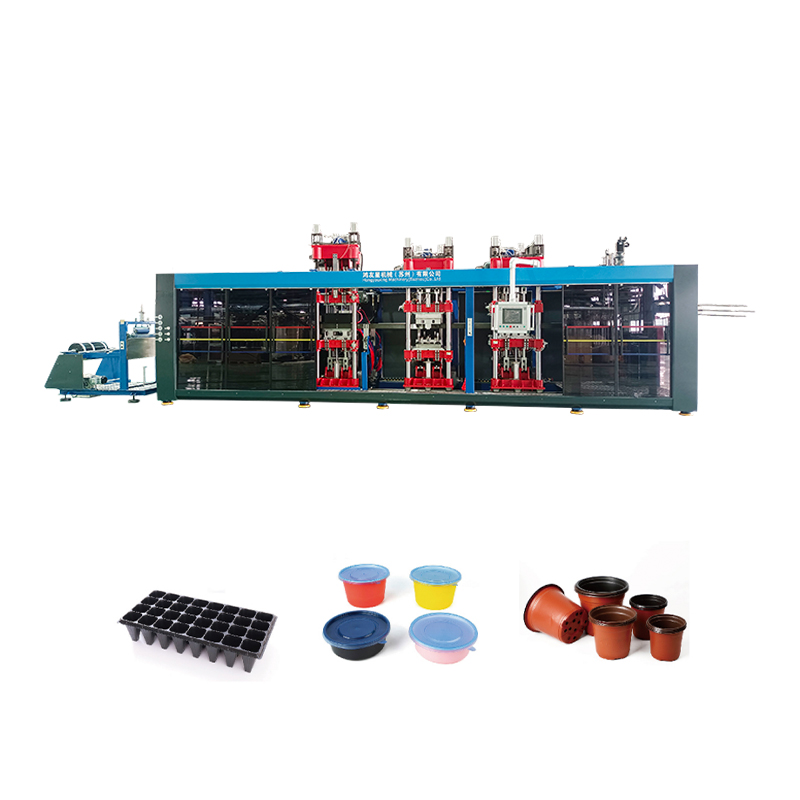
When a packaging or industrial parts buyer compares quotes for the same tray, liner, or clamshell, the first question is usually not about the machine brand. It is about which forming method should be used. Vacuum forming, pressure forming, and injection molding all start with plastic, but they lead to different part geometries, tolerances, cycle times, and tooling costs.
Conclusion first: choose vacuum forming for simple low-cost parts, pressure forming for finer detail, and injection molding only when the part geometry and annual volume justify the mold investment.
This article sets out a practical way of comparing different forming methods, including where each process wins, where it loses, and how to translate those differences into purchasing decisions.
If you only look at the final product, the differences between forming methods may look small. Once the product goes into production, five factors separate them:
These factors can change the quote more than the machine name. A vacuum forming tool for a 600 by 400 mm tray may be cut in aluminum, while an injection mold for the same part would require steel, cooling channels, and ejection pins. That difference often decides the payback period.
None of these factors is good or bad by itself. The right method is the one that fits the part design, annual volume, surface finish requirement, and available tooling budget.
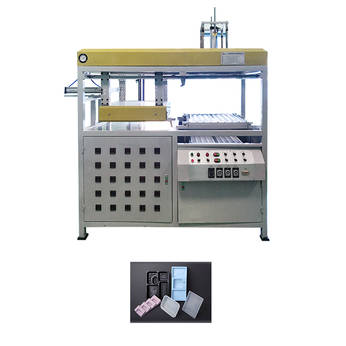
Vacuum forming is often the first comparison point because it is simple. A plastic sheet is heated until soft, then pulled against a single-sided mold by vacuum. It gives fast mold changes, low mold cost, and reliable results for parts with generous draft angles. The limit is that vacuum force is only about 14.7 psi at sea level, so very fine details, sharp corners, deep textures, and undercuts are harder to reproduce.
Pressure forming uses air pressure, often combined with positive and negative pressure integration, to push the sheet into the mold with more force. The results are sharper edges, better logo reproduction, and a cosmetic surface that comes closer to injection molding. For visible parts such as instrument panels, electronics housings, and medical trays, pressure forming is usually the safer choice.
Draw depth is another reference. Vacuum forming is reliable for shallow walls and generous corner radii, while pressure forming can hold deeper side walls when plug assist is used. If the part needs a grained texture or fine logo detail, pressure forming reproduces the pattern more consistently.
| Factor | Vacuum forming | Pressure forming |
|---|---|---|
| Detail reproduction | Low to medium | High |
| Tooling cost | Lower | Medium |
| Typical sheet thickness | 0.3 to 3 mm | 0.3 to 4 mm |
| Surface texture | Limited | Fine |
| Main advantage | Fast and economical | Near-injection detail |
If you are choosing between these two, this pressure forming vs vacuum forming comparison explains the tolerance and mold design rules in more detail.
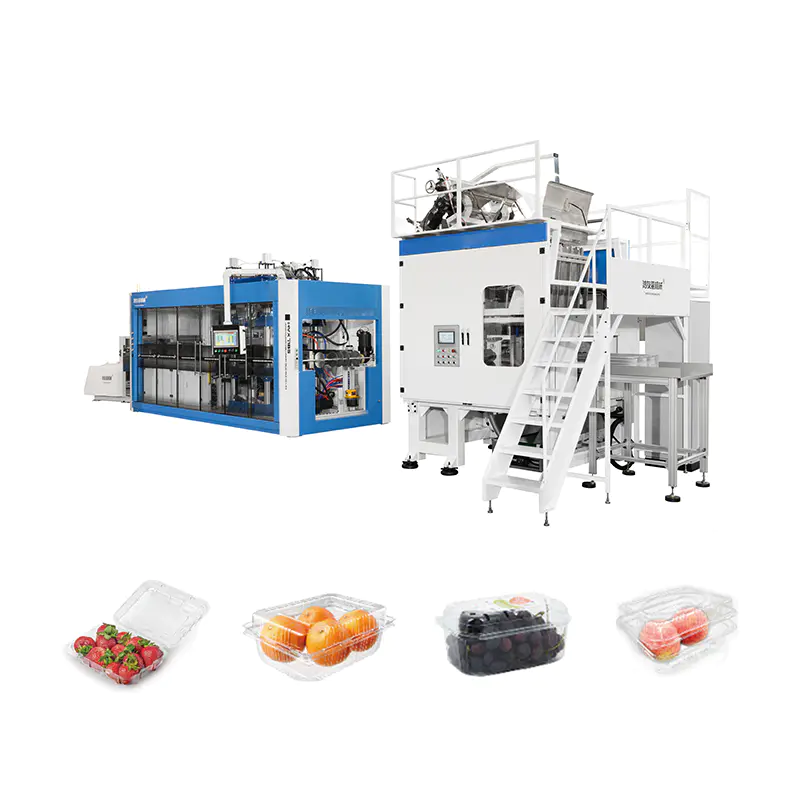
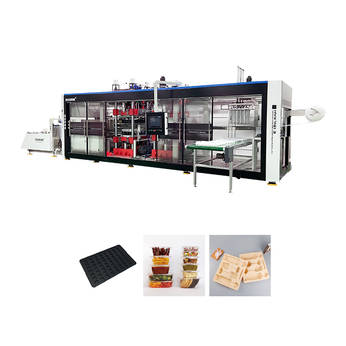
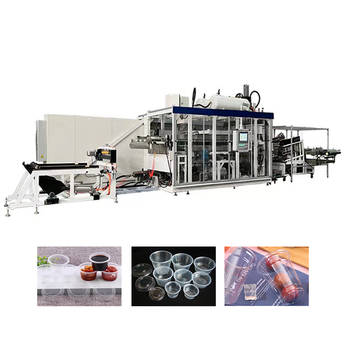
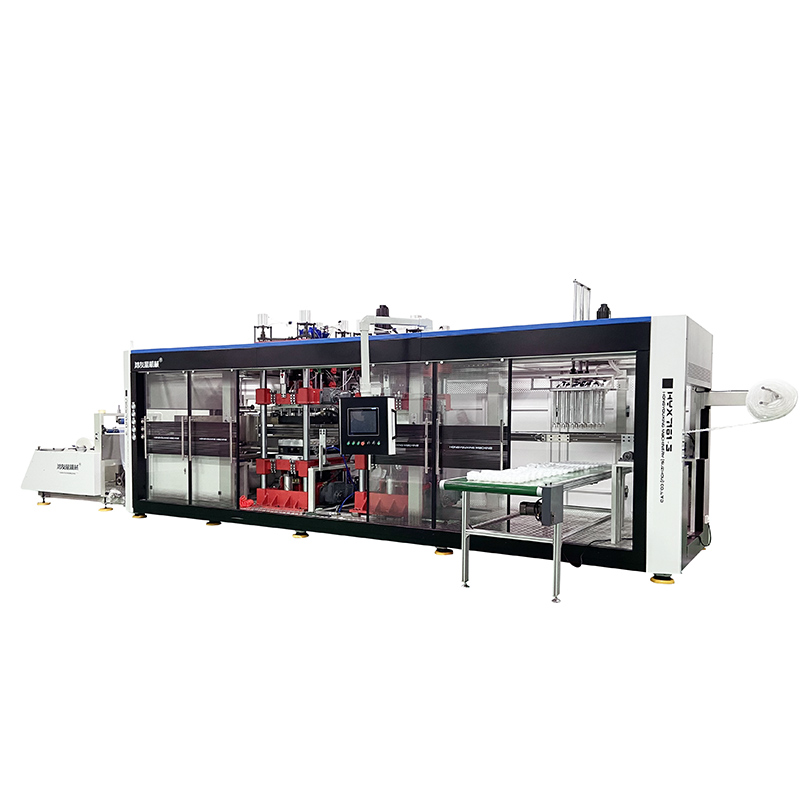 HYX-7161 Fully Automatic 3-Station Thermoforming MachineThis three-station positive-negative pressure former covers heating, forming, and cooling/unloading in one indexed cycle. It suits medium runs and parts that don't require extended cooling, making it a practical option for trays and blisters.View Product →
Once you move beyond a single forming station, comparing different forming methods also means comparing how the machine is set up. A 3-station positive-negative pressure former indexes the sheet through heating, forming, and cooling or unloading. It suits medium runs and components that do not need long cooling before release.
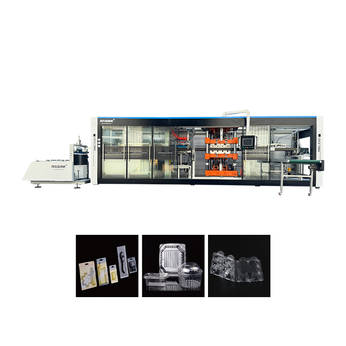
A 4-station machine adds a separate station, usually for cooling or unloading. That gives the part more time under the mold before it is pulled away. The practical effect is lower warpage, tighter dimensional consistency, and easier handling for thin-gauge cups, lids, and trays.
For products with shallow draw and high daily output, the fourth station often pays for itself through fewer rejects. For thicker sheet or parts with complex geometry, it also gives the operator more room to remove parts without extending the cycle.
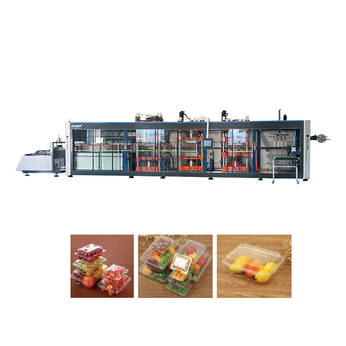
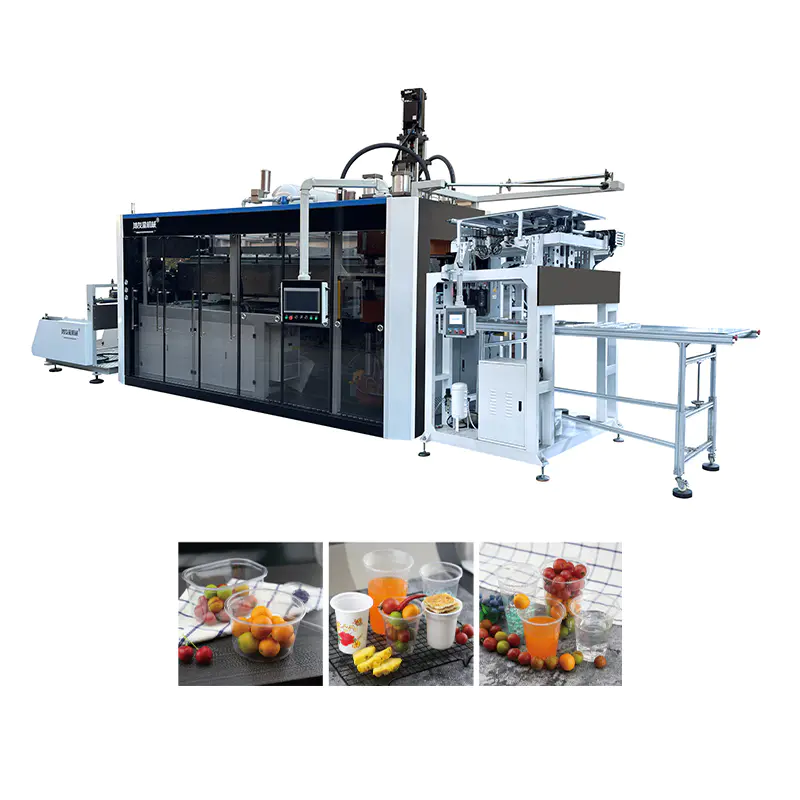
HYX-7161 Fully Automatic 4-Station Thermoforming MachineAdds a punching and cutting station for products with holes, enabling inline forming, punching, cutting, and stacking. The fourth station helps reduce rejects and provides more operator room for part removal without slowing the cycle.View Product →When a project needs tight dimensions and complex undercuts, injection molding becomes the main alternative. But injection molding is also the most expensive process to enter because the mold is machined from tool steel and the machine must hold the two mold halves closed against high pressure.
The raw material story is also different. Thermoforming buys pre-extruded sheet and reheats it, while injection molding feeds pellets into a barrel and creates a new melt. That is why a factory already using extruded sheet can reduce energy and handling steps with thermoforming.
Thermoforming uses a single-sided mold and lower forming pressure, so tooling is lighter, modifications are easier, and small-batch production is more practical. The trade-off is wall thickness distribution and the need for secondary trimming. A thermoformed part cannot reproduce a deeply ribbed injection molded part without extra forming or assembly steps.
A simple selection rule: thermoforming is usually the lower-risk option for large parts, medium and low volumes, or frequent design revisions. Injection molding becomes more attractive when annual volume is high, tolerances are tight, and part geometry requires slides or inserts.
Many factories use both methods in the same plant. Injection molding makes small precision components, while pressure forming produces large panels and trays. Understanding this combination is part of comparing forming methods at plant level, not just machine level.
Before comparing quotes, we ask customers for five pieces of information:
If the first pass points to thermoforming, the next question is which variant. A protective tray with few cosmetic requirements can use vacuum forming. A visible packaging part with embossed detail should use pressure forming. For a 4 mm to 8 mm industrial liner or dunnage tray, a thick-sheet vacuum forming line is often more economical than injection molding.
Short trial runs matter. A prototype vacuum molded from a machined resin tool can be produced within days, which helps confirm draft angles, shrinkage, and trimming method before a production aluminum mold is cut.
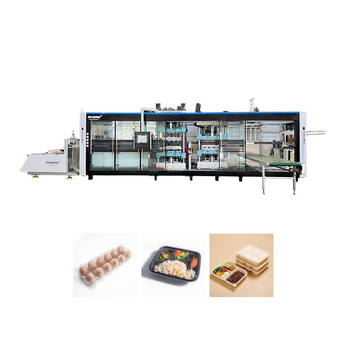
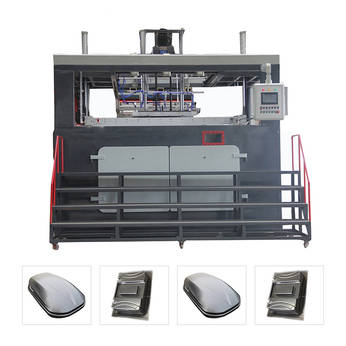
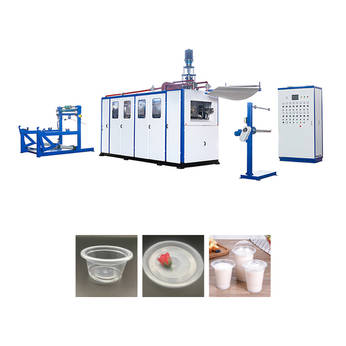
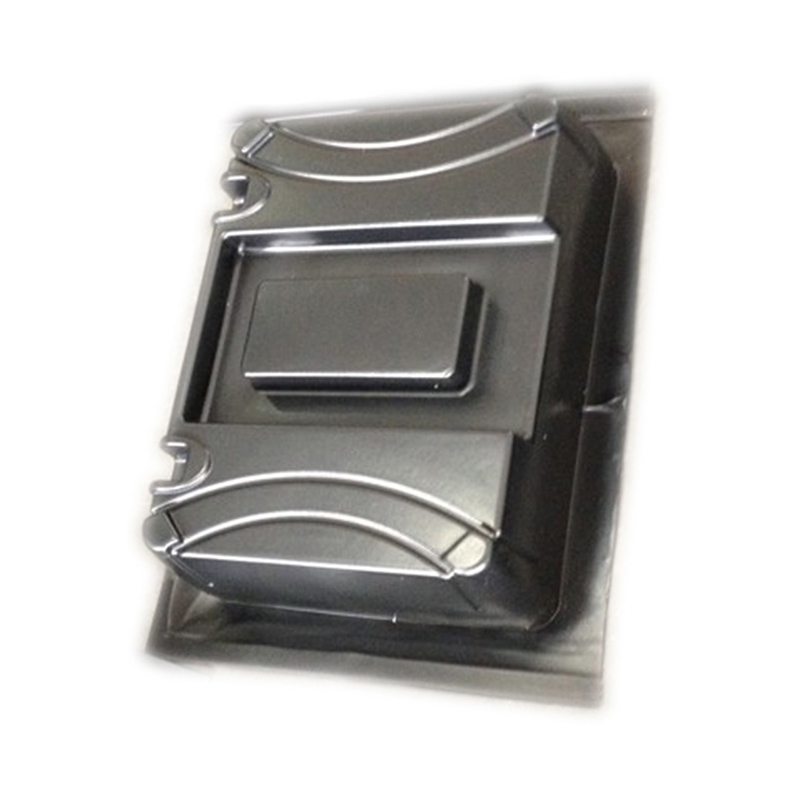 Thick Sheet Vacuum Thermoforming MachineBuilt for large, thick components like car mats and pallets. It features a welded steel frame, dual hydraulic cylinder platform, adjustable pressing frame, and flexible cooling system. Useful for prototyping and short trials before committing to production tooling.View Product →
Material choice matters as well. HIPS is easy to form and low cost, PVC offers clarity, and PP is more sensitive to heating time. The forming method must remain compatible with the material elongation, shrinkage, and heat resistance.
Vacuum forming uses vacuum suction to pull heated plastic sheet against a mold. Pressure forming adds positive air pressure to push the sheet into tighter corners and reproduce finer detail. The practical difference appears in edge sharpness, texture clarity, and dimensional consistency.
Thermoforming is cheaper in tooling and start-up cost, but not always in per-part cost at very high volume. If you need millions of identical small parts with tight tolerance, injection molding can cycle faster and give a lower unit cost after the mold is amortized.
No single rule covers every machine. Thin-gauge formers are faster for sheet below 2 mm, while thick-sheet machines have more heating capacity and stronger platens. A manufacturer that offers both can recommend a machine according to your sheet range and product size.
Comparing different forming methods is not about proving that one process is superior. It is about matching the process to the part, the volume, and the financial situation of the buyer. Vacuum forming remains the fastest route for simple shapes; pressure forming adds precision; and injection molding wins when scale and tolerance dominate.
Because molds, machines, and materials interact, a supplier that builds both molds and forming equipment can give a more honest comparison. That is the approach used in the HYX thermoforming equipment range and in the factory support provided by the Hong You Star team.

 +8618621972598
 +8613917961988
 [email protected]
 No. 565, Xinchuan Road, Xinta Community, Lili Town, Wujiang District, Suzhou City, China
Copyright © 2024 Thermoforming Machine/Plastic Cup Machine All Rights Reserved.Custom Automatic Vacuum Thermoforming Plastic Machine Manufacturers