

 English
 عربى
عربى 简体中文
简体中文
Home / News / Industry News / Manual vs Semi-Automatic Vacuum Forming Machines: A Comprehensive Comparison

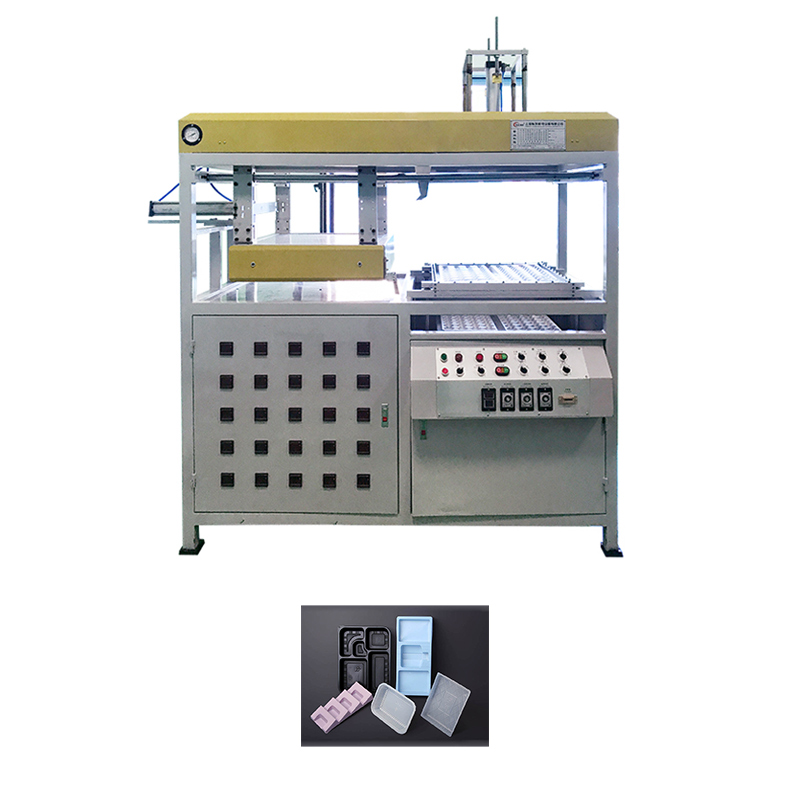
Vacuum forming has become an essential manufacturing process across industries, from packaging and automotive components to signage and consumer products. The process works by heating thermoplastic sheets until pliable, then using vacuum pressure to draw the material into a mold cavity. However, not all vacuum forming equipment operates identically. The choice between manual vacuum forming machines and semi-automatic systems represents a critical decision for manufacturers, makers, and small businesses.
Understanding the distinctions between these two categories goes beyond simple cost comparison. It involves evaluating production speed, labor requirements, material consistency, operator skill levels, and long-term operational costs. This guide explores both systems in detail, helping you determine which technology aligns with your business objectives and production requirements.
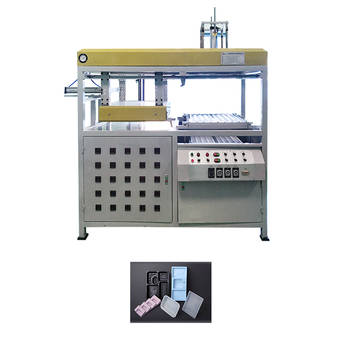
Manual vacuum forming relies on operator intervention for nearly every step of the thermoforming cycle. The operator manually positions the thermoplastic sheet into the machine frame, monitors the heating phase, activates the vacuum pump at the appropriate moment, and removes the finished part from the mold. This hands-on approach characterizes small manual vacuum forming machines and benchtop vacuum forming equipment.
The basic workflow includes: loading the sheet material, securing it in the frame, heating the plastic to optimal forming temperature, positioning the mold beneath the sheet, activating the vacuum pump, holding pressure for the required duration, releasing vacuum, cooling the part, removing the formed piece, and preparing for the next cycle. Each step depends on human judgment and timing.
A typical manual vacuum forming setup consists of:
Manual systems work well for:
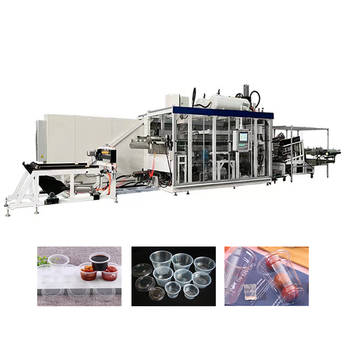
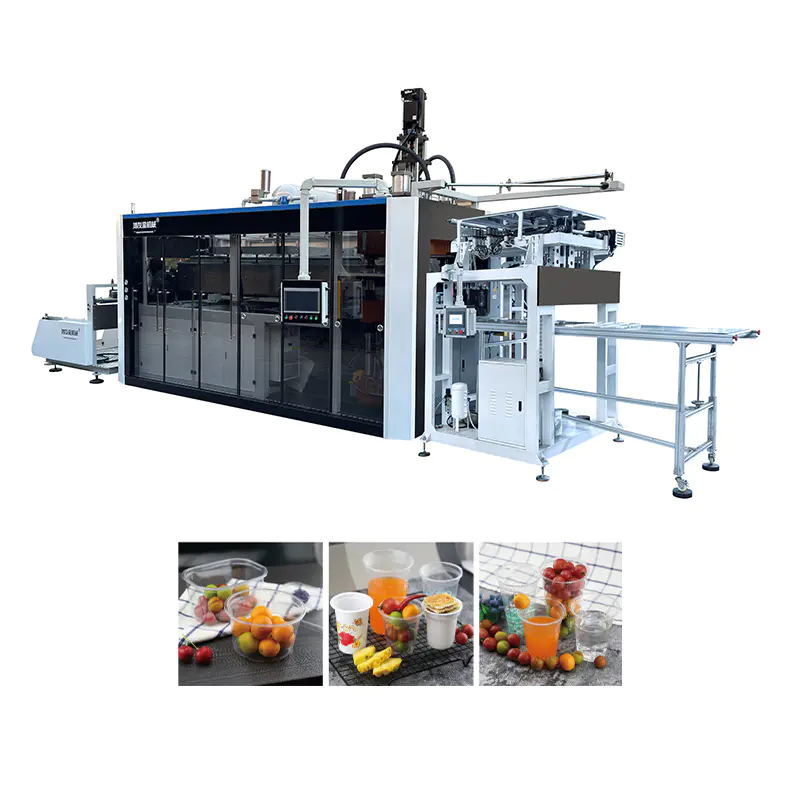
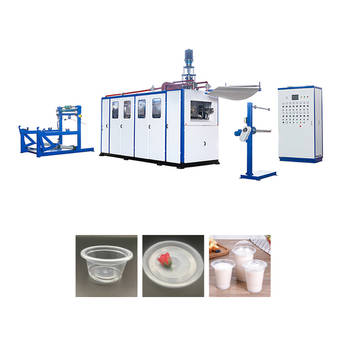
Semi-automatic vacuum forming machines incorporate programmable logic controllers (PLCs) and automated component sequences. Rather than manual activation at each stage, the operator loads the material and initiates a preprogrammed cycle. The machine then automatically manages heating duration, vacuum timing, pressure levels, and cooling sequences according to set parameters.
This category includes industrial manual formers upgraded with automation elements, as well as purpose-built portable vacuum forming equipment designed for more consistent production. The operator's role shifts from active participation in every step to oversight and quality control.
Semi-automatic systems typically feature:
Semi-automatic equipment suits:
| Aspect | Manual Vacuum Forming | Semi-Automatic Vacuum Forming |
|---|---|---|
| Operator Involvement | High - every cycle step | Low - monitoring only |
| Cycle Time | 3-10 minutes per part | 1-5 minutes per part |
| Production Consistency | Variable (operator-dependent) | Consistent (program-controlled) |
| Initial Cost | Lower ($5,000-$20,000) | Higher ($20,000-$60,000+) |
| Labor Efficiency | Requires constant attendance | One operator can manage multiple machines |
| Skill Requirements | Moderate training needed | Initial setup complex, operation simple |
| Material Waste | Higher (trial and error) | Lower (optimized processes) |
| Design Flexibility | Excellent (quick adjustments) | Good (program reprogramming) |
| Maintenance | Simple, minimal downtime | More complex, specialized knowledge |
| Space Requirements | Minimal (compact benchtop options) | Moderate to significant |
Perhaps the most visible difference appears in production throughput. Manual systems typically require 4-8 minutes per complete cycle, including heating, forming, cooling, and part removal. Semi-automatic machines often complete the same sequence in 2-4 minutes, depending on material type and mold complexity.
For example, a facility producing 100 parts daily requires roughly 400-800 operator-minutes with manual equipment, assuming continuous operation. The same facility using semi-automatic systems needs 200-400 operator-minutes, while the machine continues running with minimal supervision. This efficiency multiplies with larger production volumes.
Manual systems introduce variability because each operator brings different timing and pressure interpretations. Part thickness uniformity, surface finish, and dimensional accuracy depend on operator experience and attention. Quality control often requires 100% inspection and frequent scrap.
Semi-automatic systems maintain tighter tolerances because programmed parameters remain constant across every cycle. Once a successful recipe is established, virtually all parts meet specifications, reducing quality control labor and material waste by estimated 30-50%.
The entry price for manual equipment starts around $5,000 for basic benchtop models and reaches $20,000 for industrial-quality manual formers. Semi-automatic systems begin at roughly $20,000 and can exceed $60,000 for systems with advanced features like multiple mold stations or integrated material handling.
This significant upfront difference often deters small operations. However, the capital expenditure calculation must incorporate the production timeline and volumes. A business planning to run for five years sees the daily cost of a $20,000 investment as approximately $11 per day, compared to $55 per day for a $60,000 system. The break-even point depends on labor costs, production volume, and product margins.
Beyond the purchase price, several operational expenses diverge:
Manual systems require dedicated operator presence. If labor costs $25 per hour, a machine requiring 8 hours daily operation costs $200 daily in wages. Semi-automatic equipment might need only 2 hours of active management from that same operator, who can oversee multiple machines. This staffing efficiency often justifies the higher equipment cost within 2-3 years.
Manual operations typically experience 15-25% scrap rates as operators learn optimal settings. Semi-automatic systems reduce this to 5-10% because consistent programming eliminates learning curve waste. For operations processing $10,000 monthly in materials, this difference represents $1,000-$1,500 monthly savings.
Manual systems waste energy through prolonged heating cycles if an operator isn't ready at the critical moment. Semi-automatic machines optimize heating duration, consuming approximately 10-20% less energy per part. Annual energy savings of $2,000-$5,000 are realistic for moderate-volume operations.
Manual equipment features simpler mechanics, requiring minimal specialized maintenance. Semi-automatic systems need regular sensor calibration, software updates, and preventive maintenance for pneumatic or hydraulic components. Annual maintenance budgets might range from $1,000 for manual systems to $3,000-$5,000 for semi-automatic models.
For a operation producing 5,000 parts annually over five years:
In this scenario, the semi-automatic investment recovers costs through labor and material efficiency, despite higher upfront and maintenance expenses.
Low Initial Investment: Accessibility is manual systems' strongest benefit. Small businesses, schools, and makers can acquire equipment for under $10,000, enabling participation in vacuum forming without major capital commitment.
Design Flexibility and Rapid Prototyping: Manual operation allows immediate adjustments to heating duration, vacuum timing, and mold positioning. Designers can iterate quickly, testing multiple mold variations in a single day. This agility is invaluable during product development phases.
Simplicity and Reliability: Fewer electronic components mean fewer failure points. Troubleshooting rarely requires specialized technicians. Operators can often resolve issues independently, minimizing downtime.
Space Efficiency: Benchtop vacuum forming machines occupy minimal space, suitable for shared workshops, educational labs, or small studios. Portability enables equipment relocation as needed.
Material Compatibility: Manual systems work effectively with diverse thermoplastic materials including ABS, PVC, PET, and acrylic. Operators can easily adjust parameters for material-specific requirements without complex reprogramming.
Production Throughput: Manual operation fundamentally limits output. Even experienced operators cannot exceed certain cycle rates, making large-volume production impractical or economically unfeasible.
Consistency Challenges: Human variability introduces inconsistencies in part quality. Different operators, varying attention levels, and fatigue effects create dimensional and aesthetic variations that complicate quality control and customer satisfaction.
Labor Intensity: Continuous operator presence becomes economically unsustainable as production scales. Labor costs compound with each additional part, making manual systems uneconomical beyond certain volume thresholds.
Skill Dependency: Output quality heavily depends on operator experience. Training new staff requires significant time investment, and learning curves delay productivity. Experienced operators becoming unavailable disrupts production.
Fatigue and Safety Concerns: Repetitive manual operations cause operator fatigue, increasing injury risk and quality degradation. Handling hot materials and operating heating elements continuously poses safety considerations requiring careful management.
Consistent Production Quality: Programmed parameters eliminate operator variability. Every cycle follows identical heating, vacuum, and cooling profiles, producing parts with uniform dimensions, wall thickness, and surface finish.
Superior Labor Efficiency: One operator can manage multiple machines simultaneously, dramatically reducing per-unit labor costs. A single employee monitoring several semi-automatic systems can outproduce multiple manual operators.
Faster Cycle Times: Automated sequences optimize each phase, reducing overall cycle duration. Accumulated across thousands of cycles, this efficiency multiplies into substantial time and cost savings.
Reduced Material Waste: Consistent processes minimize scrap rates. Optimized heating and pressure parameters extract maximum usable material from each sheet, reducing waste and environmental impact.
Scalability: Semi-automatic systems accommodate production scaling without proportional labor cost increases. Expansion occurs through purchasing additional machines or extended operation hours, not necessarily hiring more staff.
Data Tracking and Process Control: Many semi-automatic systems log cycle data, tracking parameters and outcomes. This documentation supports quality assurance, compliance documentation, and continuous process improvement.
Higher Capital Requirements: Initial investment of $20,000-$60,000 creates financial barriers for small operations and startups. Equipment financing may be necessary, adding interest costs to the total investment.
Setup Complexity: Configuring automated cycles requires technical expertise. Parameter optimization, testing, and refinement demand time and specialized knowledge. Setup delays can postpone production by days or weeks.
Reduced Design Flexibility: Making changes to part designs requires modifying programmed sequences and often rebuilding or adjusting molds. Rapid design iteration becomes more time-consuming than with manual systems.
Maintenance and Technical Support: Automated systems incorporate sensors, controllers, and pneumatic/hydraulic components requiring specialized maintenance knowledge. Technical support dependence increases operational complexity and potential downtime duration.
Less Suitable for One-Offs: Setup time and complexity make semi-automatic systems uneconomical for single-part or ultra-low-volume production. The break-even threshold typically requires minimum batch sizes of 50-100 units.
Learning Curve for Parameters: While operation becomes simple after setup, optimizing cycle parameters requires understanding material properties, heating dynamics, and vacuum physics. Initial parameter development can involve frustrating trial-and-error phases.
Educational Institutions: Schools and universities utilize manual equipment to teach thermoforming principles without major investment. Students learn hands-on machine operation and material behavior through direct engagement.
Maker Spaces and Hobbyists: DIY thermoforming enthusiasts prefer manual equipment for its accessibility and learning potential. Community workshops share benchtop machines enabling member access to vacuum forming technology.
Prototyping and Design Studios: Product designers and inventors use manual systems for rapid iteration and design validation. The ability to quickly modify mold positioning and try different parameters accelerates development cycles.
Custom/Artisanal Production: Craftspeople creating limited-run artistic products benefit from manual equipment's flexibility and lower investment. Bespoke thermoformed art pieces and unique designs suit manual systems well.
Sample and Test Batches: Manufacturers validating new products or testing market demand use manual systems to produce samples without major capital commitment. Volumes rarely justify semi-automatic investment at this stage.
Packaging Manufacturing: Food packaging, blister packs, and protective containers require consistent quality and high volumes. Semi-automatic equipment maintains the uniformity essential for regulatory compliance and brand consistency.
Automotive Components: Dashboard panels, air ducts, and interior trim pieces demand precise dimensions and repeatable quality. Automotive supply chains favor semi-automatic systems for their consistency and traceability.
Consumer Products: Appliance components, toy packaging, and electronics enclosures produced at volumes of thousands benefit from semi-automatic efficiency. Labor cost reduction becomes crucial at this scale.
Medical Device Housings: Regulatory environments and quality requirements in medical manufacturing make semi-automatic systems' consistency and documentation capabilities essential.
Signage and Displays: Commercial signage production and retail display elements often require consistent appearance. Semi-automatic systems produce the uniformity necessary for professional presentation.
Some sophisticated operations maintain both manual and semi-automatic systems. Manual equipment handles prototyping, low-volume custom work, and design validation. Semi-automatic equipment manages production of validated, consistent designs. This hybrid approach balances flexibility with efficiency, though it requires managing two different technology platforms.
When evaluating equipment, several technical specifications determine suitability for your application:
Thermoplastic Types: Different materials have different forming characteristics. Acrylic forms at lower temperatures (320-360°F) and requires careful control to prevent crazing. ABS tolerates broader temperature ranges (300-350°F). PVC demands lower temperatures (300-320°F) and careful attention to avoid degradation.
Sheet Thickness: Material gauge (typically 0.015" to 0.250") affects heating time and forming pressure requirements. Thicker materials heat more slowly but provide greater mold detail reproduction. Thinner sheets heat rapidly but risk tearing during deep draws.
Mold quality fundamentally affects part quality and machine compatibility. Considerations include:
The choice between manual and semi-automatic systems depends on multiple intersecting factors:
Answer these questions to guide your decision:
Manual equipment requires regular maintenance to ensure safety and longevity:
Automated systems require more specialized maintenance:
Thermal Safety: Both system types heat plastic materials to 300-400 degrees Fahrenheit. Personnel must maintain proper distance from heating elements. Thermal gloves protect hands during material handling. Emergency cooling procedures should be established and understood by all operators.
Vacuum System Safety: Sudden vacuum release can create sudden pressure changes. Guards around mold areas prevent hand contact with vacuum-drawn materials. Proper ventilation removes vapors from heating plastic. Vacuum pressure release should occur slowly and in controlled manner.
Electrical Safety: Proper grounding prevents electrical hazards. Regular electrical inspections identify deterioration before failure. Operators should receive electrical safety training appropriate for their experience level.
Operator Training: Manual systems require hands-on training covering material handling, temperature monitoring, vacuum operation, and emergency procedures. Semi-automatic systems require training on parameter programming, sensor interpretation, and troubleshooting.
Vacuum forming technology continues evolving. Recent developments include integration of artificial intelligence for parameter optimization, enabling machines to automatically adjust heating and vacuum profiles based on real-time sensor feedback. Vision systems inspect parts immediately after forming, identifying defects for real-time process correction.
Industry 4.0 connectivity increasingly appears in semi-automatic systems, enabling remote monitoring and data analysis. Operators can track production metrics, predict maintenance needs, and optimize efficiency through cloud-based analytics platforms.
Advances in thermoplastic materials expand vacuum forming possibilities. Bio-based and recycled materials with different thermal properties require evolving forming techniques. Equipment manufacturers continuously adapt heating and pressure capabilities to accommodate emerging sustainable materials.
Sustainability focus drives improvements in material efficiency and energy consumption. Modern systems incorporate better insulation reducing energy waste. Scrap reduction initiatives minimize material waste. Some equipment explores heating element innovations reducing energy requirements while maintaining forming consistency.
Equipment manufacturers increasingly develop systems combining manual flexibility with semi-automatic consistency. Programmable manual systems allow operators to record successful cycles, then automatically repeat them with human-adjustable parameters. These hybrid approaches bridge the gap between fully manual and fully automatic systems.
Partial upgrades are possible but rarely economical. Adding basic timers and solenoid valve controls might automate some functions, but achieving true semi-automatic consistency requires control systems, sensors, and integration with machine architecture. Usually, investing in purpose-built semi-automatic equipment proves more reliable and cost-effective than retrofitting older manual machines.
Well-maintained manual systems often operate effectively for 10-15 years or longer. Simple mechanics mean fewer failure points. Semi-automatic systems typically have 8-12 year practical lifespans as control system components degrade and become obsolete. However, major component replacement can extend useful life significantly.
Manual systems require moderate hands-on training covering material heating, timing judgment, vacuum operation, and safety procedures. Competent operation typically develops within 20-40 hours of supervised practice. Semi-automatic systems require initial technical setup training (50-100 hours for full parameter optimization capability) but then simpler operational training as basic operation becomes routine once configured.
Most common thermoplastics work with both. ABS, acrylic, PVC, and PET form successfully in manual and semi-automatic systems. Specialty materials like polycarbonate, polystyrene, and various filled polymers also work with both, though parameter optimization differs. Material data sheets guide temperature and pressure selection for each system type.
Use this rough guideline: if producing fewer than 5,000 identical parts annually, manual systems typically prove most economical. From 5,000-20,000 parts, detailed cost analysis considering labor rates and material waste is necessary. Exceeding 20,000 parts annually almost always justifies semi-automatic investment. Regional labor costs significantly affect this threshold.
Semi-automatic systems require operator loading and unloading of material sheets and typically require part removal after forming. Fully automatic systems incorporate robotic material handling, automated part removal, and complete cycle management with minimal human interaction. Fully automatic equipment costs substantially more (typically $100,000+) and suits only very high-volume production scenarios.
Yes, properly designed molds work in both systems. Key mold design principles like adequate venting, appropriate draft angles, and surface finish apply universally. However, semi-automatic systems might require slightly different mold positioning or attachment methods compared to manual equipment, so some adaptation might be necessary.
Manual systems allow mold changes within 15-30 minutes typically. The operator simply removes the current mold, positions the new mold, and adjusts heating/vacuum parameters as needed. Semi-automatic systems require mold changes and complete cycle reprogramming, potentially taking 2-4 hours for complex parameter optimization with new molds.
Thicker materials (0.100" and above) require longer heating times and higher vacuum pressure, increasing cycle duration significantly. Thinner materials (0.015"-0.040") heat quickly but risk tearing during deep draws. Mid-range materials (0.060"-0.090") typically form most easily in both system types, representing the practical sweet spot for most applications.
Room temperature significantly affects results. Ideally, operating environments maintain 70-75 degrees Fahrenheit. Cooler environments slow heating cycles increasing cycle time. Warmer environments might complicate cooling phases. Humidity control is equally important, as moisture absorption in thermoplastics affects forming characteristics. Climate-controlled facilities produce most consistent results.

 +8618621972598
  +8613917961988
  [email protected]
 No. 565, Xinchuan Road, Xinta Community, Lili Town, Wujiang District, Suzhou City, China
 Copyright © 2024 Thermoforming Machine/Plastic Cup Machine All Rights Reserved.Custom Automatic Vacuum Thermoforming Plastic Machine Manufacturers