



 English
 عربى
عربى 简体中文
简体中文
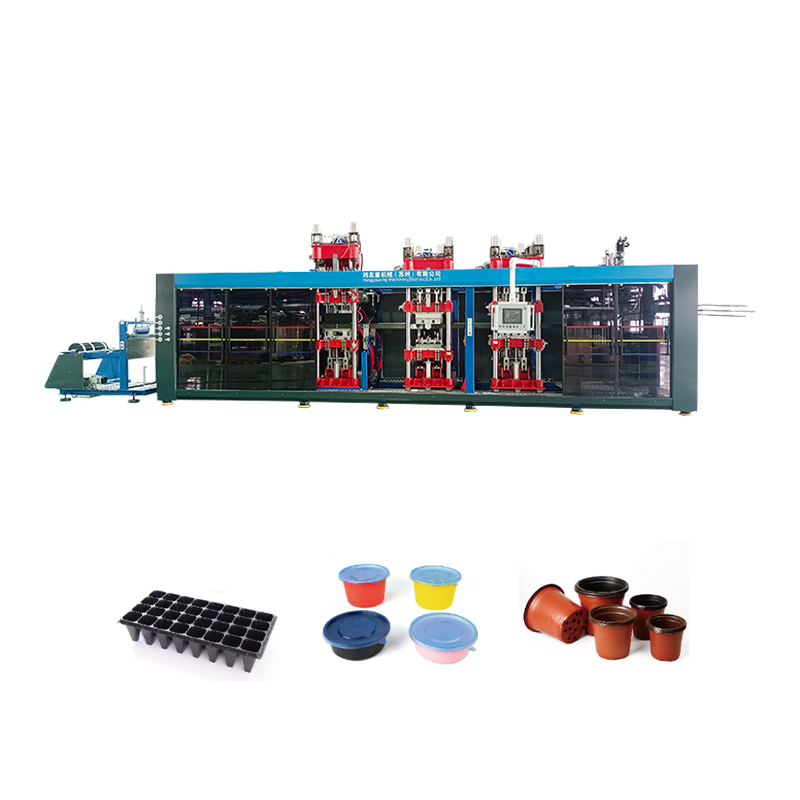
Why leading manufacturers are shifting to thermoforming for medium-to-large parts — and when injection molding still wins.
-68% avg. saving
-55% faster ramp-up
-32% with advanced trimming
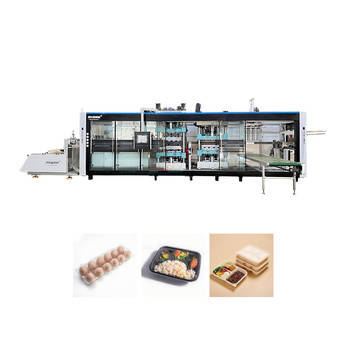
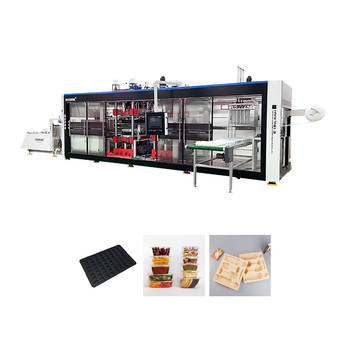
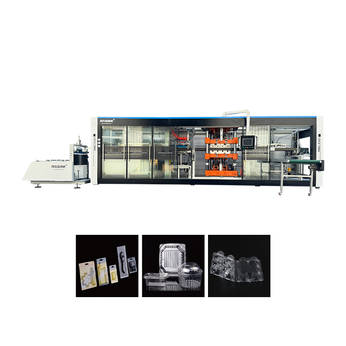
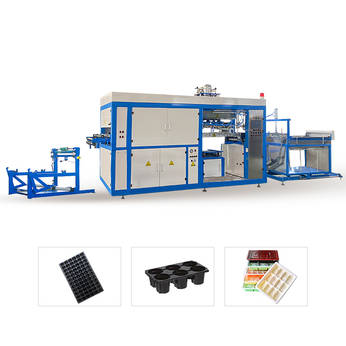
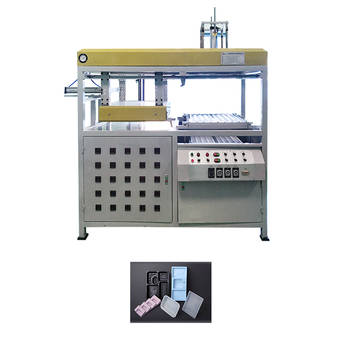
Thermoforming Machine technology has evolved dramatically, offering production speed and tooling economics that challenge traditional injection molding. This article dissects quantifiable advantages, process workflows, and cost structures to guide your manufacturing decision.
1. Tooling Cost & Lead Time: Thermoforming vs. Injection Molding
Thermoforming tooling costs are typically 60–70% lower than injection molds, with lead times reduced by more than half. For production runs under 100,000 units, the thermoforming machine offers a compelling ROI.
2. Production Speed & Cycle Time Benchmark
While injection molding cycles are shorter (18–25s vs. 28–40s), thermoforming technique excels in low-to-medium volume where tool change and cavity count matter. Advanced thermoforming lines now achieve 25% faster heating with ceramic IR systems.
3. Material Waste Reduction Over Production Runs
Material waste reduction is a hidden advantage: modern thermoforming with scrap recycling and closed-loop trimming reduces waste from 18% to below 7% in high-volume runs, outperforming injection molding's 12–15% typical sprue/runners loss.
4. Multi-Dimensional Process Comparison (Radar)
The radar chart illustrates that thermoforming manufacturing scores higher on tooling cost, design flexibility, and material utilization, while injection molding leads in cycle speed and absolute precision. The choice depends on your volume–complexity matrix.
5. Process Flow: Thermoforming vs. Injection Molding
The thermoforming technique eliminates complex injection screws and cooling channels, reducing energy consumption by up to 40% for parts with wall thickness > 2mm. The linear process flow also simplifies automation.
6. Detailed Cost & Efficiency Matrix
Thermoforming cost efficiency is most pronounced in large-part production, with tooling amortization up to 5x faster than injection molding. For runs between 5,000 and 100,000 units, thermoforming delivers a 38–52% lower total cost per part.
7. Core Advantages of Thermoforming in Modern Manufacturing
- Lower tooling investment – aluminum molds vs. hardened steel.
- Faster design iterations – 3D printed molds for prototyping.
- Material versatility – ABS, HDPE, PETG, PC, and more.
- Reduced scrap – regrind and reuse of thermoplastic sheets.
- Energy efficiency – only heats the sheet, not the entire mold block.
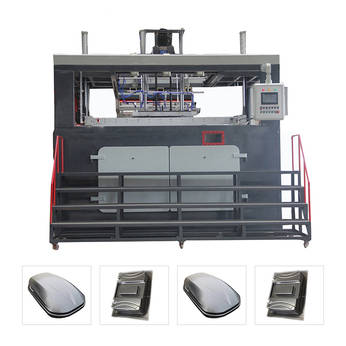
Advantages of thermoforming extend to design freedom: undercuts, texturing, and insert molding are achievable with advanced thermoforming machine configurations. The process supports both thin-gauge and heavy-gauge applications.
Frequently Asked Questions
Q1: What is the main advantage of thermoforming over injection molding?
The primary advantage is significantly lower tooling cost and faster time-to-market. Thermoforming uses single-sided aluminum molds that cost 60–80% less than injection molds, with lead times of 6–8 weeks versus 14–22 weeks for injection molding.
Q2: When should I choose thermoforming instead of injection molding?
Choose thermoforming for parts with large surface area, medium production volumes (1,000–100,000 units), and when design flexibility or material changes are frequent. Injection molding is better for high-volume, small, intricate parts that require tight tolerances.
Q3: How does material waste compare between the two processes?
Thermoforming typically generates 5–9% waste, which is often recyclable back into sheet extrusion. Injection molding waste (sprues, runners, gates) ranges from 10–16%, though it can be reground, but with more contamination risk.
Q4: Is thermoforming suitable for high-volume production?
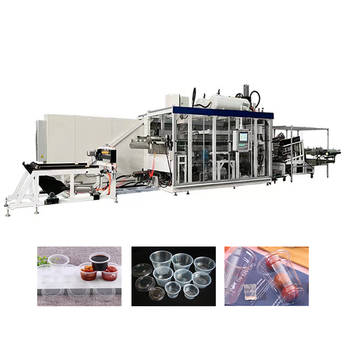
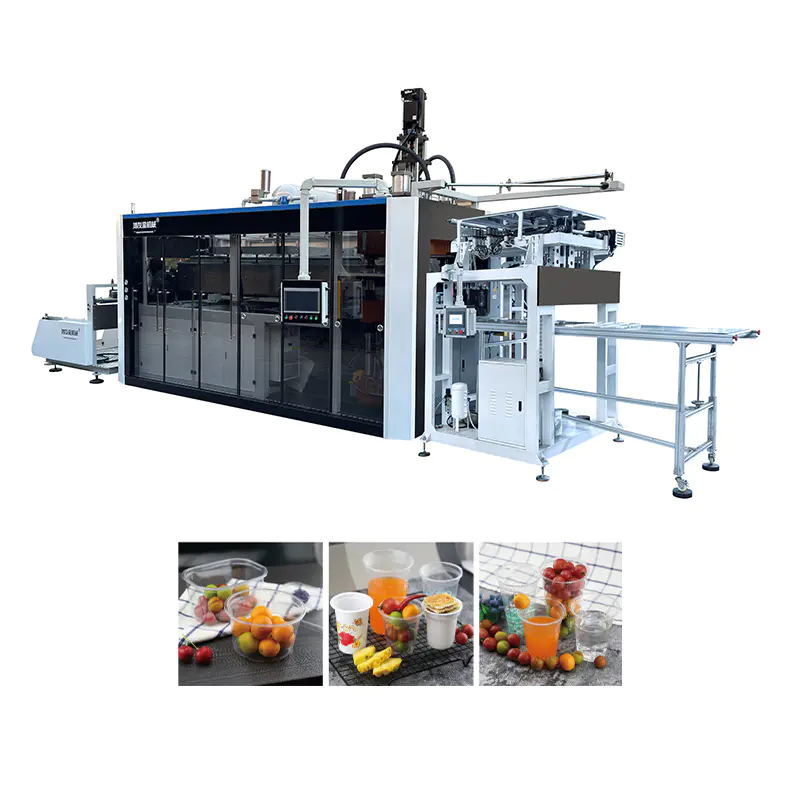
Yes, with advanced inline trimming and stacking, thermoforming lines can produce 500–1,200 parts per hour. For volumes above 500,000 units, injection molding may become more cost-effective, but newer servo-driven thermoforming machines are narrowing the gap.

 +8618621972598
  +8613917961988
 No. 565, Xinchuan Road, Xinta Community, Lili Town, Wujiang District, Suzhou City, China