

 English
 عربى
عربى 简体中文
简体中文
Home / News / Industry News / What Drives Thermoforming Cost Efficiency in 2026? A Data-Driven Market & Technology Review

CAGR of 5.8% driven by sustainable packaging and high-speed cup production.
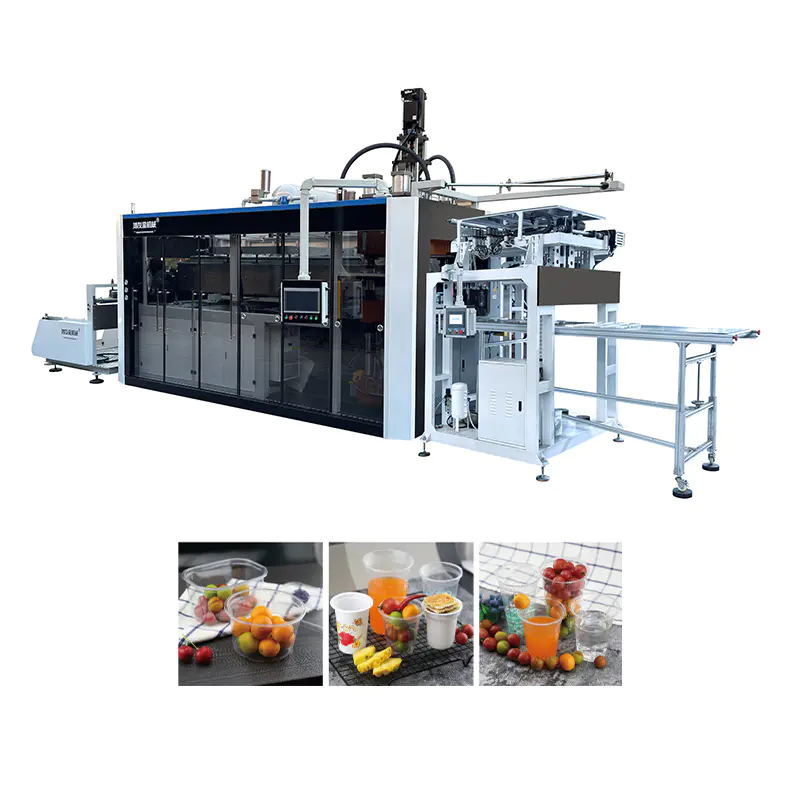
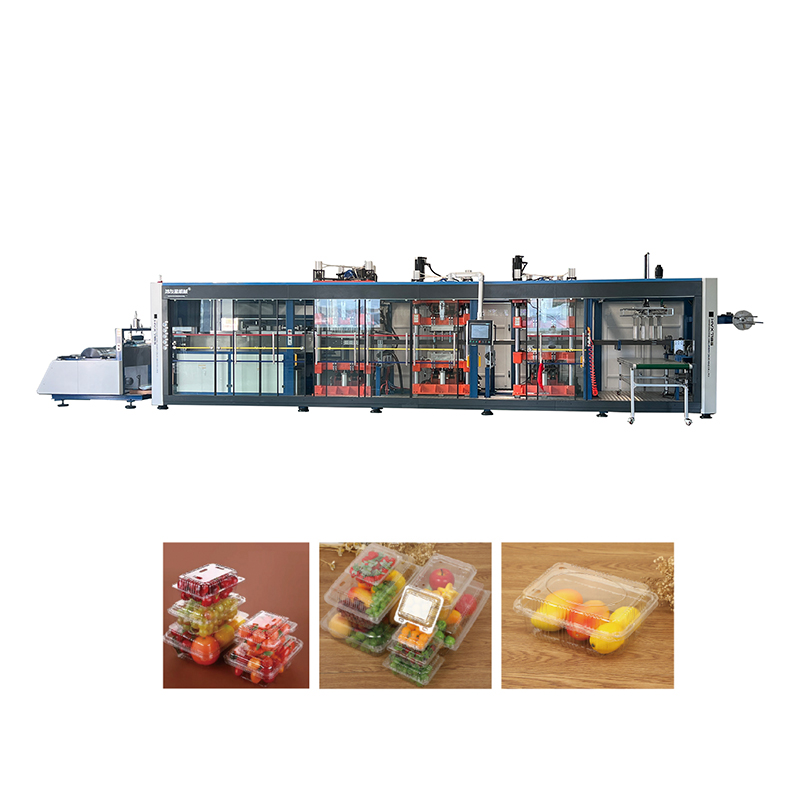
Advanced servo-driven thermoforming machine designs improve efficiency.
Sustainability drives material innovation in the plastic cup making machine segment.
How much does thermoforming cost? The answer depends on material selection, energy consumption, labor, and machine utilization. For a typical high-volume thermoforming machine producing 250ml cups, the cost per 1,000 units ranges from $18 to $42, with material accounting for 55-68% of total variable costs.
Material costs have stabilized after the 2024 resin price volatility, but energy remains a key lever for cost optimization. Modern thermoforming machine systems with regenerative drives can reduce energy consumption by up to 22% compared to conventional hydraulic units.
The heavy gauge thin gauge thermoformed plastic market is experiencing a structural shift. Thin-gauge (0.2–1.5mm) applications—primarily cups, lids, and clamshells—dominate volume, while heavy-gauge (1.5–6mm) parts for automotive and industrial trays command higher margins.
Market share by volume (2025)
Thermoforming ROI depends on throughput, scrap rate, and energy efficiency. A mid-speed plastic cup making machine running 22 hours/day at 40 cycles/min can achieve payback in 18–24 months. The following chart compares ROI drivers across three common production scales.
High-speed plastic cup making machine configurations with integrated scrap regrind systems show 30% better ROI compared to standalone units, primarily due to reduced raw material waste.
Electricity accounts for 18% of total operating costs. Servo-electric thermoforming machine systems cut energy use by 28% vs. hydraulic.
Automated stackers and in-line leak testers reduce manual intervention by up to 40% per shift.
Post-industrial recycled (PIR) content now reaches 35–50% in thin-gauge food packaging without compromising cycle times.
| Cost component | 2024 | 2025 | 2026 (est.) | Change |
|---|---|---|---|---|
| Resin (PET/PS) | $1.42/kg | $1.38/kg | $1.35/kg | -5% |
| Energy per 1k cups | $3.20 | $2.90 | $2.75 | -14% |
| Labor per shift | $185 | $192 | $198 | +7% |
| Maintenance & consumables | $0.08/cup | $0.075/cup | $0.072/cup | -10% |
Sustainable packaging trends are accelerating the shift to mono-material structures and bio-based resins. In 2025, 62% of new plastic cup making machine installations included compatibility with PLA and PHA materials. The following radar chart compares key sustainability criteria across three common thermoforming materials.
PET remains the most balanced option, while PLA shows strong biobased and recyclability scores but lags in barrier properties. This directly influences thermoforming packaging news as converters invest in multi-material capable systems.
High-speed cup production economics favor output above 45 cycles/min. At this speed, the cost per thousand cups drops below $22 for standard 250ml sizes. The breakeven point for upgrading to a high-speed plastic cup making machine is typically reached at 8 million cups annually.
At 55 cycles/min, the incremental energy and labor costs are nearly flat, making high-speed plastic cup making machine investments highly attractive for medium-to-large producers.
Recent thermoforming packaging news highlights three major developments: (1) EU’s PPWR (Packaging and Packaging Waste Regulation) driving 30% recycled content mandates by 2028, (2) emergence of digital twin systems for real-time scrap reduction, and (3) a 15% increase in demand for in-mold labeled (IML) cups, which command a 20% price premium.
Key insight: Converters who adopt AI-driven process control on their thermoforming machine lines report 9% higher OEE (Overall Equipment Effectiveness) compared to conventional setups.
For a high-volume thermoforming machine producing thin-gauge cups, the payback period typically ranges from 18 to 28 months, depending on utilization rate and material savings from integrated scrap recycling.
At full production capacity (45 cycles/min), the fully loaded cost is approximately $0.018–$0.024 per cup, with material representing about 62% of that cost.
PET (polyethylene terephthalate) offers the best balance of cost, clarity, and recyclability. However, PP (polypropylene) is gaining ground for hot-fill applications despite slightly higher cycle times.
Key trends include: (a) shift to mono-material structures, (b) increased use of rPET and bio-based resins like PLA, (c) lightweighting to reduce material usage, and (d) design for recyclability guidelines from organizations like CEFLEX.
Increasing speed from 30 to 50 cycles/min reduces cost per thousand cups by approximately 28%, primarily by spreading fixed costs (labor, overhead) over more output and reducing energy per part.
Thin-gauge (under 1.5mm) is used for disposable cups, lids, and clamshells; heavy-gauge (over 1.5mm) is used for durable trays, automotive parts, and industrial packaging. The economics and machine specifications differ significantly.

 +8618621972598
  +8613917961988
  [email protected]
 No. 565, Xinchuan Road, Xinta Community, Lili Town, Wujiang District, Suzhou City, China
 Copyright © 2024 Thermoforming Machine/Plastic Cup Machine All Rights Reserved.Custom Automatic Vacuum Thermoforming Plastic Machine Manufacturers