

 English
 عربى
عربى 简体中文
简体中文
Home / News / Industry News / What Makes an Automatic Thermoforming Machine Essential for Modern Manufacturing

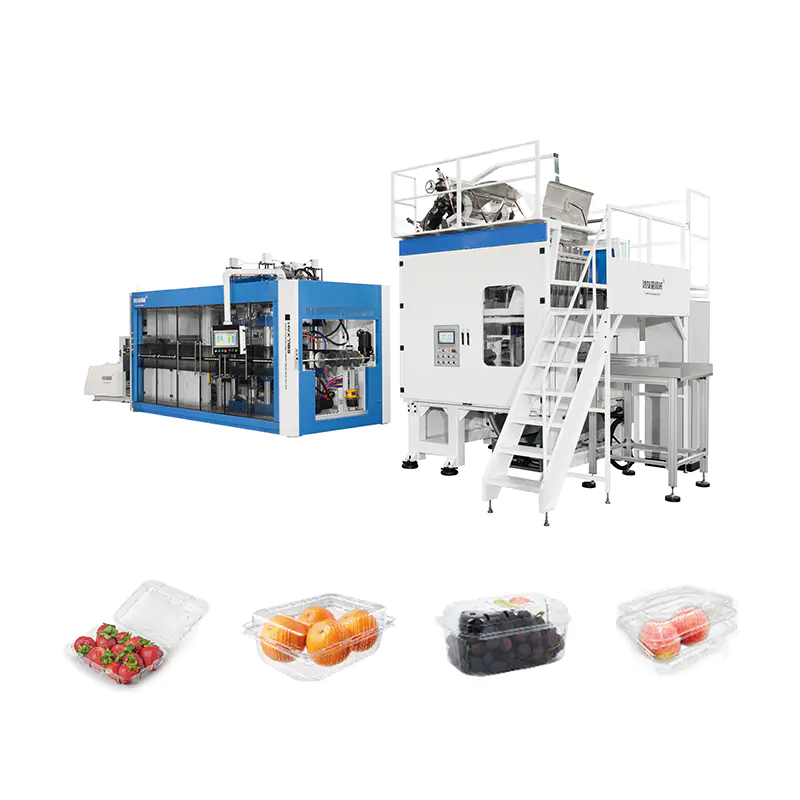
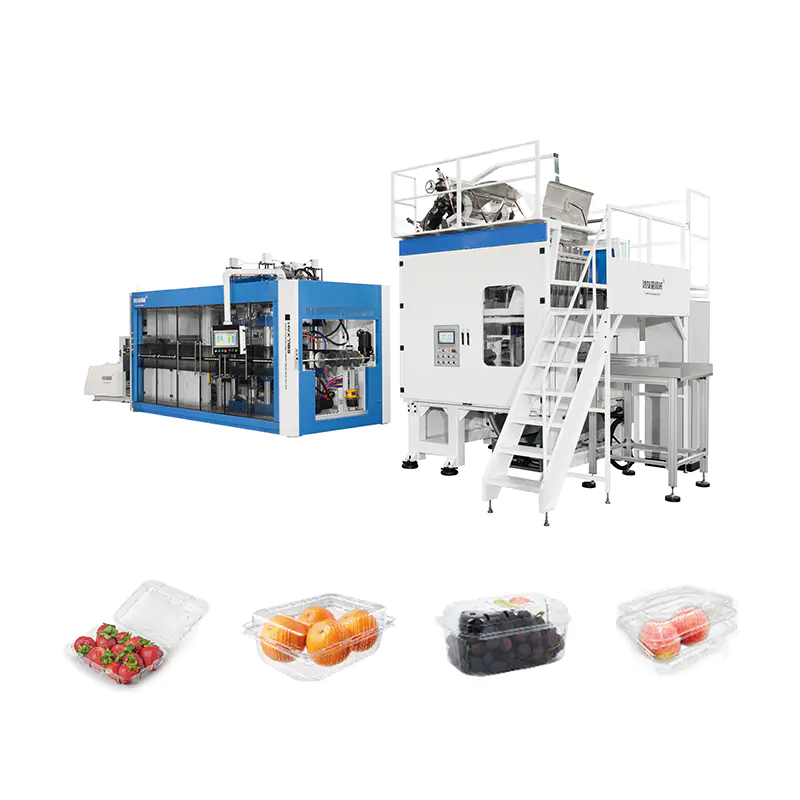
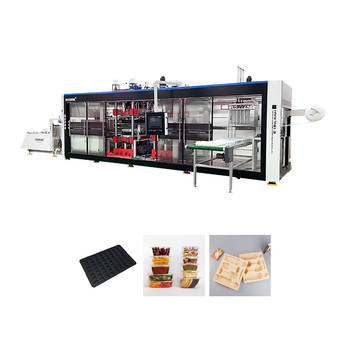
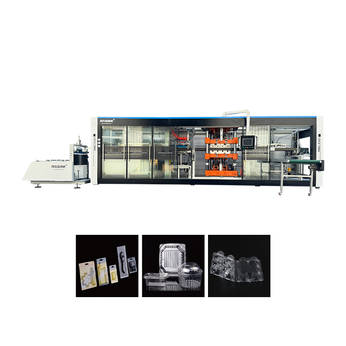
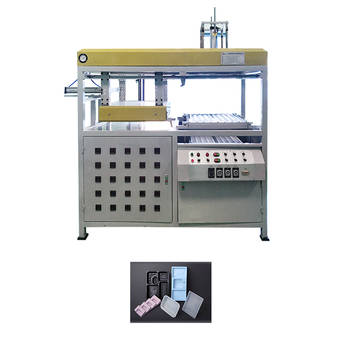
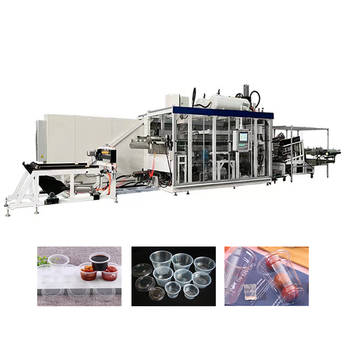
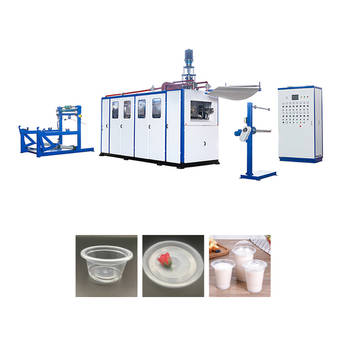
An automatic thermoforming machine is essential for modern manufacturing because it delivers consistent quality, high output speeds, and significant reductions in labor and material waste — all within a single automated production line. For industries such as food packaging, medical devices, electronics, and consumer goods, the ability to form, trim, and stack plastic parts at scale without manual intervention is no longer a luxury — it is a competitive necessity.
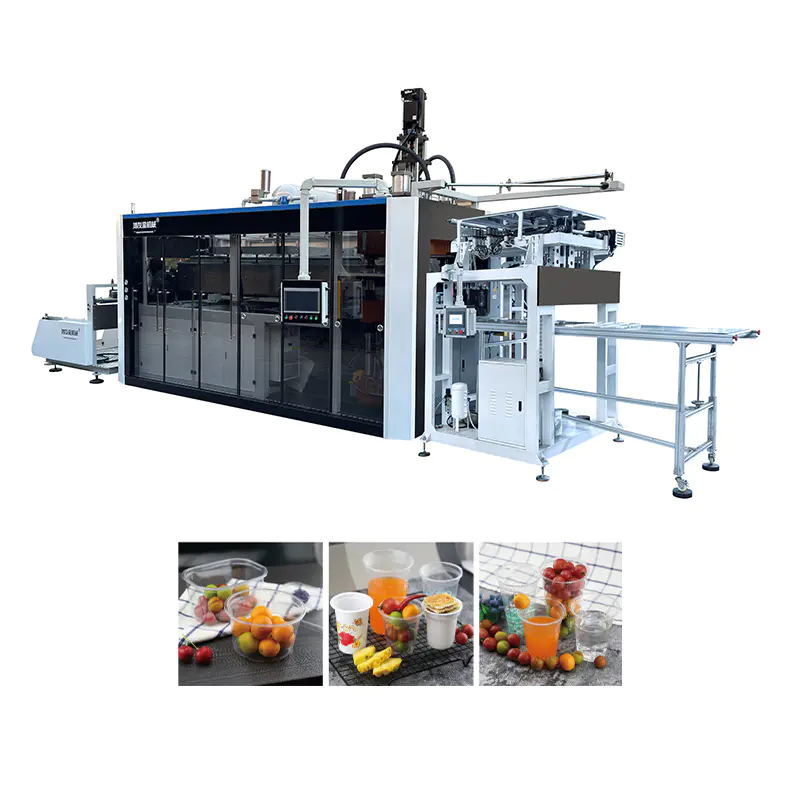
Factories that have adopted High Speed Automatic Thermoforming Machine technology report cycle times as low as 3–5 seconds per sheet, output rates exceeding 60,000 parts per hour for small components, and material utilization rates above 85% — figures that manual or semi-automatic alternatives simply cannot match.
Not all thermoforming equipment is created equal. A true high speed automatic thermoforming machine integrates several critical functions into one continuous process:
This end-to-end automation means a single operator can oversee what previously required a team of four to six workers on a semi-automatic line.
The demand for automatic thermoforming equipment spans a wide range of sectors. Below is a summary of typical applications and their requirements:
| Industry | Typical Products | Key Requirement |
| Food Packaging | Trays, cups, clamshells, lids | FDA compliance, high cycle speed |
| Medical & Pharmaceutical | Blister packs, sterile trays | Cleanroom compatibility, precision |
| Electronics | Component carriers, anti-static trays | Dimensional accuracy, ESD protection |
| Consumer Goods | Cosmetic packaging, retail inserts | Surface finish, color clarity |
| Agriculture | Seedling trays, produce containers | Durability, UV resistance |
Food packaging remains the largest single application segment, accounting for over 60% of global thermoforming machine installations, driven by the global growth of ready-to-eat and take-away food formats.
Speed is where automatic thermoforming machines most visibly outperform their manual and semi-automatic counterparts. Consider these benchmarks for a mid-to-large scale production scenario:
These figures translate directly into lower cost-per-part and faster order fulfillment — critical advantages in high-volume, price-competitive markets.
Modern automatic thermoforming machines are engineered to handle a broad range of thermoplastic materials, giving manufacturers flexibility to respond to shifting customer demands and sustainability requirements.
The ability to switch between materials with minimal mechanical adjustment is a hallmark of premium high speed automatic thermoforming equipment, enabling manufacturers to serve multiple customer segments with a single machine.
Energy consumption is a growing concern for manufacturers facing rising utility costs and stricter environmental regulations. High speed automatic thermoforming machines address this in several ways:
The intelligence embedded in a modern high speed automatic thermoforming machine is as important as its mechanical components. PLC (Programmable Logic Controller) systems and touchscreen HMI (Human-Machine Interface) panels are now standard features that deliver:
These smart control features reduce operator skill requirements, shrink training time, and make it feasible to run high speed thermoforming lines with minimal staffing during night shifts.
The upfront investment in a high speed automatic thermoforming machine is higher than semi-automatic alternatives, but the total cost of ownership over a 5–10 year lifespan typically favors full automation. Key financial drivers include:
| Cost Factor | Semi-Automatic Line | High Speed Automatic Line |
| Labor per shift | 4–6 operators | 1–2 operators |
| Output per shift | 15,000–25,000 pcs | 40,000–80,000 pcs |
| Scrap rate | 3–8% | 0.5–2% |
| Energy per 1,000 parts | Higher (baseline) | 30–40% lower |
| Typical payback period | — | 18–36 months |
For manufacturers producing more than 5 million parts annually, the shift to full automation is typically justified within two to three years through labor savings and reduced scrap costs alone.
A high speed automatic machine integrates forming, trimming, stacking, and waste winding in one continuous, PLC-controlled process with minimal operator input. A semi-automatic machine requires manual steps — such as sheet loading or part removal — which limits speed and consistency.
Most high speed automatic thermoforming machines process sheet thicknesses from 0.15mm to 2.0mm, covering thin-gauge packaging films through heavier structural trays. Some specialized models extend to 4mm or beyond.
With quick-release mold clamping and stored PLC recipes, changeover can be completed in 20–45 minutes on well-equipped machines, versus several hours on older or manual-adjustment systems.
Yes. Most current machines are compatible with RPET, PLA, and other bio-based films, provided the heating and forming parameters are adjusted appropriately for each material's specific thermal characteristics.
Routine daily checks cover lubrication points, heating element condition, and trim blade sharpness. Major servicing — including drive system inspection and mold alignment — is typically scheduled every 500–1,000 operating hours.
It varies by model and manufacturer. Many current machines offer optional or standard Ethernet connectivity, OPC-UA support, and data export functions for integration with factory management systems. Confirm specific protocol support before purchase.

 +8618621972598
  +8613917961988
  [email protected]
 No. 565, Xinchuan Road, Xinta Community, Lili Town, Wujiang District, Suzhou City, China
 Copyright © 2024 Thermoforming Machine/Plastic Cup Machine All Rights Reserved.Custom Automatic Vacuum Thermoforming Plastic Machine Manufacturers