

 English
 عربى
عربى 简体中文
简体中文
Home / News / Industry News / How Does Pressure Forming Compare to Vacuum Forming for Precision Plastic Parts?

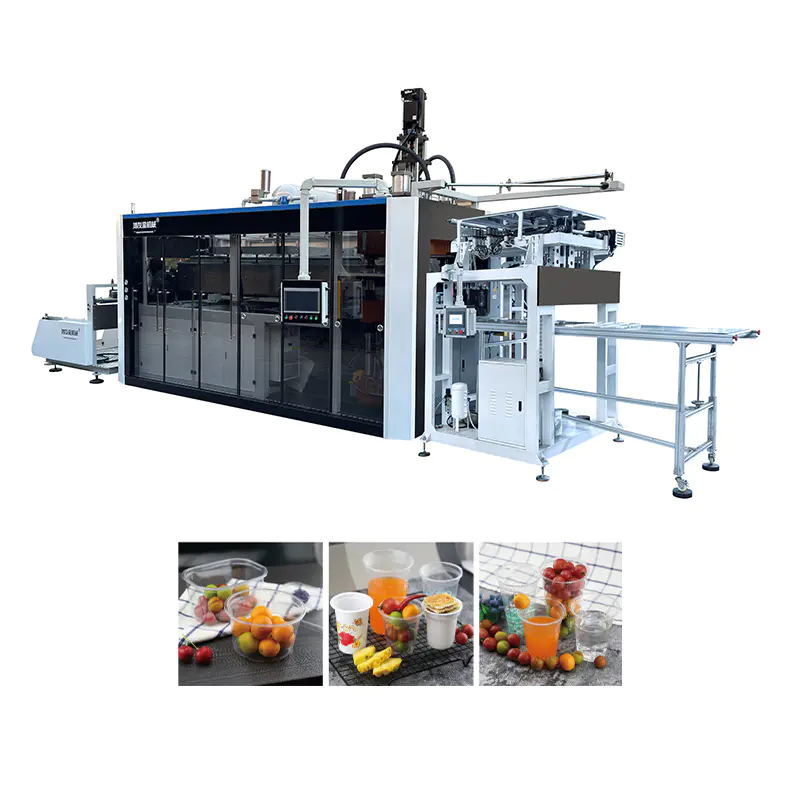
Manufacturers who work with heat forming plastic sheet into functional parts usually face one early decision: should the sheet be shaped using negative air pressure alone, or should positive air pressure be added to push material into fine mold details. This single choice affects tooling cost, cycle time, surface texture, and how sharp a corner or logo detail can be reproduced.
Both methods heat a plastic sheet until it becomes pliable, then stretch it over or into a mold. The difference sits in how the forming force is applied. A vacuum-only setup relies on atmospheric pressure pulling the softened sheet down as air is evacuated from beneath the mold. A pressure-assisted setup adds a sealed pressure box above the sheet, forcing compressed air downward at the same time vacuum pulls from below.
Key distinction: vacuum forming uses roughly one atmosphere of forming force, while pressure forming can add three to six atmospheres on top of that, which is why detail reproduction differs so much between the two.
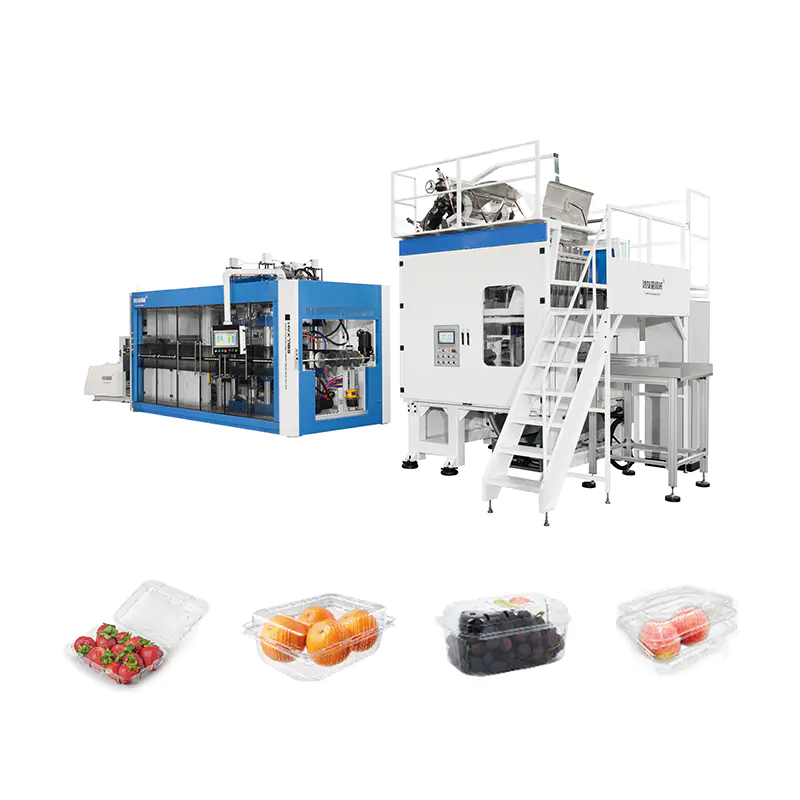
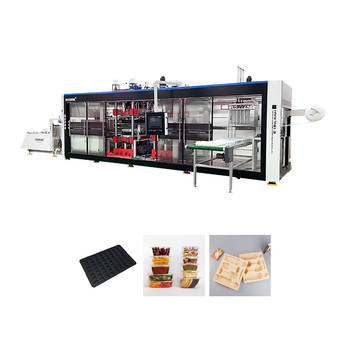
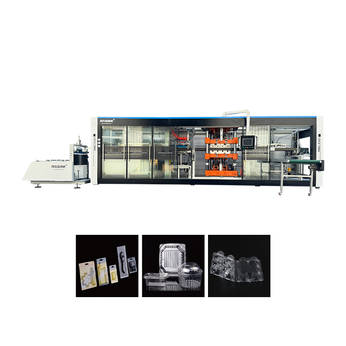
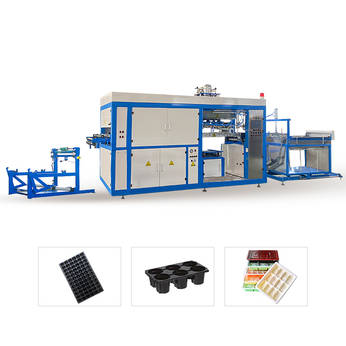
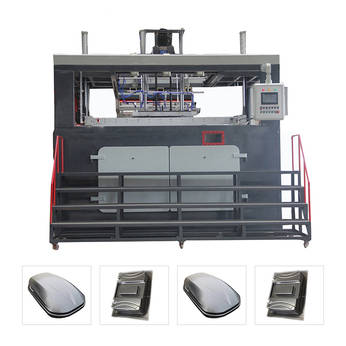
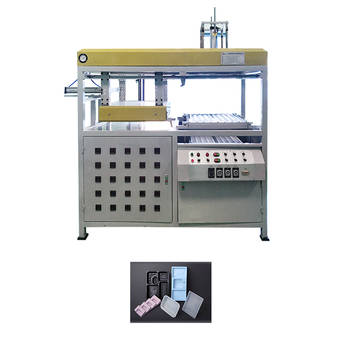
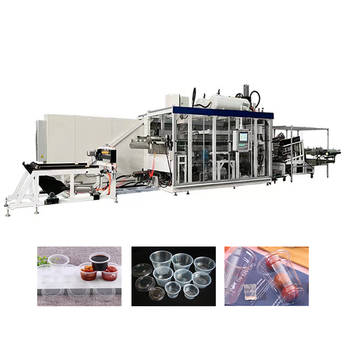
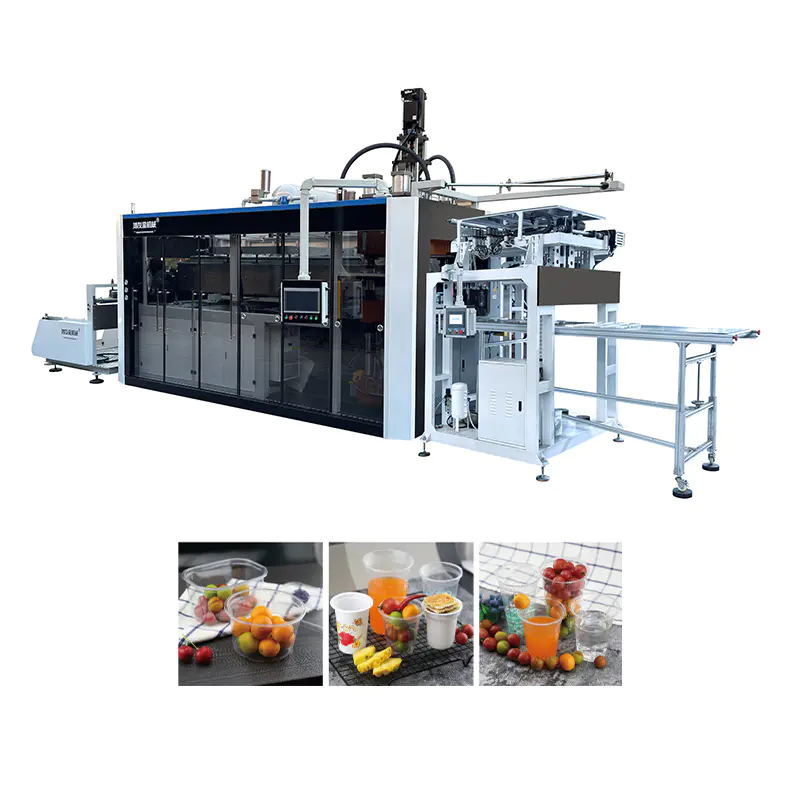
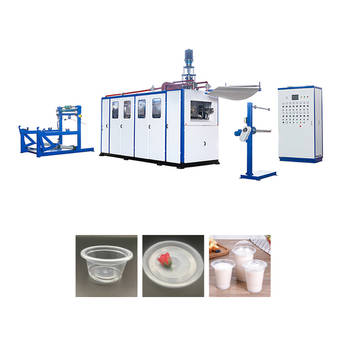
A thermoforming machine is the shared platform behind both methods. It typically includes a clamping frame to hold the sheet, a heating oven or radiant heater bank, a mold platen, and a vacuum or pressure system. What changes between a vacuum-only line and a pressure-forming line is the addition of a sealed upper chamber and a compressed-air supply capable of sustained delivery during the short forming window.
A production thermoforming machine set up with a mold platen and forming station.
Because the mechanical frame and heating stage are similar across both approaches, many production lines are built to switch between vacuum-only and pressure-assisted tooling by changing the mold and adding a pressure box, rather than purchasing an entirely separate line.
| Component | Vacuum Forming | Pressure Forming |
|---|---|---|
| Forming Force Source | Vacuum pump only | Vacuum pump plus compressed air |
| Upper Chamber | Not required | Sealed pressure box required |
| Typical Mold Detail | Moderate | Fine, including texture and small radii |
| Tooling Cost | Lower | Higher |
The vacuum forming process follows a repeatable sequence, and understanding each stage helps identify where cycle time can be trimmed or where defects such as webbing or thin corners tend to originate.
Once the sheet reaches forming temperature, gravity and the vacuum draw pull it against the mold surface. Because only atmospheric pressure is available to push material into cavities, deep draws or sharp internal corners tend to thin out faster than the surrounding wall, which is why vacuum forming performs best on shallower geometries.
Pressure thermoforming repeats the same heating and clamping stages but seals a pressure box against the top of the sheet immediately after mold contact. Compressed air is then released into that chamber, adding force from above while vacuum continues pulling from below.
The trade-off is tooling complexity. A pressure box must seal reliably across thousands of cycles, and the mold itself is usually machined from aluminum rather than lower-cost composite tooling, which raises upfront cost even though part quality improves.
The clearest way to see the pressure vs vacuum technique trade-off is across several quality dimensions at once. The radar comparison below scores both methods on a relative scale from 1 to 5 for five common evaluation criteria.
Vacuum forming scores higher on cost efficiency and cycle speed for simple shapes, while pressure forming pulls ahead on detail, corner radius, and texture reproduction, matching the pattern seen in typical production shops.
Cycle time optimization is often the first efficiency target once a process is running reliably. The chart below shows average cycle time by wall thickness for a mid-size tray part formed on each method.
As wall thickness increases, both methods slow down because the sheet needs more time in the oven to heat evenly through its cross section. Pressure forming runs consistently longer per cycle since the pressure box must seal, pressurize, and vent before the mold opens, but the extra seconds are usually offset by lower scrap rates on detailed parts.
Tooling material choice is the largest cost driver separating the two methods. Vacuum forming molds can be cut from composite or cast material since forming loads are lower, while pressure forming molds generally require machined aluminum to withstand repeated pressurized cycles without dimensional drift.
Even though pressure forming tooling costs more upfront, it typically holds tighter tolerances over a longer mold life, which lowers cost per part once production volume climbs into the higher unit ranges common in retail packaging or enclosure manufacturing.
Sheet material choice affects which process performs better. Softer, more elastic materials tend to draw evenly under vacuum alone, while stiffer engineering sheets often need the extra force pressure forming provides to fill detail before the material cools below its forming window.
| Material | Better Suited To | Notes |
|---|---|---|
| ABS | Pressure Forming | Holds texture and sharp detail well |
| HIPS | Vacuum Forming | Draws evenly on shallow parts |
| PETG | Either | Flexible across both processes |
| PP | Vacuum Forming | Lower cost, moderate detail needs |
| PC/ABS Blends | Pressure Forming | Used where dimensional accuracy matters |
Complex shape molding, meaning parts with textured logos, tight internal corners, or two-sided detail, generally points toward pressure forming despite the added tooling investment. Simpler geometries such as trays, blister packaging, or shallow enclosures are usually better matched to vacuum forming, where lower tooling cost and faster cycles keep unit price down.
A practical starting point is to review part drawings for the smallest radius, the deepest draw ratio, and whether any surface texture or embossed detail is specified. If any of those three factors are aggressive, pressure forming is worth the added tooling cost. If the part is dimensionally simple and produced in high volume with a flat cost target, vacuum forming remains the more efficient route.
Many machines can run both if they are fitted with a pressure box and a compressed air supply, though the mold itself still needs to be built for the process being used.
Generally yes, because sealing and pressurizing the upper chamber adds a step, though the difference is usually a few seconds per part rather than a major slowdown.
Usually not, since flat or shallow parts rarely need the extra detail resolution pressure forming provides, making vacuum forming the more cost-effective choice.
Thin spots typically occur at the deepest draw points or sharpest corners, where atmospheric pressure alone cannot stretch the sheet evenly into the cavity.
Thicker sheet generally benefits more from pressure forming, since added force helps the material fill detail before it cools past its workable temperature range.

 +8618621972598
  +8613917961988
  [email protected]
 No. 565, Xinchuan Road, Xinta Community, Lili Town, Wujiang District, Suzhou City, China
 Copyright © 2024 Thermoforming Machine/Plastic Cup Machine All Rights Reserved.Custom Automatic Vacuum Thermoforming Plastic Machine Manufacturers