

 English
 عربى
عربى 简体中文
简体中文
Home / News / Industry News / How to Integrate MAP and Vacuum Skin Packaging (VSP) into Thermoforming Lines

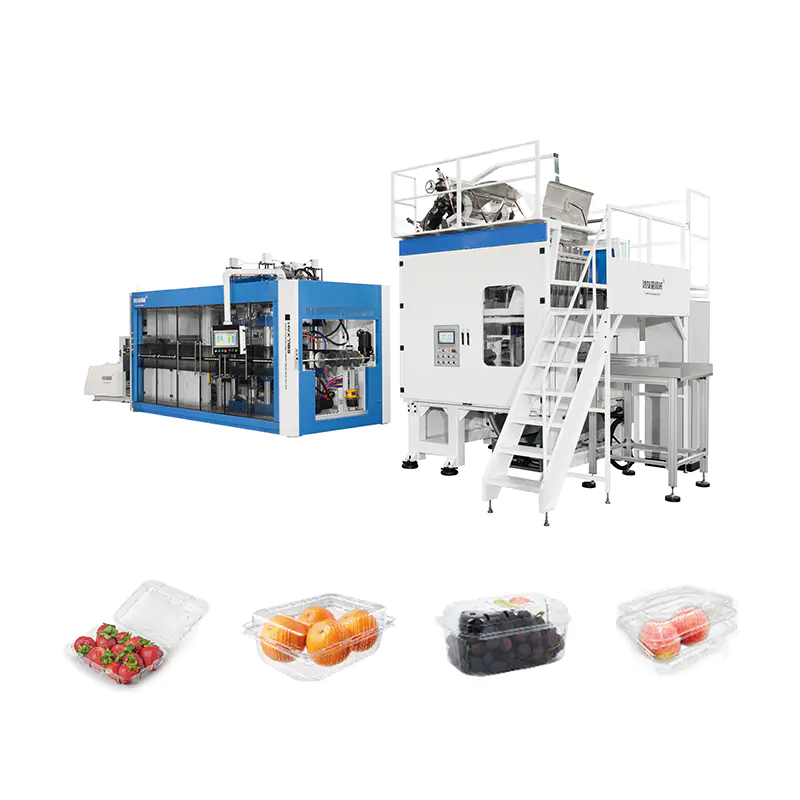
High-volume protein and perishable food processing operations demand exceptional production flexibility, precise atmosphere control, and reliable seal integrity. Modern production facilities are increasingly moving away from dedicated, single-purpose packaging machinery in favor of hybrid configurations. Integrating Modified Atmosphere Packaging (MAP) and Vacuum Skin Packaging (VSP) within a single automated Thermoforming Machine platform delivers significant advantages, maximizing capital equipment utilization while protecting product quality.
This comprehensive technical integration strategy details the engineering adjustments, pneumatic control mechanisms, tooling changeover protocols, and barrier material choices needed to successfully operate both MAP and VSP processes on one continuous, web-fed thermoforming line.
Evaluating skin packaging vs vacuum packaging requires a close look at how the physical films interact with the product and the forming web. While both methods remove ambient atmospheric air to prevent aerobic spoilage, their mechanical execution and structural properties differ significantly.
Standard vacuum packaging draws a vacuum within a pre-formed rigid or semi-rigid pocket, sealing a flat top film across the flanges. This process often leaves ambient head-space gaps if the product shape does not perfectly match the pocket contours. Liquid migration can occur, creating visual defects and weakening seal strength.
In contrast, vacuum skin packaging uses a specialized top film softened by an infrared or contact heating plate inside the sealing chamber. As air is evacuated from the lower cavity, atmospheric pressure forces the softened top film downward. The film conforms precisely to the product shape like a second skin, securing it firmly to the bottom web without distorting its natural structure. This method prevents moisture loss, eliminates fluid movement, and allows the finished package to be displayed vertically.
Integrating MAP and VSP processes on a single thermoforming line requires an adaptable, multi-stage pneumatic circuit. When the system functions as modified atmosphere packaging equipment, the packaging cycle involves two main phases: rapid air evacuation followed by controlled gas injection. The sealing die closes, pulls a deep vacuum down to 5 to 10 mbar, and then injects a precise blend of carbon dioxide, nitrogen, or oxygen through gas-flush thermoforming manifolds to achieve optimal food preservation.
To maintain residual oxygen levels below 0.5 percent, the system configuration must include:
Switching the line to vacuum skin packaging changes the pneumatic requirements. VSP does not use a gas flush; instead, it relies on a two-stage vacuum process. The first stage removes air from the upper heating dome to hold the flexible film against the hot plate. The second stage quickly evacuates air from the lower product cavity, pulling the film down around the product. This requires high-capacity rotary vane vacuum pumps combined with roots blowers to handle the rapid drop in pressure without causing cycle delays.
The mechanical design of the sealing and cutting stations determines how successfully a thermoforming line can process both MAP and VSP. Standard MAP sealing dies utilize flat, perimeter-heating elements that apply pressure solely to the flat outer flanges of the package. VSP tooling design requires a more complex layout, incorporating an upper dome chamber equipped with integrated heating plates and thermal insulation barriers.
The physical constraints of handling vacuum+skin+packaging+for+meat and bone-in proteins require specialized lower cavity support plates. If a product extends above the flange line, the upper sealing die must provide even, radiant heat across the entire film surface without creating hot spots that could burn the material. The table below outlines the core mechanical specifications required for hybrid sealing stations:
| Mechanical Parameter | MAP Configuration Requirements | VSP Configuration Requirements |
|---|---|---|
| Upper Die Geometry | Flat plates with perimeter sealing bands | Insulated vacuum dome with micro-grooved hot plates |
| Vacuum Delivery Method | Single-stage perimeter base ports | Dual-stage independent dome and base evacuation |
| Trimming Mechanical Mode | Standard punch-and-die profile cutters | Pre-heated contour knives or high-pressure shear trimming |
| Base Tooling Profile | Fixed depth pockets matching product size | Variable-height base inserts with perimeter drainage canals |
Selecting the right film structure is essential for maintaining product shelf life and ensuring smooth machine performance. Both MAP and VSP rely on advanced barrier film technology to block gas transmission, but the required mechanical properties of the films differ substantially between the two formats.
For MAP setups, the top web must remain flat, clear, and rigid enough to resist warping under internal gas pressures. These films typically use co-extruded structures of ethylene vinyl alcohol (EVOH) sandwiched between polyethylene (PE) sealing layers and polyester (PET) outer structural faces. The forming web must provide excellent gas barrier properties across its entire draw depth to prevent oxygen from entering through thinned corners.
VSP operations require highly flexible top films with excellent elasticity and memory. The material must soften uniformly at specific temperatures, stretch over high-profile products without puncturing, and shrink tightly into corners. Ionoplast or specialized metallocene-polyethylene blends are often used as the base layers, paired with a flexible EVOH gas barrier layer. The film must also seal reliably through fat, blood, and moisture residues on the bottom web flanges, which is critical when configuring vacuum+skin+packaging+for+meat applications.
Processing fresh proteins requires precise control over temperature and pressure variables within the thermoforming packaging system. For red meats, poultry, and seafood, the choice between MAP and VSP alters both production throughput and product presentation.
When using map machine packaging methods for fresh beef, the gas mixture typically requires high oxygen concentrations (up to 80 percent) combined with carbon dioxide (20 percent) to maintain the bright red oxymyoglobin color. This setup requires strict safety protocols, including specialized, oil-free oxygen-rated vacuum pumps and explosion-proof exhaust venting systems. The seal pressure must be uniformly distributed across the flange area to prevent gas leaks over time.
When configuring the system for VSP meat processing, color maintenance relies instead on complete oxygen exclusion. The vacuum system removes all ambient air, causing the meat to take on a darker, natural purple deoxymyoglobin shade, which quickly turns bright red once the consumer opens the package. The primary operational challenges center on managing film temperature and vacuum timing. If the top film is heated too long, it can cause surface searing on delicate proteins. Conversely, insufficient heating prevents the film from forming correctly into corner radii, leading to unsealed micro-voids that reduce shelf-life extension machinery efficiency.
Upgrading a standard thermoforming line to a hybrid MAP/VSP platform requires careful coordination of the physical hardware and control software. The programmable logic controller (PLC) must include pre-programmed recipes that store specific profiles for heating profiles, vacuum levels, gas flush pressures, and transition timing for each packaging style. This software automation reduces human error during production transitions.
To optimize production efficiency, the mechanical hardware should incorporate quick-change die systems. Pneumatic docking manifolds and multi-point electrical connectors allow operators to swap out lower pocket inserts and upper sealing plates without using manual tools. This integration reduces changeover times from hours to under twenty minutes, ensuring high line availability even when running diverse product batches.
The financial justification for choosing a dual-purpose line over two separate packaging machines is clear when analyzing capital expenditures and operational footprints. A hybrid system eliminates the need for redundant forming stations, film unwinds, and cutting assemblies. This lowers the initial machinery investment by up to 35 percent and saves valuable cleanroom floor space, while allowing processing facilities to respond quickly to shifting market demands between MAP and VSP products.
Yes, provided the base web material remains identical. However, the depth of the forming pocket must be adjusted. MAP requires a deep pocket to provide sufficient gas volume around the product, whereas VSP works best with a shallower tray or flat card profile. This variation is managed by using removable base insert plates inside the forming station.
Film puncturing typically occurs when the top skin film is drawn too rapidly over sharp bone edges under high vacuum. This can be resolved by adjusting the PLC profile to introduce a multi-stage vacuum pull, which slows the final film drawdown, or by upgrading to a top film with better puncture resistance and multi-layer ionomer co-extrusions.
In MAP, residual oxygen levels must be precisely controlled based on the product type. Red meats require high oxygen levels to maintain color, while low-oxygen products require levels below 0.5 percent to prevent aerobic microbial growth. In VSP, the film forms directly to the product surface to eliminate all residual headspace oxygen, which reliably extends shelf life without needing a complex gas flush.
Yes. MAP configurations typically use traditional guillotine cross-cutters and rotary longitudinal knives because the film remains flat along the flanges. VSP requires specialized contour cutting knives or pre-heated trimming assemblies to clean-cut the highly elastic skin film along the tray perimeter without leaving loose tabs or jagged edges.

 +8618621972598
  +8613917961988
  [email protected]
 No. 565, Xinchuan Road, Xinta Community, Lili Town, Wujiang District, Suzhou City, China
 Copyright © 2024 Thermoforming Machine/Plastic Cup Machine All Rights Reserved.Custom Automatic Vacuum Thermoforming Plastic Machine Manufacturers