

 English
 عربى
عربى 简体中文
简体中文
Home / News / Industry News / How High-Efficiency Thermoforming Solutions Are Redefining Ready-Meal and Food Tray Sealing

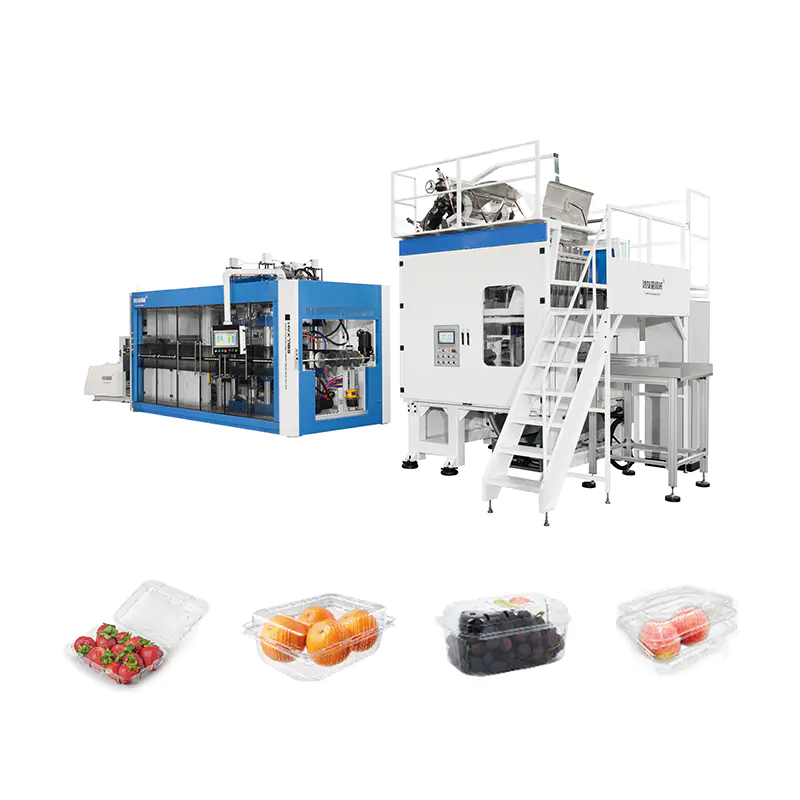
The global ready-meal market has grown at a compounded rate exceeding 6% annually over the past five years, pushing food manufacturers to rethink every link in their packaging chain. At the center of this shift sits a single critical technology: the thermoforming machine. Whether a facility runs chilled protein trays, fresh pasta portions, or heat-and-eat entrees, the ability to form, fill, and seal at high throughput now separates competitive operations from laggards. This article examines the engineering fundamentals, process configurations, mould design logic, and sealing science that define modern rigid thermoformed packaging lines — with hard numbers and layout principles you can act on today.
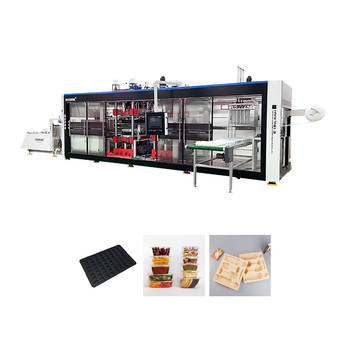
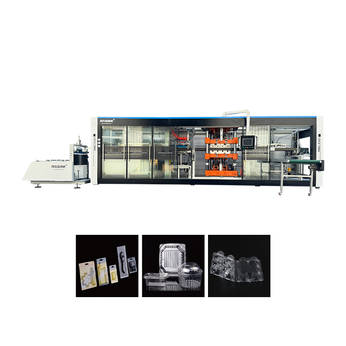
A high-speed thermoform-fill-seal (TFS) line converts a continuous reel of rigid or semi-rigid plastic sheet into filled, hermetically sealed packs in a single inline pass. The sequence is tightly coupled: forming and sealing stations operate in synchronized index cycles, which means downtime at any station stops the entire line. Understanding each stage is essential before specifying equipment.
The heating station uses either infrared lamps or heated contact plates to bring the plastic sheet to its forming temperature — typically between 140 degrees Celsius and 190 degrees Celsius depending on the material. Over-heating causes thinning and pinholes; under-heating produces incomplete draw depth and wrinkled sidewalls. Precise zone control within plus or minus 2 degrees Celsius is a standard benchmark on modern lines.
For deep-draw food trays exceeding 50 mm in depth, plug-assist forming is standard practice. A shaped mechanical plug pre-stretches the heated sheet into the mould cavity before vacuum is applied, distributing material more evenly across the base and sidewalls. Without plug assistance, deep draws concentrate thinning at the corners — precisely where structural integrity matters most for stacking strength.
Wall thickness uniformity directly affects three downstream variables: seal quality, barrier performance, and stacking load. Industry data indicates that plug-assist reduces corner thinning by 30% to 45% compared to vacuum-only forming on draws deeper than 40 mm.
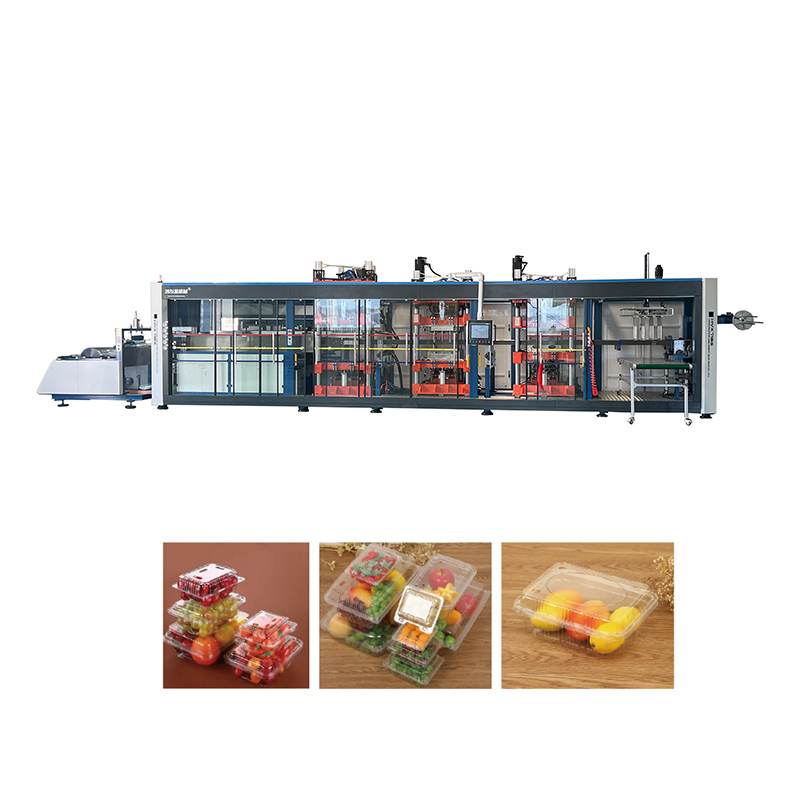
A thermoforming mould is the single largest determinant of line output rate. Cavity count per mould directly multiplies packs-per-cycle, so engineers maximize cavities within the constraints of sheet width, press tonnage, and heat distribution. Common configurations for retail food trays run 4-wide by 3-deep (12 cavities per cycle) or 6-wide by 4-deep (24 cavities) on 600 mm to 800 mm wide sheet.
The relationship between cavity count and cycle time is not linear. Adding cavities increases the heated platen area, which can extend heating dwell time and offset throughput gains if the heating system is not recalibrated. A 24-cavity mould running at 8 cycles per minute yields 11,520 trays per hour — but only if the heating station can achieve uniform temperature across the full platen within the cycle window.
| Mould Material | Thermal Conductivity | Typical Application | Relative Cost |
|---|---|---|---|
| Aluminium alloy | 160 W/m·K | High-volume food trays | Medium |
| Tool steel (P20) | 29 W/m·K | Abrasive-filled or glass-fibre trays | High |
| Kirksite (zinc alloy) | 113 W/m·K | Prototype and short-run tooling | Low |
| Epoxy-backed aluminium | Variable | Development trials | Very low |
Aluminium remains the dominant choice for production food tray moulds because its high thermal conductivity supports rapid cooling cycles. Integrated water-cooling channels machined into aluminium tooling can reduce cooling dwell from 3.5 seconds to 1.8 seconds on a standard 250 g ready-meal tray — a cycle-time improvement that compounds across millions of packs annually.
Draft angles between 3 degrees and 7 degrees on sidewalls ensure clean part ejection without distortion. Insufficient draft causes the formed tray to grip the mould cavity, leading to tearing at the flange or pulling the tray out of register with the sealing station. Surface finish in the cavity affects the visual appearance of the finished tray and the coefficient of friction during ejection; a 0.4 Ra electropolished surface is standard for premium retail trays.
The vacuum tray sealing machine station applies heat, pressure, and dwell time to bond a lid film onto the tray flange. These three parameters are interdependent: increasing sealing temperature can reduce the required dwell time, but exceeding the material's heat-seal initiation temperature (HSIT) causes the lid film to distort and produces a non-uniform bond. On APET trays sealed with a coextruded PE/PP lid film, typical parameters are 160 to 185 degrees Celsius, 4 to 6 bar, and 1.2 to 2.0 seconds dwell.
Perimeter sealing technology directs heat exclusively to the flange area rather than across the full tray surface. This is critical for modified-atmosphere packaging (MAP) applications, where headspace gas composition must be preserved. The sealing tool geometry matches the tray flange width — typically 4 mm to 8 mm — with tolerances held to plus or minus 0.2 mm to prevent cold-seal zones at corners.
Selecting between MAP and vacuum sealing is primarily a product-driven decision. Ready meals with sauce components or loose-fill salads require headspace to avoid compression damage to the product — MAP is the standard choice. Dense, solid products like cured meats or hard cheeses tolerate vacuum compression and benefit from the longer shelf life it delivers.
Not every line thermoforms trays from reel stock. Pre-formed rigid trays — injection-moulded CPET trays for ovenable meals, for instance — require a denesting station upstream of the filling system. Automatic tray denesting uses a combination of vacuum cups, mechanical fingers, or air knives to separate individual trays from a nested stack and place them onto the conveyor at production pitch.
Denesting reliability is measured as the percentage of single-tray separations per 1,000 attempts. High-performing denesting systems achieve 99.7% or greater single-tray separation rates across tray depths from 25 mm to 90 mm. Failures (double-trays or missed placements) disrupt filling station registration and typically require manual intervention, so denesting uptime is a key OEE driver on pre-formed lines.
Inline portion packaging systems position filling directly above the formed or denested trays while they remain registered in the transport system. Two main filling approaches are used in ready-meal lines:
Tray lidding in an inline TFS system draws lid film from an upper reel positioned above the sealing station. The lid film unwinds and indexes in synchrony with the lower tray web. For a sealing tray application, lid film selection depends on five criteria: oxygen transmission rate (OTR), moisture vapour transmission rate (MVTR), peelability, printability, and compatibility with the tray substrate.
A typical APET tray sealed with a PE-based peelable lid achieves an OTR below 5 cc/m2/day at 23 degrees Celsius — adequate for chilled ready meals with a 7-to-10-day shelf life target. Extending to 21-day shelf life requires either an EVOH barrier layer in the tray itself or an AlOx-coated lid film, which reduces OTR to below 0.5 cc/m2/day.
Rigid thermoformed packaging for the ready-meal sector uses a range of thermoplastic substrates, each optimised for different end-use conditions. The choice of substrate locks in downstream parameters: forming temperature window, mould cooling requirements, seal layer chemistry, and end-of-life recyclability.
| Material | Forming Temp (deg C) | Max Use Temp | Key Advantage | Recyclability |
|---|---|---|---|---|
| APET | 130 to 155 | 60 deg C | Clarity, recycled-content availability | High (PET stream) |
| CPET | 160 to 185 | 220 deg C | Dual-ovenable (microwave and conventional) | Medium |
| PP | 150 to 175 | 120 deg C | Microwave safe, cost-effective | Medium (PP stream) |
| PS / HIPS | 120 to 145 | 70 deg C | Easy forming, low cost | Low |
| PLA (bio-based) | 58 to 80 | 50 deg C | Renewable feedstock, compostable | Industrial compost only |
Light-weighting is a central sustainability and cost lever in thermoformed food packaging. Reducing tray wall thickness from 350 microns to 270 microns on an APET ready-meal tray reduces plastic consumption by approximately 23% per pack. However, thinner walls require tighter forming process control to maintain the 0.25 mm minimum corner thickness needed for seal integrity and stacking strength under a 10 kg distribution load.
Incorporating 30% to 50% post-consumer recycled (PCR) content into APET tray sheet is now commercially mainstream for ambient and chilled applications. Processing PCR-containing sheet requires adjusted heating profiles — PCR content raises sheet viscosity variation, which demands tighter oven zone control to prevent over-heated spots that cause thinning defects.
Overall Equipment Effectiveness (OEE) is the standard productivity metric for packaging lines. OEE = Availability x Performance x Quality. World-class thermoforming lines targeting ready-meal production aim for OEE above 75%; leading operations achieve 82% to 88% on mature, well-maintained lines. The three OEE components break down as follows on a typical TFS line:
Seal integrity is non-negotiable in food packaging. Three testing methods are applied at different stages of production:
| Line Type | Cavities per Cycle | Cycles per Minute | Packs per Hour |
|---|---|---|---|
| Compact TFS (snack / dessert) | 8 | 10 to 14 | 4,800 to 6,720 |
| Mid-range TFS (ready meals) | 12 | 7 to 10 | 5,040 to 7,200 |
| High-speed TFS (protein trays) | 24 | 6 to 8 | 8,640 to 11,520 |
| Pre-formed tray sealer | 4 to 6 | 12 to 20 | 2,880 to 7,200 |
Contemporary thermoforming machine for food packaging applications runs on fully servo-driven motion systems. Servo axes replace the mechanical cam systems that previously governed index, forming, and sealing motions. Benefits are substantial: recipe parameters (index pitch, forming depth, seal temperature, dwell time) are stored digitally and recalled in under 3 minutes via touchscreen HMI. A servo-driven line running 40 SKUs per week eliminates the tooling setup time that mechanical cam systems imposed — typically 20 to 60 minutes per changeover.
Modern PLC-based control architectures integrate the forming, filling, and sealing stations into a single control environment. This enables real-time feedback loops: if the filling station registers a weight deviation beyond the set tolerance, the control system can halt the affected cavity's contribution to the next cycle automatically, reducing downstream reject rates.
All product-contact surfaces in a TFS food line must meet hygienic design principles to satisfy food safety legislation. Key design requirements include:
Energy consumption in a TFS line is dominated by the heating station (typically 35% to 45% of total electrical demand) and the sealing station (20% to 30%). Infrared heating systems with zoned control reduce idle energy consumption by shutting down non-contributing zones during low-speed or startup phases. Regenerative braking on servo axes recovers kinetic energy during deceleration, with field measurements showing 8% to 12% reduction in overall drive energy consumption.
Before issuing a request for quotation, procurement and engineering teams should align on the following parameters. Missing any one of these inputs commonly delays project timelines by 6 to 10 weeks as equipment suppliers seek clarification.
A thermoforming machine forms trays from a plastic sheet reel, fills them, and seals them in a single inline process. A tray sealer accepts pre-formed trays (supplied separately) and applies a lid film to seal them. Thermoforming lines offer higher throughput and lower per-pack material cost for large-volume production, while tray sealers offer lower capital investment and greater flexibility for short runs or multiple tray formats supplied from a single sealer.
Standard vacuum-only forming achieves draw depths up to approximately 40 mm reliably. With plug-assist forming, depths of 80 mm to 120 mm are achievable on most thermoplastic substrates. Maximum draw depth is also constrained by the draw ratio — the ratio of cavity depth to minimum cavity dimension — with a practical upper limit of around 1:1 for food tray applications without specialist tooling and process optimisation.
Crystalline polyethylene terephthalate (CPET) is the established standard for dual-ovenable (conventional oven and microwave) ready-meal trays. CPET withstands continuous temperatures up to 220 degrees Celsius, making it suitable for conventional oven reheating at 180 to 200 degrees Celsius. Polypropylene (PP) is suitable for microwave use only, typically up to 120 degrees Celsius. APET trays are not suitable for oven heating.
The most common inline method is vacuum decay testing, where each sealed pack passes through a pressure chamber and any pack with a compromised seal shows measurable pressure change within a few seconds. This method allows 100% inspection at line speed without destroying the pack. Offline methods including dye penetration testing and burst pressure testing are used for scheduled quality audits and process validation, typically on sampled packs at regular intervals during production.
A mid-range TFS line running 12 cavities typically achieves 7 to 10 cycles per minute, delivering 5,040 to 7,200 packs per hour at rated speed. At a planning OEE of 80%, this translates to an effective output of 4,030 to 5,760 packs per hour across a production shift. Actual rates depend on product fill weight variation, film splice frequency, and the number of format changeovers per shift.
Yes. Post-consumer recycled (PCR) APET sheet with 30% to 100% recycled content is commercially available and is processed on standard thermoforming lines with adjusted heating profiles. Higher PCR content introduces greater viscosity variation in the sheet, which requires tighter oven zone temperature control. Most modern TFS lines with multi-zone infrared heating can accommodate up to 50% PCR content without significant throughput reduction. Grades above 50% PCR may require dedicated process trials to establish stable forming windows.
Automatic tray denesting is the process of separating individual pre-formed trays from a nested stack and placing them onto a conveyor or filling carrier at production pitch. It is required on lines that use pre-formed trays — such as injection-moulded CPET trays for ovenable meals — rather than forming trays inline from reel stock. Denesting systems use vacuum cups, mechanical separation fingers, or air knives, and high-performance units achieve single-tray separation rates above 99.7% per 1,000 attempts.

 +8618621972598
  +8613917961988
  [email protected]
 No. 565, Xinchuan Road, Xinta Community, Lili Town, Wujiang District, Suzhou City, China
 Copyright © 2024 Thermoforming Machine/Plastic Cup Machine All Rights Reserved.Custom Automatic Vacuum Thermoforming Plastic Machine Manufacturers