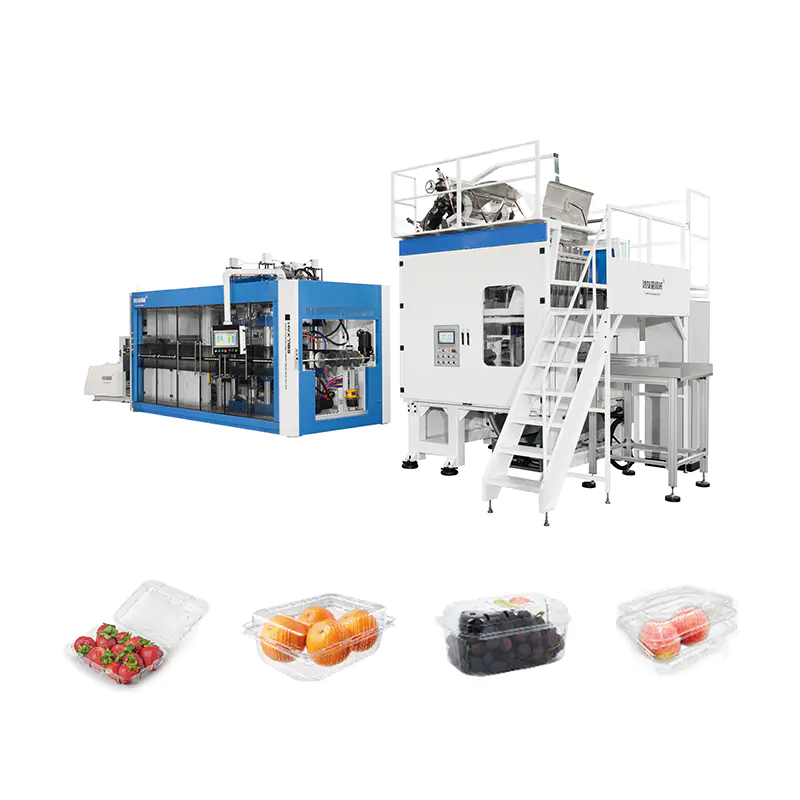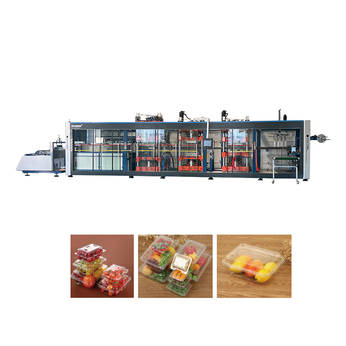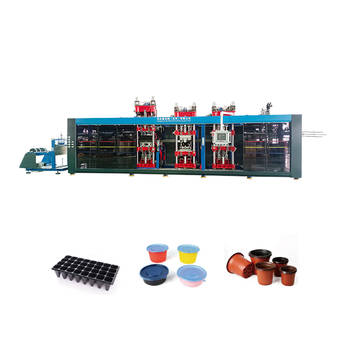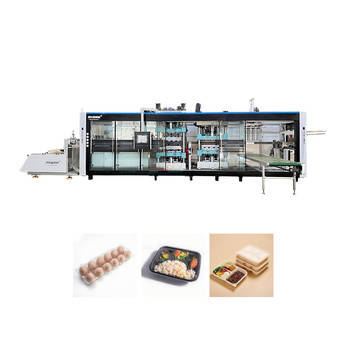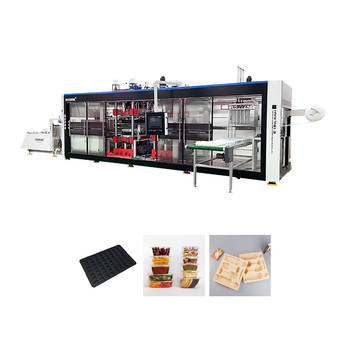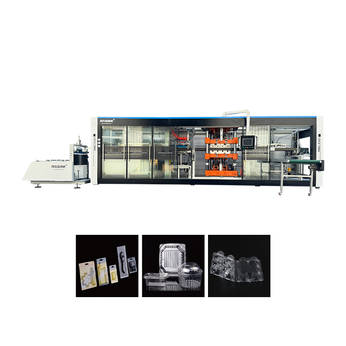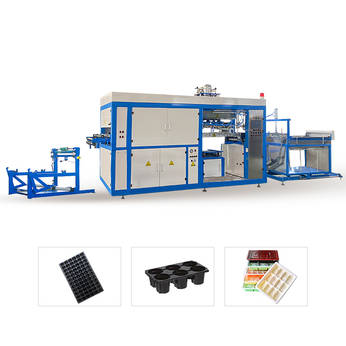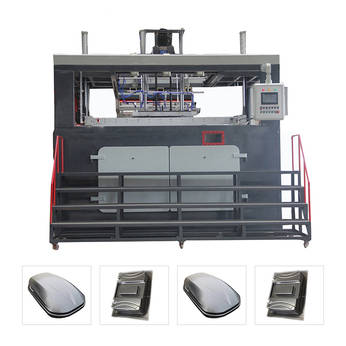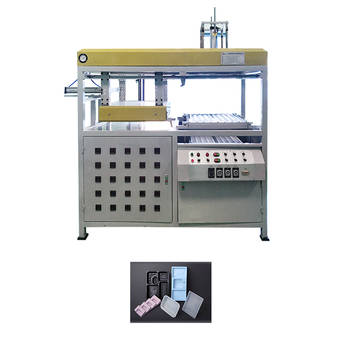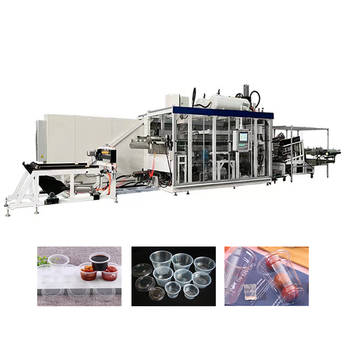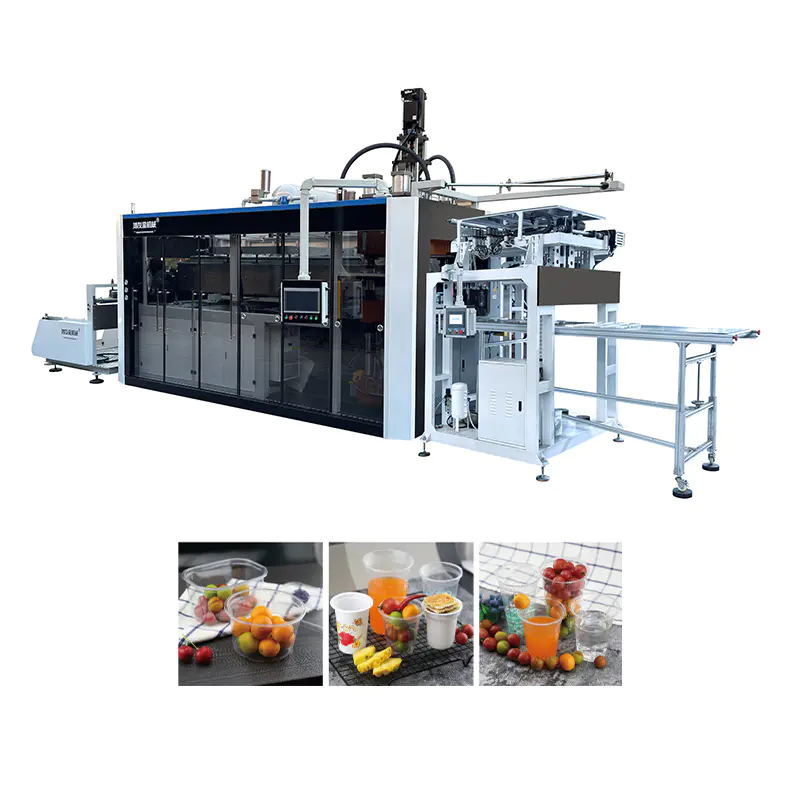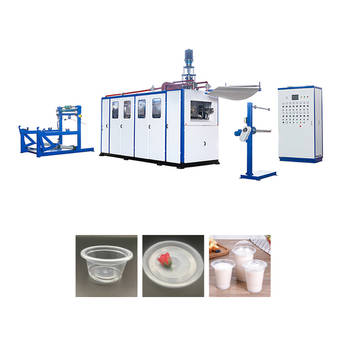
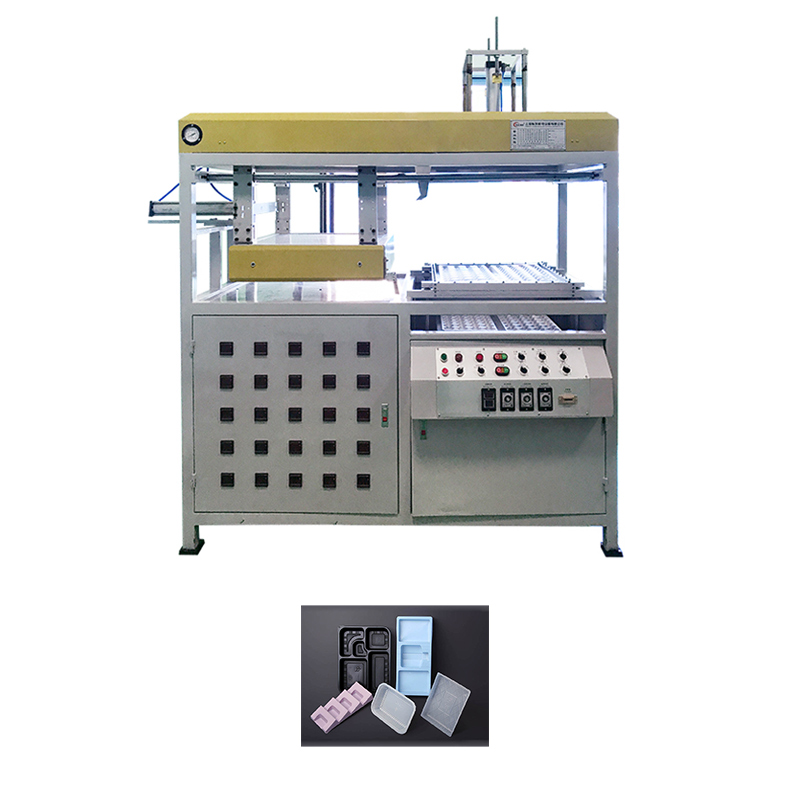
Vacuum forming is a plastic sheet shaping process where heat softens the material and vacuum pressure draws it tightly over a mold. The result is a precisely contoured part that replicates every detail of the mold surface. For manufacturers, hobbyists, and prototypers working at small or medium scale, a manual vacuum forming machine offers an accessible, cost-effective way to produce consistent formed plastic parts without complex automation.
The core principle is straightforward: thermoplastic sheets become pliable when heated to a specific temperature window, vacuum suction pulls that softened sheet against a mold, and cooling locks in the new shape. This process is repeatable, scalable, and applicable to dozens of materials and industries.
Understanding each step helps operators optimize quality, reduce waste, and troubleshoot defects efficiently.
A flat thermoplastic sheet is loaded into a clamping frame. The frame holds the sheet firmly around its perimeter to prevent slipping or warping during heating. Common sheet thicknesses range from 0.5 mm to 6 mm, depending on the application and material type.
The clamped sheet is moved beneath radiant heaters — typically infrared elements. Temperature targets vary by material: for example, ABS softens between 150°C and 180°C, while PETG requires approximately 130°C–160°C. Heating time depends on sheet thickness, typically 30 to 120 seconds for standard gauges. Uniform heating is critical; uneven temperature causes thinning, webbing, or incomplete draw.
While the sheet heats, the mold is positioned below (or above, depending on machine design). Molds can be made from wood, aluminum, epoxy resin, or 3D-printed materials. The mold surface should be clean and lightly vented to prevent air trapping. Small vent holes of 0.5–1 mm diameter are drilled at deep draw points.
Once the sheet reaches optimal softness (visually identified by a slight sag of 10–25 mm), the mold is raised into contact with the sheet and vacuum is applied. A vacuum pump evacuates air from beneath the sheet, typically achieving -0.08 to -0.095 MPa of negative pressure. The atmospheric pressure above the sheet (approximately 101 kPa) pushes the softened plastic firmly over all mold contours.
The formed part must cool sufficiently before release. Cooling can be passive (ambient air) or accelerated with fans or mist sprayers. Typical cooling time ranges from 20 to 90 seconds. Removing the part too early causes warping; waiting too long reduces production throughput.
After solidification, vacuum is released and the part is separated from the mold. The excess flange material (flash) is then trimmed using knives, scissors, CNC routers, or die presses depending on production volume. The trimmed part is the finished product.
Each component directly affects forming quality and ease of operation. The table below outlines main parts and their functions:
| Component | Function | Impact on Quality |
|---|---|---|
| Clamping Frame | Holds sheet flat and fixed during heating and forming | Prevents sheet slippage and edge distortion |
| Heater Bank | Radiates heat evenly across the sheet surface | Uniform softening ensures even wall thickness |
| Vacuum Pump | Generates negative pressure to draw sheet over mold | Higher vacuum speed reduces draw time and webbing |
| Vacuum Platen / Box | Sealed chamber below mold that connects to pump | Air distribution affects forming uniformity |
| Mold Platform | Raises and lowers mold into forming position | Consistent mold contact timing improves repeatability |
| Control Panel | Sets heater temperature, time, and vacuum parameters | Precise controls reduce trial-and-error adjustments |
Material selection determines part strength, clarity, chemical resistance, and end-use suitability. Common thermoplastics used in vacuum forming include:
Manual vacuum forming machines are not simply a downgrade from automated systems — they serve a distinct and important role in production environments. The comparison below clarifies when manual machines are the logical choice:
| Factor | Manual Machine | Automated Machine |
|---|---|---|
| Initial Investment | Low to moderate | High |
| Production Volume | Small to medium batches | High-volume continuous runs |
| Setup Time | Short (minutes) | Longer (programming required) |
| Mold Changeover | Fast and flexible | Slower, more structured |
| Operator Skill Required | Moderate | Lower per cycle, higher for setup |
| Best Use Case | Prototyping, custom parts, education | Mass production, packaging lines |
For businesses producing fewer than 500–2,000 units per day, or requiring frequent mold changes across diverse product lines, manual machines typically deliver better return on investment. They also allow operators to visually monitor sheet readiness — a practical advantage when processing specialty or recycled materials with variable heating behavior.
Even the best machine cannot compensate for poor mold design. Several design rules consistently improve forming outcomes:
Systematic troubleshooting reduces scrap rates and shortens the learning curve for new operators.
| Defect | Likely Cause | Corrective Action |
|---|---|---|
| Webbing / Bridging | Sheet cools before reaching mold details | Increase heat or speed up forming cycle |
| Wall Thinning | Excessive draw depth or uneven heating | Improve heat distribution; use plug assist for deep parts |
| Incomplete Draw | Insufficient vacuum pressure or sheet too cool | Check pump performance; increase heat time |
| Warping After Removal | Part removed before adequate cooling | Extend cooling time; use cooling fans |
| Surface Blistering | Moisture in the sheet material | Pre-dry sheets at 60–80°C for 2–4 hours before forming |
| Mold Marks on Surface | Debris or rough mold surface | Clean mold; sand and polish mold contact surfaces |
| Sticking to Mold | Insufficient draft angle or no release agent | Add draft; apply mold release spray or wax |
Manual vacuum forming machines serve a wide range of sectors due to their flexibility and low tooling costs:
Most manual machines handle sheets as thin as 0.3–0.5 mm, though very thin sheets cool rapidly and require fast forming cycles. Sheets above 0.8 mm are generally easier for beginners to work with consistently.
A full cycle — heating, forming, cooling, and demolding — typically takes 2 to 5 minutes depending on sheet thickness, material type, and part complexity. Thin sheets (under 1.5 mm) can cycle in under 2 minutes.
Yes, provided the recycled sheets are clean, uniform in thickness, and properly dried. Inconsistent thickness or moisture content in recycled sheets increases defect rates, so pre-drying at 60–80°C for 2–4 hours is recommended.
For forming areas up to 600 × 600 mm, a pump with a displacement of 40–80 L/min and maximum vacuum of -0.09 MPa is typically sufficient. Larger forming areas require proportionally higher pump capacity.
Plug assist is optional but recommended for parts with draw ratios exceeding 0.5:1 (depth:width). It pre-stretches the sheet into the mold cavity before vacuum is applied, improving wall thickness uniformity in deep-draw applications.
Apply a thin coat of mold release wax or spray, ensure draft angles of at least 3°, and allow the part to cool adequately before removal. Aluminum molds require less release agent than porous materials like MDF.
For low-volume or prototype work, MDF, foam, or 3D-printed molds are cost-effective. For production runs, aluminum molds offer the best durability, dimensional consistency, and heat dissipation.

 +8618621972598
  +8613917961988
  [email protected]
 No. 565, Xinchuan Road, Xinta Community, Lili Town, Wujiang District, Suzhou City, China
 Copyright © 2024 Thermoforming Machine/Plastic Cup Machine All Rights Reserved.Custom Automatic Vacuum Thermoforming Plastic Machine Manufacturers



 English
 عربى
عربى 简体中文
简体中文