

 English
 عربى
 简体中文

Home / News / Industry News / Benefits of Automated Production Processes in Thermoforming | Cost, Quality, ROI


Every shift change used to mean the same ritual in many thermoforming workshops: re-tuning the heating curve because each operator ran the machine a little differently. Start-up scrap consumed 5 to 6 percent of every sheet roll, and output depended on who was standing at the control panel. This is the exact situation that automated production processes are designed to remove.
The benefits of automated production processes for packaging and thermoforming plants come down to four numbers: more good parts per hour, lower cost per part, fewer operators per line, and a narrower scrap rate. Every other advantage—consistent quality, easier audits, simpler scheduling—follows from those four.
Automation in thermoforming is not a single on-off switch. It is a spectrum, and each step removes a specific source of variation and labor.
On a fully automatic machine, the controller defines the heating time, forming pressure, cooling time, and trimming sequence. Those parameters repeat cycle after cycle, which is the foundation of every benefit discussed below.
The most immediate benefit is throughput. A fully automatic thermoforming machine removes the two biggest bottlenecks in a forming cell: manual sheet loading and manual part removal. The operator no longer controls the rhythm of production; the machine does.
Multi-station machines take this further. A 3-station or 4-station automatic former overlaps heating, forming, and trimming in separate stations, so the forming station never waits for the operator. The fourth station, where available, allows in-machine punching or cutting, which eliminates a separate hydraulic cutting step and shortens the time from sheet to finished part.
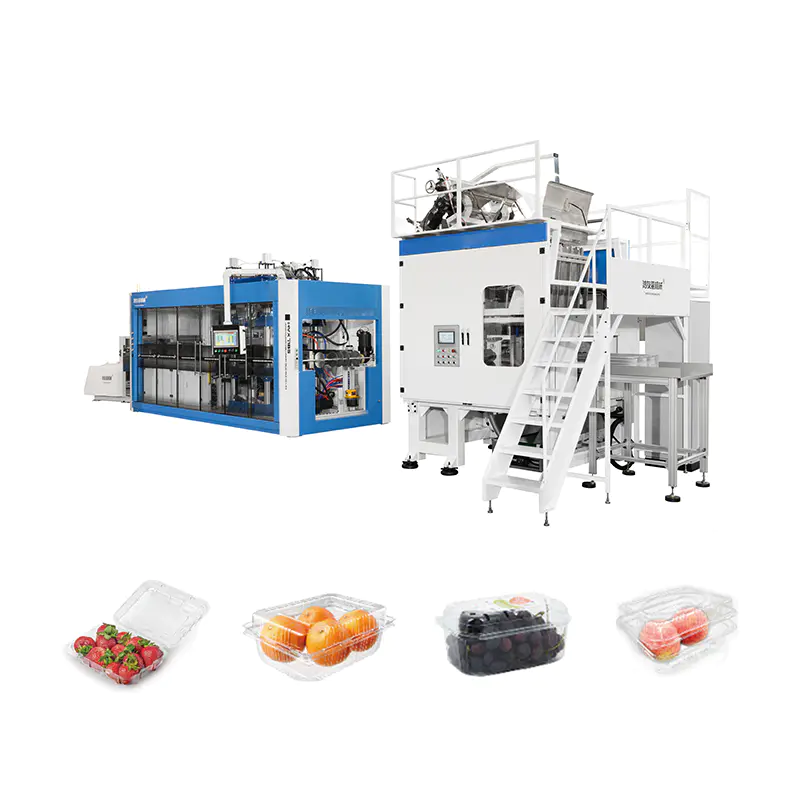
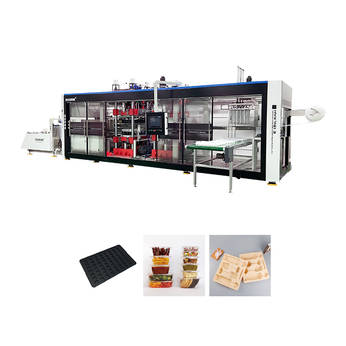
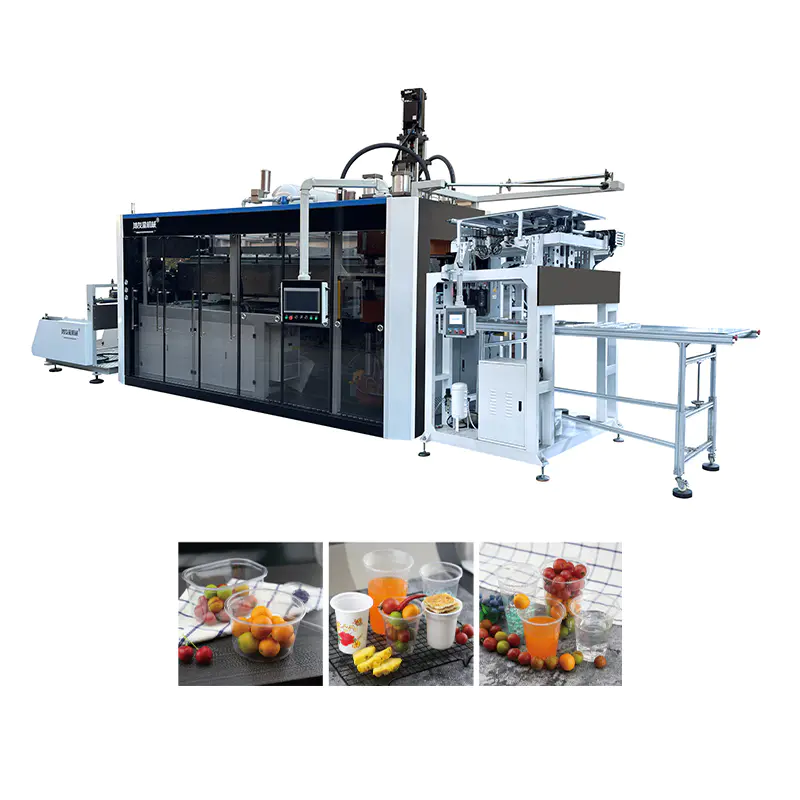
Machines such as the HYX7161 series fully automatic positive and negative pressure 3-station former are built exactly for this pattern of work: continuous sheet feed, precise cycle control, and one operator supervising the whole forming cell.
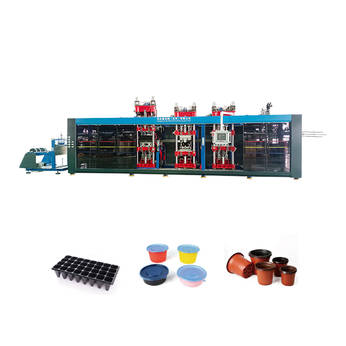
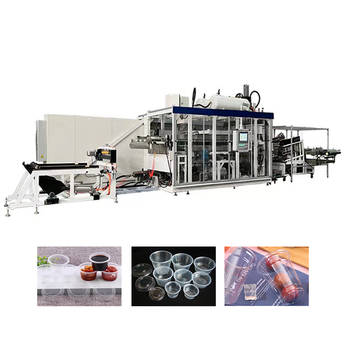
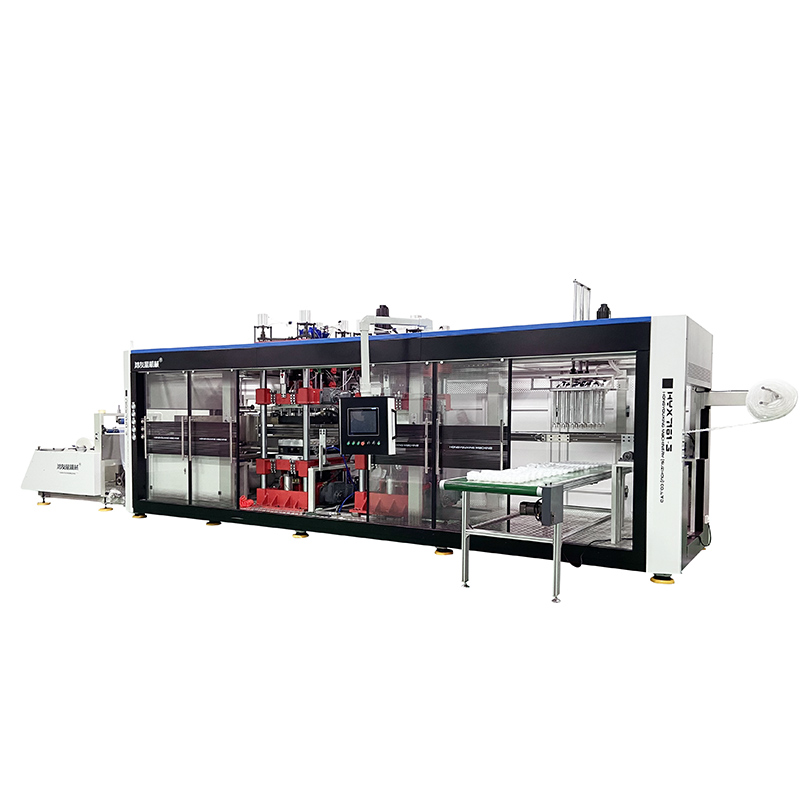 HYX-7161 Three-Station Thermoforming Machine for Cups and TraysThis fully automatic former handles heating, forming, cutting, and stacking in three stations, with servo stretching and intelligent temperature control for efficient high-volume tray and cup production.View Product →
For plants running high-volume cups, lids, trays, and containers, this difference is not marginal. It is the difference between meeting a contract deadline and paying for expedited shipping.
Unit cost is the sum of material, energy, labor, and machine amortization divided by the number of good parts. Automation improves every term in that equation.
| Factor | Manual | Semi-Automatic | Fully Automatic |
|---|---|---|---|
| Operators per line | 2 to 3 | 1 to 2 | 1 |
| Cycle consistency | Operator-dependent | Moderate | High |
| Material waste level | High | Medium | Low |
| Output per shift | Baseline | 1.3× baseline | 1.5× baseline or more |
| Changeover effort | Quick but labor-heavy | Medium | Fast with stored recipes |
An inline crusher is a small investment compared with the material it saves. A scrap reduction of 3 to 5 percent on a three-shift line pays for the unit quickly, and the benefit compounds as material prices rise.
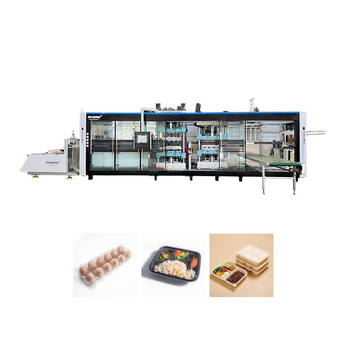
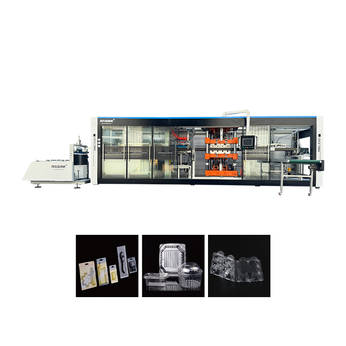
Inline Crusher for Thermoforming Scrap ReductionAn online crusher connected to forming machines grinds edge trim from 0.1-3mm materials in a sealed system, cutting waste and material costs on continuous production lines.View Product →
For plants already running a sheet extruder, the combination is even stronger: in-house sheet production plus inline regrind closes the material loop and reduces dependence on external sheet suppliers.
In medical device packaging, electronic components, and automotive interior parts, dimensional consistency is not a preference; it is a contract requirement. Automated production processes deliver repeatability that manual work cannot match.
The reason is simple: an automated former applies the same heating profile, the same forming pressure, and the same cooling sequence to every sheet. Positive and negative pressure integration gives crisper detail and better material distribution than vacuum alone, especially for deep-draw parts and thin-wall containers. With a precision-machined aluminum mold, the result is a part that meets the specification on the first cycle and on the ten-thousandth cycle.
Automated lines are also easier to audit. If a customer asks how you guarantee wall thickness, the answer is a stored machine parameter, not an operator's judgment. This matters most in medical device vacuum packaging, where traceability is part of the product itself.
A fully automatic vacuum forming machine with servo-driven movement and closed-loop temperature control holds the process within narrow tolerances, shift after shift.
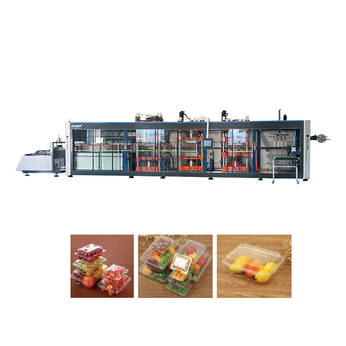
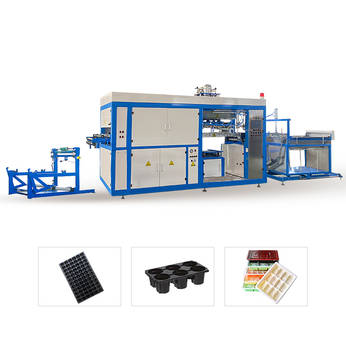
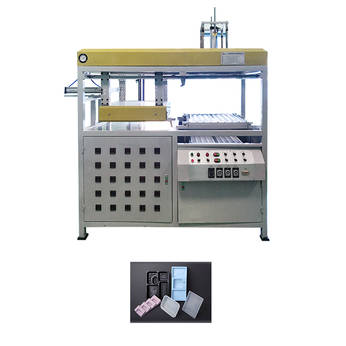
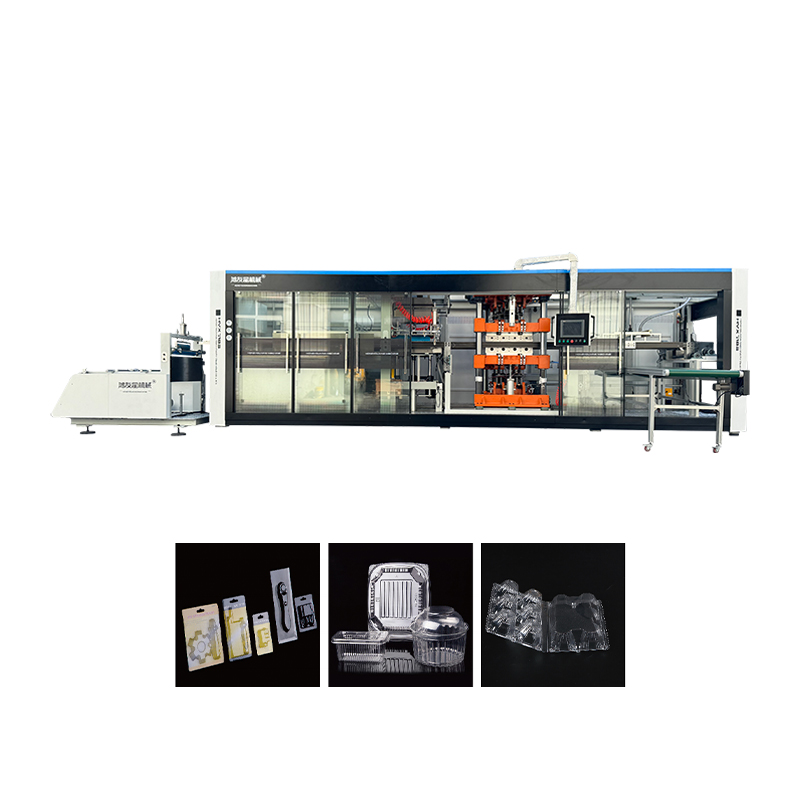 Automatic Vacuum Forming Machine with Cutting and StackingThis PLC-controlled machine combines servo sheet feeding, vacuum forming, cutting, stacking, and conveying with two-stage heating, reducing manual labor while maintaining precise process control.View Product →
Labor is the largest variable cost in a thermoforming plant, and it is becoming harder to secure. Few operators want to stand at a forming station for eight hours, pulling parts and trimming flash by hand.
The labor requirements of semi-automatic vacuum forming machines explain why many plants make the next step: a semi-automatic line still needs an operator for every station, while a fully automatic line needs one person to supervise, check quality, and handle mold changes.
Automation also protects the process from staff turnover. A trained operator who leaves takes experience along. A controller with stored recipes keeps that experience on file. For plants running three shifts in export markets, this is often the deciding factor: automation turns a labor problem into a management tool.
Automation is sometimes assumed to be rigid, but modern servo-driven thermoforming machines are the opposite. Each product has a recipe: heating profile, forming pressure, cooling time, and trimming position. When you change molds, you recall the recipe and the machine sets itself.
For producers of cups, lids, and bowls, this flexibility means the same line can switch between product sizes without dedicating a machine to each SKU. Small batches become profitable, which is increasingly important as retailers order smaller quantities more frequently.
Manufacturers who move to automated production processes usually see the return in three places: labor savings, material savings, and higher billable output. A conservative estimate for a three-shift plant: if a fully automatic line replaces two semi-automatic lines, frees up two operators per shift, and cuts scrap by 3 to 5 percent, the payback period is measured in months, not years.
The exact return depends on product mix, local wages, and material prices, but the direction is consistent. Plants that measure scrap and output before the investment can calculate the payback with surprising accuracy.
Vacuum forming uses suction to draw the heated plastic sheet into or around the mold. Positive-negative pressure forming adds compressed air on the opposite side, pushing the sheet into finer details and improving material distribution. For deep-draw parts and thin-wall containers, pressure forming usually produces more consistent wall thickness and crisper definition.
Typically one operator monitors the machine, checks part quality, and handles mold changes. Forming, trimming, and stacking are automatic. A semi-automatic line, by contrast, generally needs one operator per station for loading and unloading sheets.
Yes, if the machine stores product recipes and the tooling changes quickly. The heating profile, forming pressure, and cycle time are recalled from memory, so changeover becomes a mold swap rather than a machine re-tuning exercise.
Mold quality sets the practical limit of automation. Precision-machined aluminum molds with proper temperature control release parts consistently and maintain thickness across the forming area. A good mold on an automatic machine is the difference between predictable quality and constant adjustment.
Automation in thermoforming is not about owning a machine that looks impressive. It is about removing the variables that cost money: operator error, heat drift, slow changeovers, and rework. The benefits of automated production processes appear on the income statement, not just on the factory floor.
Start with your current scrap rate, output per shift, and labor cost per part, then compare them with a fully automatic line. The engineering team at JIANFENG Machinery has built thermoforming equipment since 1984 and supplies complete lines—machines, molds, and auxiliary equipment—to customers around the world. Send your product drawings or samples for a line recommendation.

 +8618621972598
 +8613917961988
 [email protected]
 No. 565, Xinchuan Road, Xinta Community, Lili Town, Wujiang District, Suzhou City, China
Copyright © 2024 Thermoforming Machine/Plastic Cup Machine All Rights Reserved.Custom Automatic Vacuum Thermoforming Plastic Machine Manufacturers