

 English
 عربى
عربى 简体中文
简体中文
Home / News / Industry News / What is the Technical Edge in Precision Thermoforming for Heavy-Gauge and Electronics ESD Trays?

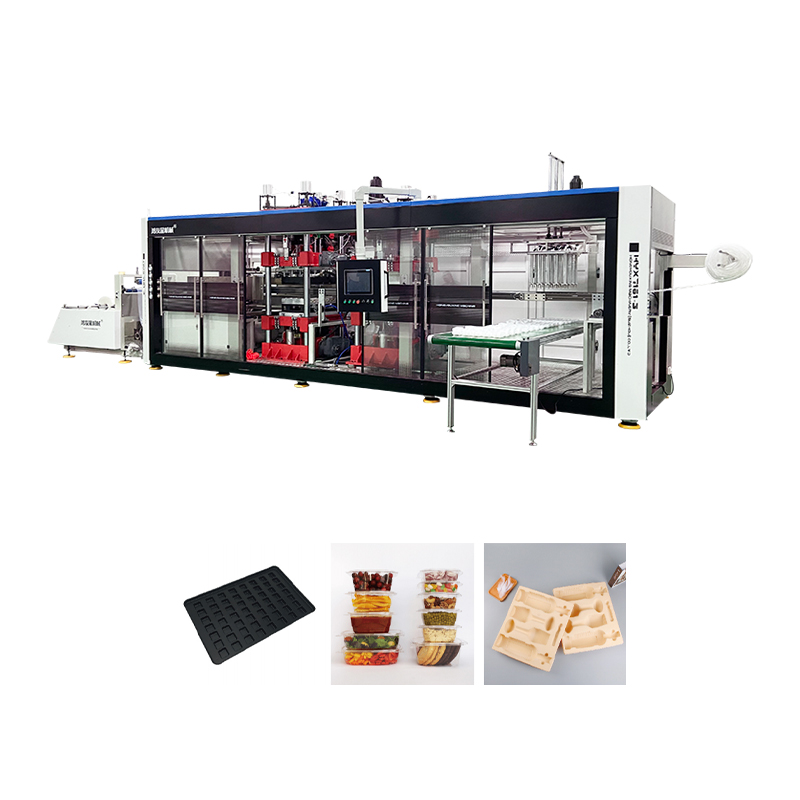
The manufacturing ecosystem for high-value components requires specialized transport media to maintain mechanical protection and electrostatic dissipation. Within the heavy gauge thin gauge thermoformed plastic market, the selection of fabrication methods dictates the long-term reliability of structural components. Electronics packaging thermoforming is not merely a method of shaping plastic; it is a controlled thermal and mechanical engineering discipline designed to yield uniform material distribution and precise dimensional tolerances.
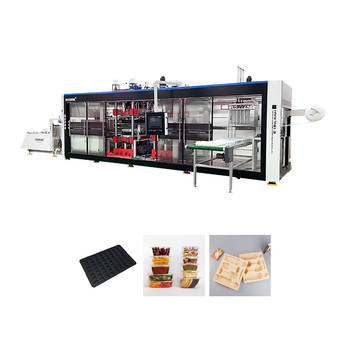
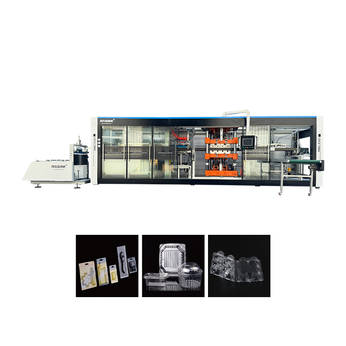
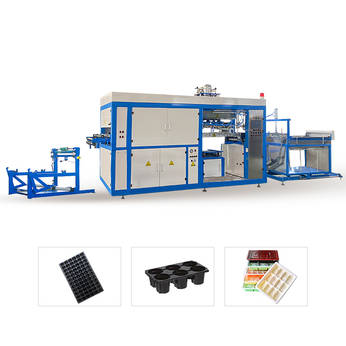
When engineering component packaging design solutions, developers often navigate the threshold between thin-gauge and heavy-gauge configurations. Thin-gauge variants typically serve single-use shipping requirements where material savings dominate procurement choices. Conversely, heavy-gauge applications target reusable, closed-loop handling systems capable of supporting substantial mass while resisting industrial wear. The structural integrity of these trays relies heavily on the capabilities of the industrial thermoforming machine utilized during production.
Electrostatic discharge represents a critical threat to semiconductor devices, integrated circuits, and sensitive printed circuit boards. Mitigating this risk requires a comprehensive understanding of the polymers utilized in thermoforming for electronics packaging. Materials are modified via conductive additives, inherently dissipative polymers, or topical anti-static codeposition to control electrical resistivity paths.
The operational landscape utilizes three primary classifications of protective plastics based on surface resistivity ranges:
The table below provides a detailed structural comparison of common polymers applied in heavy-gauge vacuum forming and electronic transport configurations:
| Polymer Compound | Resistivity Spectrum | Impact Endurance | Thermal Stability Threshold |
|---|---|---|---|
| High-Impact Polystyrene (HIPS) | Dissipative to Conductive | Moderate | 70 degrees Celsius |
| Polyethylene Terephthalate Glycol (PETG) | Anti-Static to Dissipative | High | 65 degrees Celsius |
| High-Density Polyethylene (HDPE) | Conductive Formulations | Very High | 80 degrees Celsius |
| Polycarbonate (PC) | Custom ESD Formulations | Extreme | 120 degrees Celsius |
The transformation of a raw polymer sheet into a highly accurate tray depends fundamentally on the quality of the thermoforming mould. For custom electronic shipping trays, tooling design must account for material shrinkage, thermal expansion coefficients, and draft angles to enable reliable demolding without damaging structural features.
The deployment of CNC machined tooling using premium aluminum grades ensures optimized thermal conductivity and dimensional repeatability. Unlike cast tooling, which may harbor internal porosity and structural inconsistencies, CNC-milled molds permit complex internal venting geometries. These micro-vents are crucial for achieving crisp definition around tight pocket radii, ensuring that delicate electronic components sit snugly without shifting during transit.
The processing sequence within a high-performance production cycle follows a structured timeline to maintain consistency across thousands of parts:
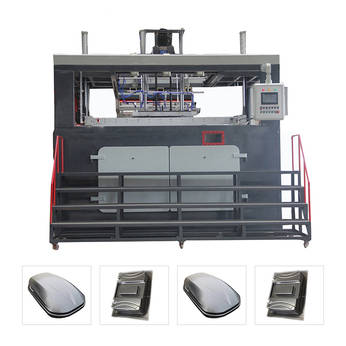
Heavy-gauge vacuum forming involves processing plastic sheets ranging in thickness from 1.5 millimeters up to over 6 millimeters. This specific manufacturing profile demands complex thermoforming machine sequences that manage immense sheet weight and slow heat absorption rates. Proper thermal profiling prevents core degradation while ensuring the outer surfaces reach the requisite viscoelastic state.
Unlike thin-gauge processing, which often utilizes inline roll-fed material, heavy-gauge forming relies on sheet-fed systems. This workflow allows for advanced multi-zone ceramic or quartz heating configurations, enabling engineers to alter the localized temperature across the plastic sheet. This spatial control prevents excessive material thinning in high-draw regions, such as deep pocket dividers within large custom electronic shipping trays.
During the forming phase, pre-stretch pneumatic pressure is frequently applied to generate a material billow before the tool makes contact. This technique ensures that the deep cavities characteristic of heavy-gauge ESD safe thermoformed trays maintain consistent wall thicknesses along both the vertical sidewalls and the base radiuses.
Modern electronic assembly plants heavily rely on automated pick-and-place robotics. This integration means that custom electronic shipping trays must conform to strict structural tolerances to prevent system errors. If a tray warps or features inconsistent pocket dimensions, robotic grippers may fail to register components properly, leading to operational downtime.
2 to 3 Degrees
Minimum slope required to facilitate rapid component extraction by automated mechanical arms without binding.
Greater than 0.5mm
Prevents localized stress concentrations and guarantees full material seating into the CNC machined tooling profiles.
+/- 0.25mm
The critical accuracy limit sustained across global tray dimensions to match robotic assembly coordinates perfectly.
To maximize rigidity without adding excessive weight, designs incorporate structural features such as localized ribbing, interlocking nesting patterns, and double-walled perimeters. These geometries distribute stacked weight across the tray structure rather than shifting the physical load directly onto the sensitive electronic assemblies inside.
Understanding the balance within the heavy gauge thin gauge thermoformed plastic market involves assessing life-cycle costs and application environments. While thin-gauge alternatives offer minimal initial financial layout, heavy-gauge alternatives demonstrate superior ROI over extended operational timelines.
Thin-gauge thermoforming for electronics packaging dominates consumer facing distribution channels, where components travel one-way from the manufacturer to the final consumer. However, inside internal fabrication hubs or long-term industrial supply loops, heavy-gauge alternatives provide the structural durability needed to endure hundreds of washing, transport, and stacking sequences.
Consider the performance metrics observed across standard industrial material loops:
Maintaining the structural and electrical integrity of ESD safe thermoformed trays requires precise testing frameworks. Quality assurance protocols confirm both the physical sizing and electrical properties across multiple manufacturing batches.
Surface resistivity is verified using calibrated concentric ring probes at specific locations across the tray profile, focusing on deep drawn areas where material stretching can thin conductive or dissipative additives. Mechanical testing involves rigorous load simulation, vibration scanning, and drop tests to verify that the component packaging design remains secure under real-world logistics stress.
Furthermore, mold temperature regulation during production on the thermoforming machine prevents latent internal stresses within the polymer. Trays that cool too quickly inside the mold can retain significant internal tension, which often leads to twisting or bowing months after deployment on the production floor.
The thermoforming process stretches the plastic sheet, which can alter the concentration of carbon or dissipative additives across deep-drawn pockets. Testing ensures that the surface resistivity remains within the required static-dissipative or conductive range across all areas of the finished tray.
CNC machined tooling provides superior dimensional precision, smoother surface finishes, and eliminates internal structural voids often found in cast molds. This provides highly repeatable tolerances and clean pocket geometry required for automated pick-and-place machinery.
The decision depends on the expected lifecycle, part weight, and structural demands. Thin-gauge is optimal for light, disposable, single-use shipping applications, while heavy-gauge is suited for heavy components, rugged industrial handling, and multi-year reusable closed-loop supply systems.
Proper draft angles, typically between 2 to 3 degrees, prevent the plastic tray from sticking tightly to the manufacturing mold or causing friction jams. This smooth profile allows robotic arms to insert and extract trays seamlessly during high-speed automated processing.
Trays made with topically applied anti-static coatings can lose their efficacy through washing and physical handling. However, trays utilizing inherently dissipative polymers or embedded carbon matrix fillers retain their ESD protection characteristics permanently, regardless of repeated wash cycles.

 +8618621972598
  +8613917961988
  [email protected]
 No. 565, Xinchuan Road, Xinta Community, Lili Town, Wujiang District, Suzhou City, China
 Copyright © 2024 Thermoforming Machine/Plastic Cup Machine All Rights Reserved.Custom Automatic Vacuum Thermoforming Plastic Machine Manufacturers