

 English
 عربى
عربى 简体中文
简体中文
Home / News / Industry News / What is the maximum draw depth achievable on a desktop manual vacuum forming machine?

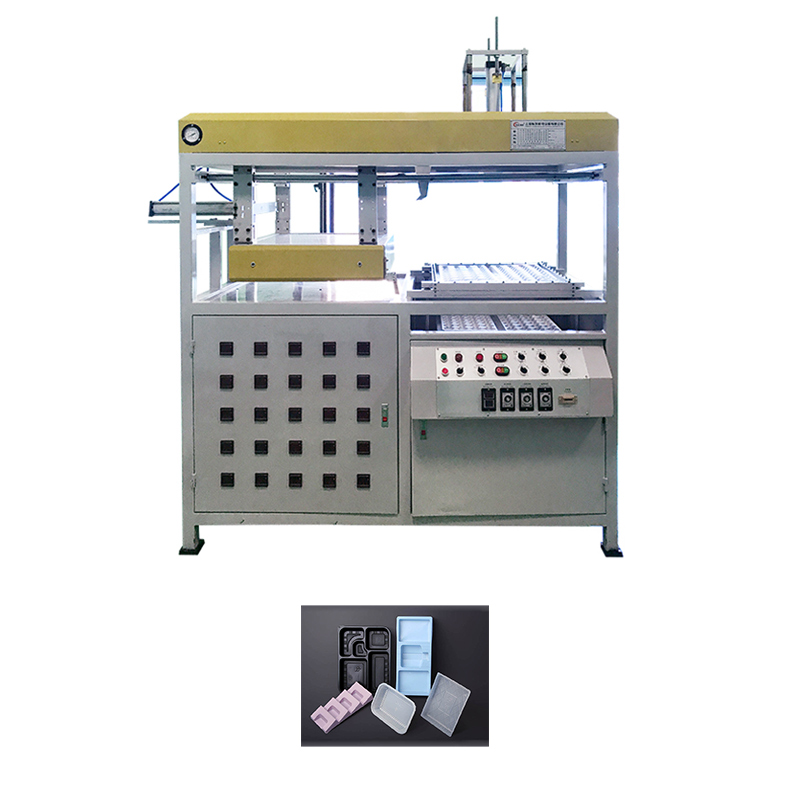
Draw depth represents one of the most critical performance parameters when evaluating a manual vacuum forming machine for your manufacturing needs. This measurement defines the maximum vertical distance a heated thermoplastic sheet can be stretched into a mold cavity while maintaining structural integrity and acceptable wall thickness distribution. For desktop manual vacuum forming machines, understanding these limitations ensures realistic project planning and optimal equipment selection.
The concept of draw depth extends beyond simple vertical measurement. Engineers and production managers must consider the relationship between cavity depth, opening width, material properties, and forming technique. When properly balanced, these factors determine whether a part can be successfully manufactured or will suffer from excessive thinning, webbing, or tearing during the forming process.
Desktop manual vacuum forming machines occupy a unique position in the thermoforming equipment spectrum. These compact units bridge the gap between hobbyist-grade equipment and industrial production machinery, offering professional-grade capabilities in space-efficient configurations. Their draw depth specifications typically range from 200mm to 300mm for standard suction forming, though actual achievable depths depend heavily on material selection, mold design, and operator technique.
Industry data reveals that desktop manual vacuum forming machines commonly offer maximum draw depths between 200mm and 300mm for straight vacuum forming operations. Entry-level compact models typically provide 200mm maximum forming depth, suitable for signage, packaging trays, and shallow enclosures. Mid-range desktop units extend this capability to 300mm, accommodating deeper industrial components and complex three-dimensional forms.
These specifications represent mechanical limits—the physical distance the forming table or mold can travel or the chamber depth available for part formation. However, practical forming depths often fall short of these mechanical maximums due to material behavior constraints. The relationship between achievable depth and part quality follows an inverse curve: as depth increases, material thinning accelerates, potentially compromising part strength and surface finish.
Analysis of available desktop manual vacuum forming equipment reveals consistent patterns in depth capabilities. Compact units with 600mm x 600mm working areas typically specify 200mm maximum suction forming depth. Larger desktop models with expanded working areas of 1200mm x 2400mm maintain similar 300mm depth ratings but offer significantly expanded forming area for larger shallow parts or multiple cavity arrangements.
The following table illustrates typical specifications found in desktop manual vacuum forming machine categories:
| Machine Category | Working Area (mm) | Max Suction Depth (mm) | Max Material Thickness (mm) |
| Compact Desktop | 600 x 600 | 200 | 5-6 |
| Standard Desktop | 1200 x 1800 | 300 | 5-6 |
| Large Format Desktop | 2000 x 3000 | 300 | 6-8 |
These specifications demonstrate that maximum draw depth remains relatively consistent across desktop machine sizes, indicating that depth capability relates more to vertical travel mechanics than overall machine scale. Buyers should note that published depth ratings assume optimal conditions—proper material heating, appropriate vacuum pressure, and suitable mold design.
Draw ratio provides the fundamental mathematical relationship governing vacuum forming depth limitations. This critical parameter compares the depth of the formed part to the width of the mold opening, establishing practical boundaries for successful thermoforming operations. Understanding draw ratios enables manufacturers to predict material behavior and determine achievable depths before committing to tooling investments.
For desktop manual vacuum forming machines, industry standards establish clear draw ratio guidelines. Straight vacuum forming without auxiliary techniques typically achieves draw ratios of 1:1, meaning the maximum depth equals the narrowest width dimension of the mold opening. Exceeding this ratio risks excessive material thinning, corner weakness, and potential part failure.
The linear draw ratio calculation follows a straightforward formula: divide the part depth by the smallest opening dimension. For example, a part requiring 150mm depth formed over a 100mm wide cavity yields a draw ratio of 1.5:1—potentially problematic for straight vacuum forming without pre-stretching techniques.
Area draw ratio offers a more comprehensive assessment by comparing total surface area before and after forming. This calculation predicts average material thinning using the relationship where average final thickness approximately equals initial thickness divided by the area draw ratio. For desktop manual operations, maintaining area draw ratios below 2:1 ensures acceptable wall thickness uniformity for most applications.
Practical application of draw ratio principles involves evaluating part geometry before mold fabrication. Deep, narrow cavities present greater challenges than shallow, wide forms. A desktop manual vacuum forming machine rated for 300mm maximum depth may successfully form a 300mm deep part with 300mm or greater opening width, but struggle with the same depth in a 150mm wide cavity due to the 2:1 draw ratio exceeding material capabilities.
Manual vacuum forming operations can extend achievable draw ratios through several established techniques. Plug-assist forming, where a mechanical helper tool pre-stretches material into the cavity before vacuum application, increases practical draw ratios to approximately 2.5:1. This technique proves particularly valuable for desktop manual machines, as it compensates for lower vacuum pressures compared to industrial systems.
Billow forming or reverse-draw techniques further extend capabilities by pre-stretching the heated sheet away from the mold before forming. These methods achieve draw ratios up to 3:1 on capable desktop equipment, though they require precise timing and operator skill. The pre-stretching action thins the sheet center intentionally, redistributing material to prevent the extreme thinning that occurs at part bottoms in deep cavities.
Thermoplastic material selection profoundly impacts achievable draw depths on manual vacuum forming machines. Each polymer exhibits unique elongation characteristics, melt strength, and memory properties that determine how far it can stretch before tearing or becoming too thin for functional use. Desktop machine operators must match material capabilities to part requirements for successful deep-draw applications.
Acrylonitrile Butadiene Styrene (ABS) and High Impact Polystyrene (HIPS) represent the most forgiving materials for deep vacuum forming operations. These amorphous polymers exhibit excellent elongation properties and maintain consistent strength across deformation ranges. On desktop manual machines, ABS can achieve practical forming depths up to 150-200mm in standard configurations, with plug-assist techniques extending this to 300mm in favorable geometries.
Material thickness directly correlates with achievable depth. For deep-draw parts exceeding 150mm, starting sheet thickness should measure at least 3mm to ensure adequate material remains at critical thin areas. Industry guidelines suggest that corners and deep pockets may thin to 40-60% of original thickness, requiring sufficient starting gauge to maintain structural requirements in finished parts.
Acrylic (PMMA) and Polycarbonate (PC) present greater challenges for deep forming due to their higher rigidity and lower elongation compared to ABS. These materials typically achieve maximum practical depths of 100-150mm on desktop manual equipment without specialized techniques. Their tendency toward stress cracking and surface mark-off requires careful temperature control and slower forming cycles.
Polycarbonate's exceptional impact resistance comes at the cost of reduced formability. Maximum draw depths for PC typically remain 20-30% lower than equivalent ABS parts. Pre-drying becomes essential for these hygroscopic materials, as moisture content above 0.02% causes surface defects that compromise deep-draw success rates.
Polyvinyl Chloride (PVC) and Polyethylene Terephthalate Glycol (PETG) occupy intermediate positions in deep-draw capability. These materials achieve practical depths of 120-180mm on desktop manual machines, with PETG offering superior clarity for transparent applications. Both materials exhibit good detail reproduction but require precise temperature control—PVC degrades above 180°C while PETG demands higher forming temperatures around 120-140°C.
The following table summarizes material-specific depth recommendations for desktop manual vacuum forming:
| Material | Maximum Practical Depth | Recommended Starting Thickness for Deep Draws | Special Considerations |
| ABS | 200-300mm | 3-5mm | Excellent for deep enclosures |
| HIPS | 150-200mm | 2.5-4mm | Cost-effective for packaging |
| Acrylic (PMMA) | 100-150mm | 4-6mm | Requires slow heating, prone to mark-off |
| Polycarbonate | 100-150mm | 4-6mm | Must be pre-dried, high impact resistance |
| PETG | 120-180mm | 3-5mm | Food-safe, good clarity |
| PVC | 120-180mm | 2-4mm | Temperature sensitive, avoid overheating |
Mold geometry and construction significantly influence the maximum effective draw depth achievable on desktop manual vacuum forming machines. Even within the mechanical depth limits of the equipment, poor mold design can restrict material flow, create thinning hotspots, or cause webbing that limits practical forming depth. Understanding these design constraints enables optimization of tooling for deep-draw applications.
Draft angles—the tapered slope applied to vertical walls—prove critical for deep-draw mold design. Industry standards recommend minimum draft angles of 3 to 5 degrees per side for vacuum formed parts, with textured or polished surfaces requiring increased angles of 7 to 10 degrees to prevent sticking. Inadequate draft creates excessive friction during forming, effectively reducing achievable depth as material struggles to slide down cavity walls.
For deep parts approaching 200-300mm depths, increasing draft angles to 5-7 degrees significantly improves material flow and reduces thinning. The taper assists gravity and vacuum pressure in pulling material to cavity bottoms while facilitating easier part release. Male molds (positive forms) generally require greater draft angles than female molds due to material shrinkage gripping the tool during cooling.
Corner radii directly impact material thinning in deep cavities. Sharp corners create stress concentration points where material stretches biaxially, resulting in accelerated thinning and potential tearing. Design guidelines specify minimum inside corner radii of 1.5 times material thickness for general forming, with deep-draw parts requiring substantially larger radii.
For parts exceeding 150mm depth, bottom corner radii should measure at least 6-12mm regardless of material thickness. This generous radius distribution prevents the extreme thinning that occurs when material must stretch around tight corners while simultaneously drawing down vertical walls. Progressive radius increases—larger radii at deeper positions—optimize material distribution throughout the draw.
Proper venting becomes increasingly critical as draw depth increases. Deep cavities trap air that must evacuate through mold vents as material descends. Inadequate venting creates air pockets that prevent material from reaching full depth, effectively reducing achievable forming distance. Desktop manual machines typically generate vacuum levels of 25-28 inches of mercury, requiring efficient venting to utilize this pressure fully.
Vent hole sizing follows material-specific guidelines: 0.25-0.6mm diameter for polyethylene, 0.6-1.0mm for thin-gauge materials, and up to 1.5mm for heavy-gauge rigid materials. Deep molds require intensified venting at corners and cavity bottoms where air entrapment risks are highest. Vent spacing of 25-50mm between centers ensures uniform vacuum distribution across deep forming surfaces.
Achieving maximum draw depth on desktop manual vacuum forming machines requires mastery of operational techniques beyond basic machine specifications. The manual nature of these machines places significant control in the operator's hands, with proper technique often determining success or failure in deep-draw applications. Understanding temperature management, timing, and auxiliary methods extends practical depth capabilities.
Uniform heating represents the foundation of successful deep vacuum forming. Desktop manual machines typically utilize quartz heating elements with reflector covers to achieve rapid, even heating. For deep draws, material must reach optimal forming temperature throughout the entire sheet thickness—surface temperatures alone prove insufficient as the core must remain pliable to allow continued stretching.
Material-specific temperature windows vary significantly:
For deep-draw parts, maintaining sheet temperature at the upper end of the forming window increases material elasticity and extends achievable depth. However, overheating risks sagging, webbing, and surface defects. Desktop machines with zoned heating control allow temperature profiling—higher temperatures in sheet centers compared to edges—to optimize material distribution during deep draws.
Pre-stretching techniques significantly extend achievable draw depths on manual vacuum forming machines. The billow method involves blowing the heated sheet into a bubble away from the mold before applying vacuum. This action stretches the sheet center—normally the thickest area in straight vacuum forming—redistributing material to prevent extreme thinning at part bottoms.
Manual execution of billow forming requires practice and timing. The operator observes sheet sagging, then introduces controlled air pressure to create a bubble approximately 50-75% of the final part depth. This pre-stretched configuration is then drawn into the mold using vacuum. The technique can increase achievable depth by 30-50% compared to straight vacuum forming for skilled operators.
Plug-assist tools represent the most effective method for extending draw depth on desktop manual machines. These mechanical helpers physically push material into the cavity before or during vacuum application, carrying material to areas that would otherwise thin excessively. Syntactic foam plugs—composite materials with low thermal conductivity—prove ideal as they insulate the sheet, preventing premature cooling during contact.
Effective plug design follows established proportions: plug dimensions typically measure 80% of the cavity opening, with plug travel reaching 70-75% of final part depth. The plug shape concentrates material where wall thickness proves most critical. For manual machines, simple wooden or resin plugs can be fabricated in-house, though commercial syntactic foam plugs offer superior performance and durability.
While desktop manual vacuum forming machines may specify maximum draw depths of 200-300mm, practical limitations often reduce achievable depths for production-quality parts. Understanding these quality-driven constraints helps establish realistic expectations and avoid costly prototyping iterations.
Material thinning follows predictable patterns in vacuum formed parts. Flat areas retain 90-100% of original thickness, vertical walls thin to 70-85%, and corners may reduce to 40-60% of starting gauge. In deep draws exceeding 200mm, bottom corners can thin below 30%, creating weak points susceptible to cracking or impact failure.
Quality standards for specific applications dictate minimum acceptable wall thickness. Structural enclosures may require 2mm minimum thickness in all areas, while cosmetic covers might tolerate thinner sections in non-critical regions. These requirements effectively limit draw depth—if 3mm starting material thins to 0.9mm at 250mm depth but 1.5mm minimum is required, practical depth limits to approximately 200mm regardless of machine capability.
Webbing occurs when excess material accumulates between mold features, creating unwanted folds or bridging. This defect becomes increasingly common in deep draws with multiple cavities or tall male features. The material lacks sufficient space to flow properly, bunching instead of stretching uniformly.
Prevention strategies include:
When webbing cannot be eliminated through process optimization, reducing draw depth or splitting the part into multiple components may prove necessary.
Deep draws compromise surface detail reproduction as material stretches away from mold surfaces. At depths exceeding 150mm, texture fidelity and fine detail definition degrade, particularly in vertical walls where material thinning reduces contact pressure against mold surfaces. Desktop manual machines with lower vacuum pressures (compared to industrial systems) exhibit greater susceptibility to detail loss in deep cavities.
For applications requiring both deep draws and high surface detail, pressure forming—where compressed air forces material against the mold—provides superior results. However, most desktop manual machines lack pressure forming capabilities, limiting users to vacuum-only processes with their inherent depth-to-detail tradeoffs.
Understanding typical depth requirements across industries helps align desktop manual vacuum forming machine capabilities with practical manufacturing needs. While maximum specifications provide theoretical limits, most applications operate well within these boundaries.
Food packaging, blister packs, and industrial trays typically require draw depths of 25-75mm, well within the capabilities of even entry-level desktop manual machines. These shallow forms prioritize speed and consistency over extreme depth, with cycle times of 30-60 seconds per part. The 200-300mm depth ratings of desktop units provide substantial capability headroom for packaging applications.
Three-dimensional signage, channel letters, and point-of-purchase displays drive demand for moderate draw depths of 100-200mm. Acrylic and ABS sign faces with 150mm depth represent common applications for desktop manual equipment. These applications benefit from the machines' ability to form large areas—1200mm x 2400mm or greater—at moderate depths with excellent optical clarity and surface finish.
Electronic enclosures, machine housings, and equipment covers often require depths of 150-300mm, pushing the upper limits of desktop manual machine capabilities. These structural applications demand consistent wall thickness and structural integrity, frequently necessitating plug-assist techniques and thicker starting materials. ABS proves the material of choice for these deep-draw enclosures due to its excellent formability and impact resistance.
Desktop manual vacuum forming machines serve extensively in prototyping workflows where maximum depth requirements may be relaxed in favor of rapid iteration. Designers can validate form and fit with reduced depths before committing to production tooling. The manual operation allows quick adjustments to depth and geometry without extensive mold modifications, supporting agile development processes.
Selecting appropriate desktop manual vacuum forming machine specifications requires careful analysis of intended applications. Overspecifying depth capability wastes investment, while underspecifying limits manufacturing flexibility. Systematic evaluation of depth requirements ensures optimal equipment selection.
Begin by cataloging current and anticipated part requirements. Measure maximum depth across your product range and add 20-30% margin for future development. Consider that deeper capability rarely compromises shallow part production—machines rated for 300mm depth form 50mm parts equally well—so specifying for maximum anticipated need provides future-proofing.
Evaluate draw ratio requirements rather than absolute depth alone. A 200mm deep part with 400mm opening (0.5:1 ratio) requires less capable equipment than a 150mm deep part with 100mm opening (1.5:1 ratio). The latter presents greater forming challenges despite lower absolute depth.
For operations primarily serving signage, packaging, and shallow enclosure markets, desktop manual machines with 200mm maximum depth prove adequate and cost-effective. These compact units offer smaller footprints and lower power requirements while handling 80% of typical thermoforming applications.
Manufacturers serving industrial equipment, automotive aftermarket, or deep enclosure markets should specify 300mm depth capability. The additional investment provides essential headroom for deep-draw applications and enables use of plug-assist techniques that effectively extend practical depth limits.
Published depth specifications assume optimal machine condition. Evaluate potential equipment for mechanical rigidity—frame construction, table alignment, and vacuum seal integrity directly impact depth achievement. Machines with pneumatic or hydraulic lift systems provide smoother, more controlled depth advancement than purely manual mechanisms, improving deep-draw consistency.
Heating system capability also influences depth achievement. Uniform heating across large sheets requires sufficient element density and reflector design. Machines with zoned heating control allow optimization for deep draws by concentrating heat in sheet centers where maximum stretching occurs.
Extracting maximum draw depth from desktop manual vacuum forming machines requires systematic optimization across material, mold, and process parameters. These strategies enable operators to approach mechanical depth limits while maintaining acceptable part quality.
Start with high-quality sheet material free from surface defects and thickness variations. Gauge variations exceeding ±5% create weak points that fail first during deep stretching. Pre-dry hygroscopic materials (polycarbonate, PETG, nylon) at 80-120°C for 2-4 hours to eliminate moisture that causes bubbling and surface defects during forming.
Select materials with high melt strength for deep draws. ABS offers the best combination of depth capability, ease of forming, and cost effectiveness. When transparency is required, PETG outperforms acrylic for deep draws due to superior elongation characteristics.
Mold temperature significantly impacts achievable depth. Cold molds chill material on contact, stopping flow before full depth is reached. Pre-heating molds to 60-80°C for heavy-gauge forming extends flow duration and improves material distribution. Aluminum molds with integrated heating elements provide optimal temperature control for deep-draw applications.
Surface finish also influences depth achievement. Highly polished surfaces reduce friction but may create vacuum seals that resist material flow. Matte or lightly textured finishes (120-180 grit) provide optimal balance between flow assistance and part release.
Successful deep draws follow precise timing sequences:
Rushing this sequence risks webbing, tearing, or excessive thinning. Desktop manual machines provide operator control over timing—an advantage over automatic systems for deep-draw optimization.
Desktop manual vacuum forming machine technology continues evolving, with depth capabilities expanding through improved materials, process controls, and hybrid techniques. Understanding emerging trends helps buyers make forward-looking equipment decisions.
Advanced materials with enhanced elongation properties are entering the market. Modified ABS grades and new copolymer formulations offer 20-30% greater draw ratios than conventional materials, effectively increasing achievable depth on existing equipment. Bio-based and recycled content materials are achieving formability parity with virgin polymers, supporting sustainable manufacturing without depth penalties.
Smart controls are migrating from industrial machines to desktop units. Temperature profiling systems that automatically adjust heating zones for deep draws reduce operator skill requirements and improve consistency. Vacuum monitoring systems with digital feedback help operators optimize timing for maximum depth achievement.
Hybrid manual-automatic operation modes represent another advancement. These systems automate critical timing sequences—pre-stretch timing, vacuum ramp rates—while retaining manual mold handling and part removal. The combination reduces the skill barrier for deep-draw success while maintaining the flexibility and cost advantages of manual operation.
Standard desktop manual vacuum forming machines typically offer maximum draw depths of 200mm to 300mm for straight vacuum forming. Compact entry-level models generally provide 200mm depth capability, while larger desktop units extend to 300mm. These specifications represent mechanical limits—the physical travel distance of the forming mechanism. However, practical achievable depths depend on material properties, mold design, and forming technique. Using plug-assist or billow forming techniques can effectively extend practical depth limits by 30-50% beyond straight vacuum forming capabilities.
This configuration presents significant challenges due to the 1.67:1 draw ratio exceeding standard vacuum forming limits. At this ratio, material thinning becomes extreme, with corners potentially reducing to 30-40% of original thickness. Success requires thick starting material (4-5mm minimum), plug-assist tooling, pre-stretching techniques, and optimal material selection (ABS preferred). Even with these measures, part quality may suffer from weak corners and inconsistent wall thickness. Consider redesigning the part to increase opening width or reduce depth, or splitting the geometry into multiple components.
Material thickness establishes the foundation for depth capability. Thicker sheets provide more material to stretch, maintaining adequate wall thickness in deep cavities. As a general guideline, parts requiring 150-200mm depth should use 3-4mm starting thickness, while 200-300mm depths require 4-6mm material. However, thicker materials demand longer heating cycles and higher vacuum capacity. Desktop manual machines typically specify maximum material thickness of 5-6mm, limiting the deepest draws unless specialized high-capacity units are selected.
Published depth ratings assume optimal conditions that may not align with real-world operations. Common limiting factors include inadequate material heating (center temperature too low), insufficient vacuum pressure (leaks or undersized pumps), cold molds chilling material prematurely, or inappropriate draw ratios for the part geometry. Verify that your material reaches proper forming temperature throughout its thickness, check vacuum system integrity (should achieve 25-28 inHg), and ensure mold temperatures are appropriate. Additionally, the rated depth may require plug-assist techniques that your operation has not yet implemented.
Desktop manual vacuum forming machines often specify different depth ratings for suction (vacuum) forming versus blow forming. Suction depths of 200-300mm represent standard vacuum forming capabilities. Blow forming depths, achieved by inflating the sheet away from the mold before forming, can extend to 220mm or greater on capable machines. This technique creates a pre-stretched bubble that redistributes material, enabling deeper final draws with more uniform wall thickness. Machines equipped with blow functions typically specify separate depth ratings for each mode.
Establish depth capability through systematic testing using progressive cavity molds. Create or acquire test molds with depths of 100mm, 150mm, 200mm, 250mm, and 300mm, all with 2:1 or better draw ratios (width at least twice depth). Use high-quality ABS sheet at 4mm thickness, properly dried and heated to 160°C. Form each cavity using your standard technique, then measure wall thickness at bottom corners. The maximum practical depth is reached when corner thickness falls below your application's minimum requirement (typically 1.5-2mm for structural parts). Record results to establish your specific machine's practical limits under your operating conditions.
Deep draws benefit from higher vacuum capacity, though desktop manual machines typically utilize fixed pump specifications. Standard units provide vacuum pump outputs of 20-100 cubic meters per hour, with larger machines offering greater capacity. While deeper draws don't necessarily require higher vacuum levels (25-28 inHg remains standard), they demand sustained vacuum application as material travels farther into cavities. Ensure your vacuum system maintains rated pressure throughout the forming cycle, not just at initial application. Check for leaks in seals, hoses, and mold venting that could compromise deep-draw performance.
Plug-assist tooling represents the most effective method for extending achievable draw depth on manual vacuum forming machines. The plug mechanically pushes material into the cavity before vacuum application, carrying material to areas that would otherwise thin excessively. This technique can increase practical draw ratios from 1:1 (straight vacuum) to 2.5:1, effectively extending achievable depth by 50-150% depending on part geometry. For desktop manual machines targeting maximum depth capability, investing in or fabricating appropriate plug-assist tools proves essential for deep-draw success.
Pressure forming, which uses compressed air to force material against the mold, typically achieves superior detail and can assist in deeper draws compared to vacuum-only forming. However, most desktop manual vacuum forming machines lack pressure forming capabilities, operating solely on vacuum principles. Some mid-range desktop units offer combination suction-and-blow functions that provide limited pressure assistance. For applications consistently requiring depths beyond 250mm with high detail requirements, upgrading to pressure-forming-capable equipment may prove necessary, though this represents a significant step up from standard desktop manual machines.
Calculate required starting thickness using draw ratio principles. First, determine your part's draw ratio by dividing depth by the smallest opening dimension. For draw ratios up to 1:1, starting thickness should equal minimum required final thickness divided by 0.6 (accounting for 40% thinning in corners). For example, if you need 2mm minimum thickness in a 200mm deep part with 1:1 draw ratio, start with 3.3mm material (2 ÷ 0.6). Higher draw ratios require thicker starting material or plug-assist techniques. Industry empirical formulas suggest: Recommended Thickness = Target Thickness × (1 + 0.35 × (Draw Ratio - 1)), providing conservative estimates for deep-draw applications.

 +8618621972598
  +8613917961988
  [email protected]
 No. 565, Xinchuan Road, Xinta Community, Lili Town, Wujiang District, Suzhou City, China
 Copyright © 2024 Thermoforming Machine/Plastic Cup Machine All Rights Reserved.Custom Automatic Vacuum Thermoforming Plastic Machine Manufacturers