

 English
 عربى
عربى 简体中文
简体中文
Home / News / Industry News / What are the specific functions of the 4th station in a full-automatic line?

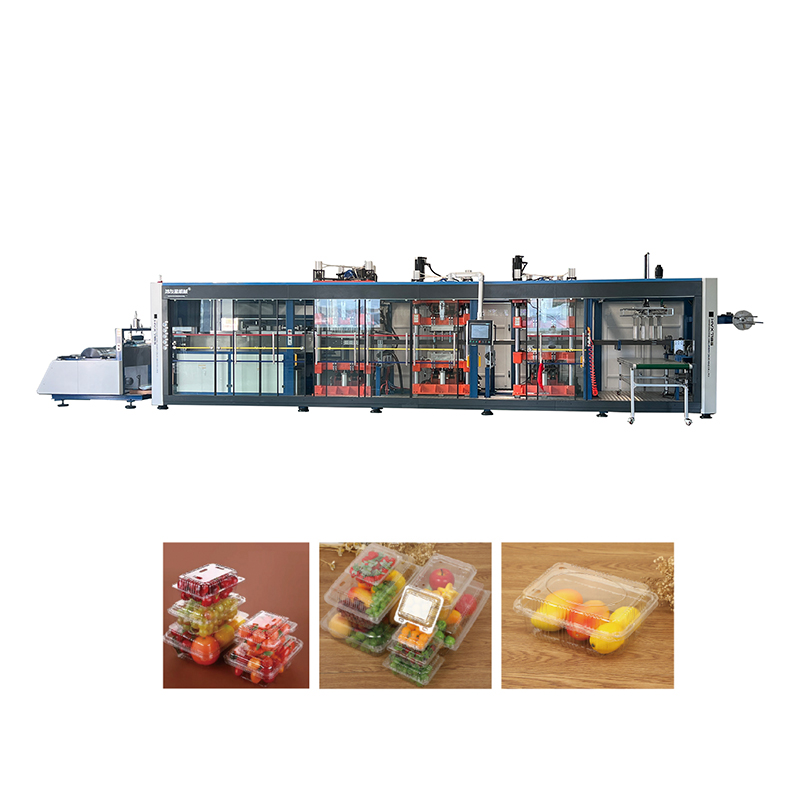
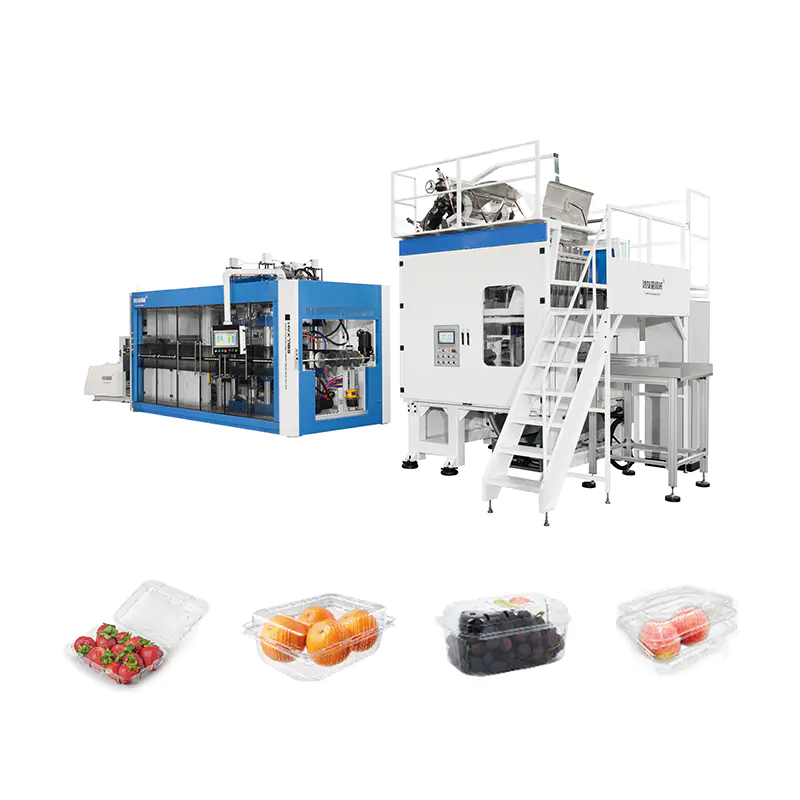
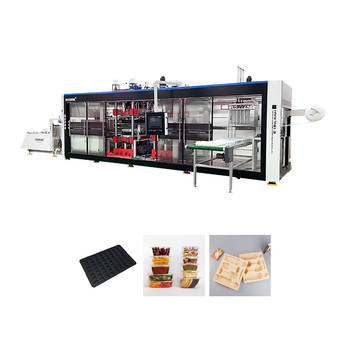
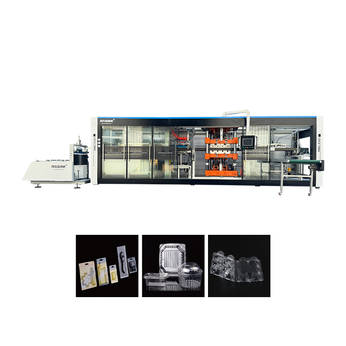
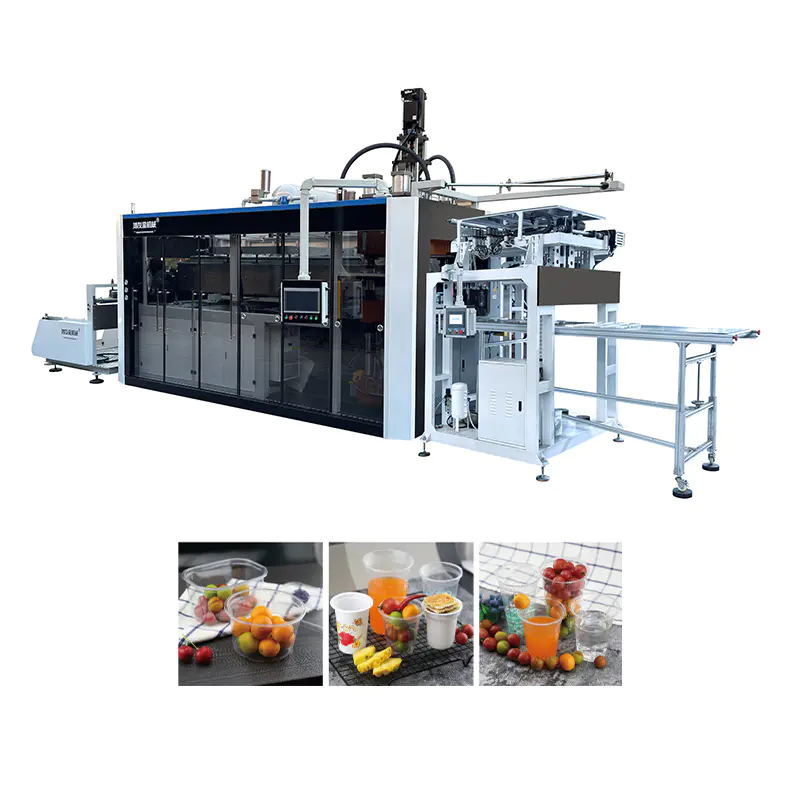
In the modern packaging industry, efficiency is no longer just a goal—it is a survival requirement. The transition from manual processes to the use of a Full-Automatic 4 Stations Thermoforming Machine represents a significant leap in manufacturing technology. While traditional machines often relied on three stages—forming, cutting, and stacking—the addition of a specialized fourth station has redefined high-speed production. This specific configuration allows for a streamlined workflow that minimizes human intervention and maximizes output quality.
For B2B buyers, understanding the internal mechanics of the 4th station is crucial for calculating ROI. This station isn't just an "extra" step; it is the integration point where product quality meets logistical readiness. By automating the final handling of the product, manufacturers can reduce labor costs by up to 30% and decrease the risk of secondary contamination, which is vital for food-grade packaging production.
The primary function of the 4th station is the precise stacking of finished parts. After the forming, punching, and cutting stages, the products are often in a fragile or high-temperature state. The 4th station uses specialized mechanical arms or robotic grippers to lift products from the cutting mold and stack them vertically or horizontally. This prevents the "nesting" issues common in manual handling, where products stick together due to residual heat.
In a commercial setting, accuracy in quantity is paramount. The 4th station is equipped with sensors that count each item as it is stacked. Once a pre-set number (e.g., 50 cups or 100 trays) is reached, the station automatically shifts the stack to a conveyor belt for packaging. This eliminates the need for manual counting, ensuring that every batch delivered to the end customer is 100% accurate.
To understand why the 4th station is so effective, we must look at how it interacts with the preceding stages. Below is a breakdown of the standard operational flow in a high-performance system:
| Station Order | Primary Function | Key Output |
|---|---|---|
| 1st Station | Forming | Defined Product Shape |
| 2nd Station | Punching (Optional) | Holes or Ventilation Slots |
| 3rd Station | Cutting | Separation from Sheet |
| 4th Station | Stacking & Waste Rewinding | Retail-Ready Stacks |
The 4th station does not only deal with finished goods. It also manages the "skeleton" or scrap material left over after the cutting process. In a high-speed line, the scrap material is pulled through the 4th station and wound into tight rolls or fed directly into a granulator. This closed-loop management system ensures that the production floor remains clean and that raw material waste is easily transported back for recycling.
The 4th station uses servo motors to maintain consistent tension on the scrap sheet. If the tension is too loose, the sheet may jam; if too tight, it may tear. The precision of the servo-driven winding system in the 4th station is critical for maintaining a continuous production cycle without downtime.
Investing in a 4-station configuration offers tangible benefits that directly impact the bottom line. For high-volume producers, the advantages go beyond simple automation:
The "brain" of the 4th station is typically a PLC (Programmable Logic Controller) that synchronizes with the main drive. The positioning accuracy is often within ±0.5mm, which is necessary for creating perfectly aligned stacks. This is particularly important for products that must undergo automatic bagging in subsequent steps, as misaligned stacks will cause bagging machine failures.
Modern 4th stations also feature "Quick Change" stacking tools. This allows manufacturers to switch between different product types (e.g., switching from a 3-compartment lunch box to a soup bowl) with minimal mechanical adjustment. This flexibility is a key selling point for B2B contract manufacturers who handle diverse client requirements.
Yes, the station is designed to be material-agnostic. The vacuum or mechanical grippers can be adjusted based on the rigidity and surface characteristics of various polymers.
Modern systems include optical sensors that detect "mis-feeds." If a product is not cleared, the 4th station will trigger an emergency stop to prevent damage to the stacking tools.
While it adds approximately 1.5 to 2 meters to the overall length of the line, the vertical stacking design saves space that would otherwise be needed for manual sorting tables.
Absolutely. The operator can set specific stack counts via the HMI touch screen, allowing for instant changes to packaging requirements without stopping the entire line.

 +8618621972598
  +8613917961988
  [email protected]
 No. 565, Xinchuan Road, Xinta Community, Lili Town, Wujiang District, Suzhou City, China
 Copyright © 2024 Thermoforming Machine/Plastic Cup Machine All Rights Reserved.Custom Automatic Vacuum Thermoforming Plastic Machine Manufacturers