

 English
 عربى
عربى 简体中文
简体中文
Home / News / Industry News / What Makes a Thermoforming Machine the Backbone of Modern Plastic Manufacturing

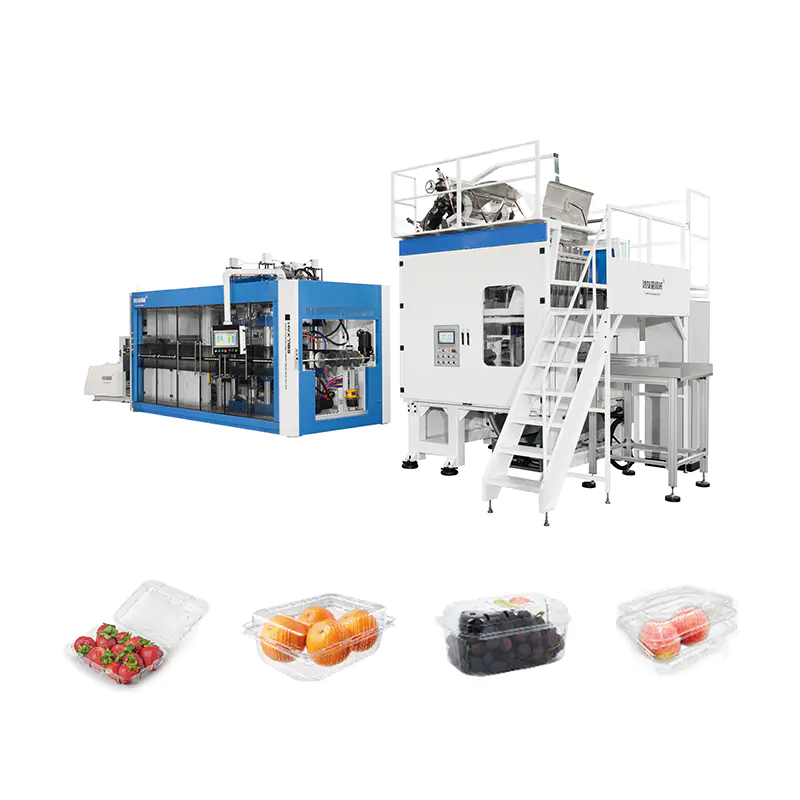
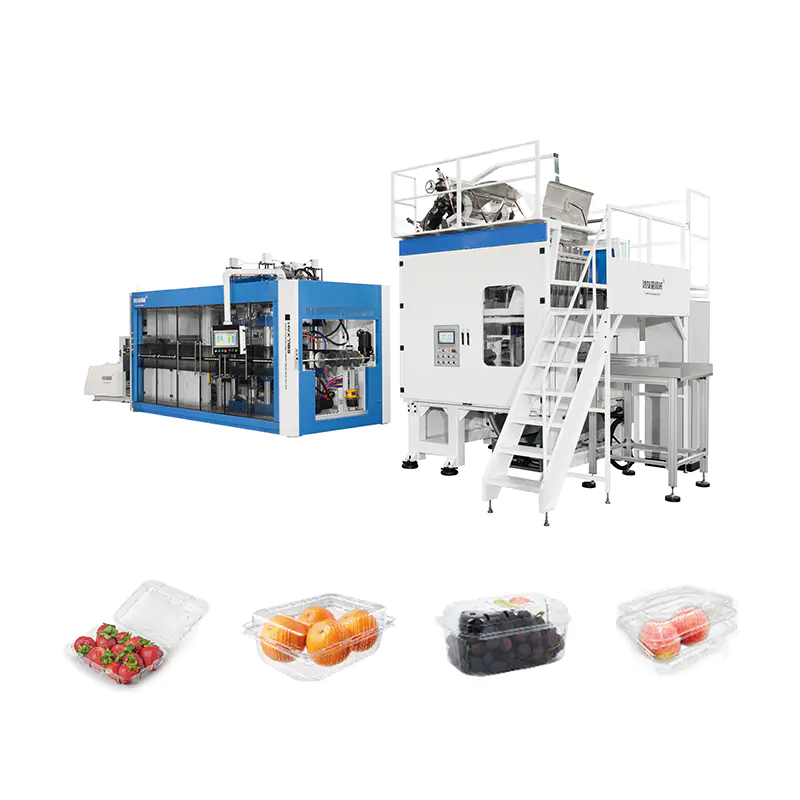
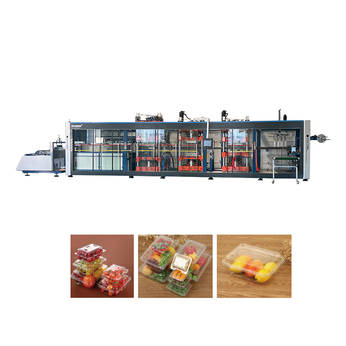
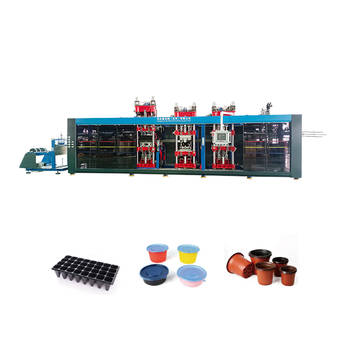
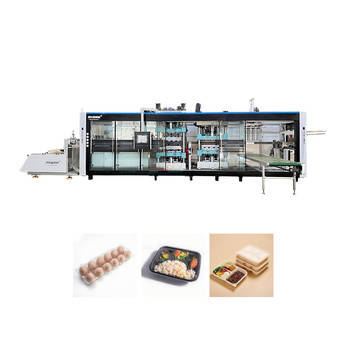
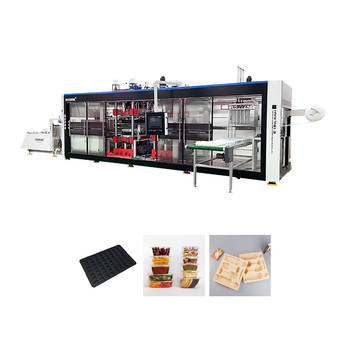
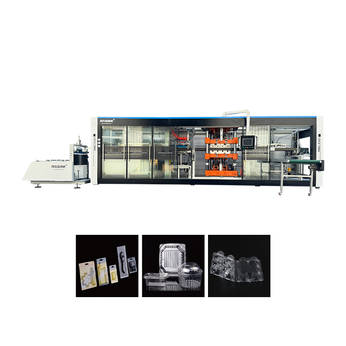
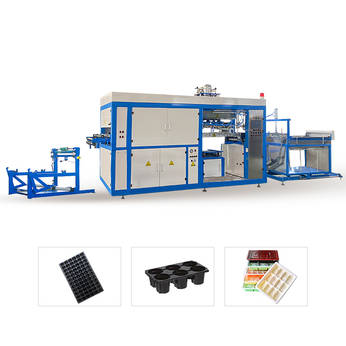
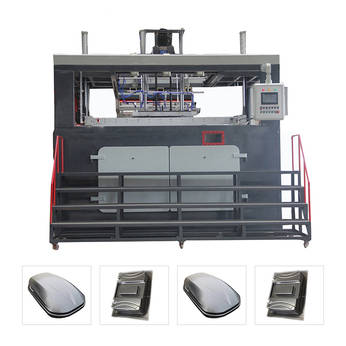
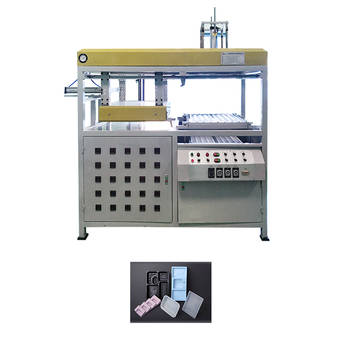
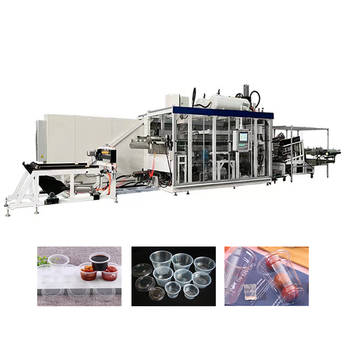
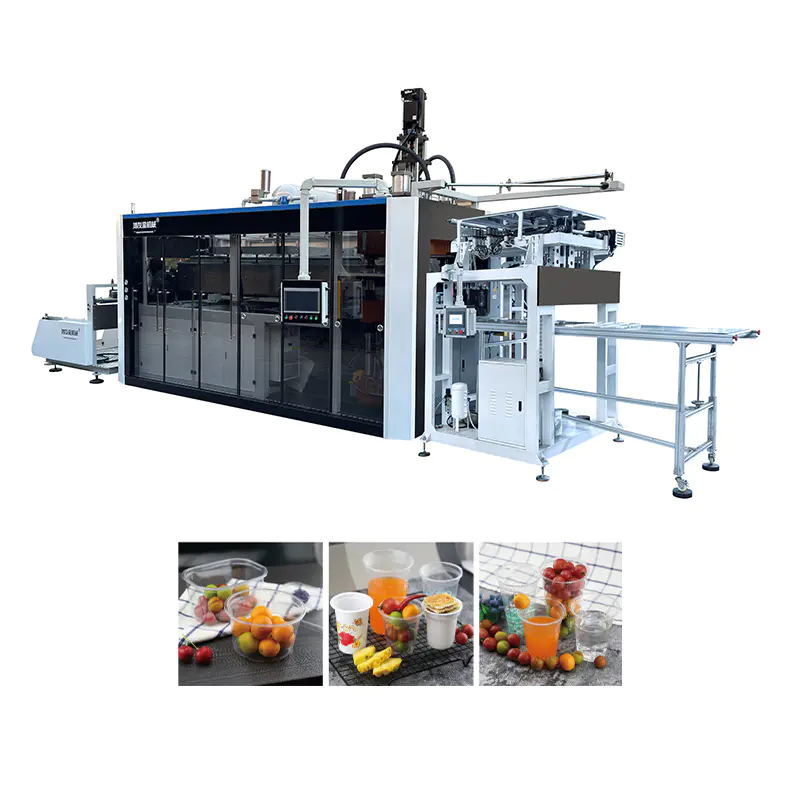
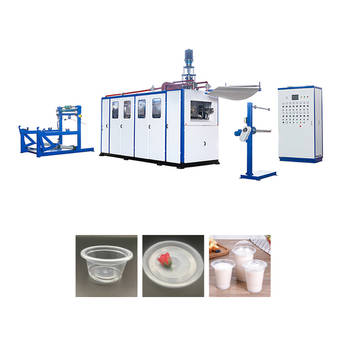
A thermoforming machine is a piece of industrial equipment that heats a plastic sheet until it becomes pliable, then forms it over or into a mold using vacuum pressure, air pressure, or mechanical assistance. Once the sheet cools against the mold surface, it retains the new shape, and the finished part is trimmed away from the surrounding sheet material.
This process sits at the center of packaging, automotive interior production, medical device housings, and consumer goods manufacturing. Unlike processes that require molten plastic injected under extreme pressure, thermoforming works with sheet stock that is softened rather than liquefied, which changes almost everything about tooling cost, cycle speed, and part design flexibility.
Key point: Thermoforming is chosen when production volume, part size, or tooling budget make injection molding impractical, especially for large, thin-walled, or short-run parts.
While machine configurations vary by manufacturer and application, the underlying sequence of a thermoforming cycle follows a consistent logic. Understanding this sequence helps explain where cycle time is spent and where efficiency gains are possible.
The heating and forming stages are usually where most cycle time is consumed, since sheet thickness and material type directly affect how long the plastic needs to reach a uniform forming temperature.
Not all thermoforming is identical. The choice of process depends on part depth, wall thickness uniformity requirements, and production volume.
| Process Type | Description | Best Suited For |
|---|---|---|
| Vacuum Forming | Sheet is drawn into a mold using vacuum pressure only | Shallow parts, packaging trays |
| Pressure Forming | Air pressure is added to push the sheet into fine mold details | Parts needing sharp detail or texture |
| Twin Sheet Forming | Two sheets are formed simultaneously and fused at the edges | Hollow, double-walled parts |
| Plug Assist Forming | A mechanical plug pre-stretches the sheet before vacuum is applied | Deep-draw parts needing even wall thickness |
Many production lines rely on an industrial thermoforming process that combines plug assist with vacuum forming, since this combination reduces thinning in deep-drawn corners while keeping cycle times reasonable.
Both processes shape plastic into finished parts, but they diverge significantly in tooling investment, part geometry limits, and suitable production volume.
| Factor | Thermoforming | Injection Molding |
|---|---|---|
| Tooling Cost | Lower, often single-sided molds | Higher, precision two-sided molds |
| Typical Part Size | Large, shallow to medium-depth parts | Small to medium, complex geometry parts |
| Wall Thickness Control | Moderate, varies with draw depth | Highly consistent |
| Production Volume Fit | Low to medium runs | High-volume runs |
| Lead Time to First Part | Shorter | Longer |
A packaging producer needing large, lightweight trays in moderate volume will typically favor thermoforming, while a company producing millions of small precision components, such as connectors, will lean toward injection molding.
Molds are generally single-sided and can be made from aluminum or composite materials, reducing upfront cost compared to matched-metal molds.
New mold patterns can move from design to test part in days rather than weeks, which shortens product development cycles.
Large panels, enclosures, and trays that would require enormous injection presses can be produced economically.
Trim scrap can often be reground and reintroduced into sheet extrusion, lowering net material waste over a production run.
Across these sectors, the common thread is a need for parts that are lightweight, moderately sized in production volume, and geometrically simpler than what precision injection molding is built for.
Efficiency in thermoforming is rarely about a single adjustment. It comes from managing several variables together across a production run.
Sheet temperature uniformity, mold cooling rate, and trim tool alignment together determine whether a thermoforming line runs at its rated cycle speed or falls behind it.
| Factor | Impact on Efficiency |
|---|---|
| Sheet Preheating Uniformity | Uneven heating causes thin spots and rejected parts |
| Mold Cooling Channels | Faster, even cooling shortens cycle time |
| Trim Tool Alignment | Misalignment increases scrap and downtime |
| Sheet Handling Automation | Reduces manual load time between cycles |
Facilities that closely monitor these variables and calibrate their thermoforming machine efficiency settings tend to see measurable reductions in scrap rate over time, since consistent heating and cooling directly reduce part rejection.
Process TipRunning trial sheets at slightly varied preheat times before a full production run helps identify the narrowest acceptable temperature window for a given material and part depth.
Common materials include polystyrene, polypropylene, polyethylene, PET, and ABS sheet stock, each chosen based on the part's required rigidity, clarity, or impact resistance.
Sheet gauges used in thermoforming typically range from thin films used for packaging up to thicker gauges used for structural panels, with thicker sheets requiring longer heating times.
It can support medium to high volumes, particularly with automated sheet-fed lines, though extremely high volume small parts are usually better suited to injection molding.
Uneven wall thickness usually results from inconsistent sheet heating, insufficient plug assist, or a mold design that requires an excessively deep draw ratio for the material.
Aluminum molds offer better heat transfer and durability for longer runs, while composite or wood molds are often used for prototyping due to lower initial cost.

 +8618621972598
  +8613917961988
  [email protected]
 No. 565, Xinchuan Road, Xinta Community, Lili Town, Wujiang District, Suzhou City, China
 Copyright © 2024 Thermoforming Machine/Plastic Cup Machine All Rights Reserved.Custom Automatic Vacuum Thermoforming Plastic Machine Manufacturers