

 English
 عربى
عربى 简体中文
简体中文
Home / News / Industry News / What Features Should You Look for in a Machine for Thermoformed vs. Injection-Molded Cups?

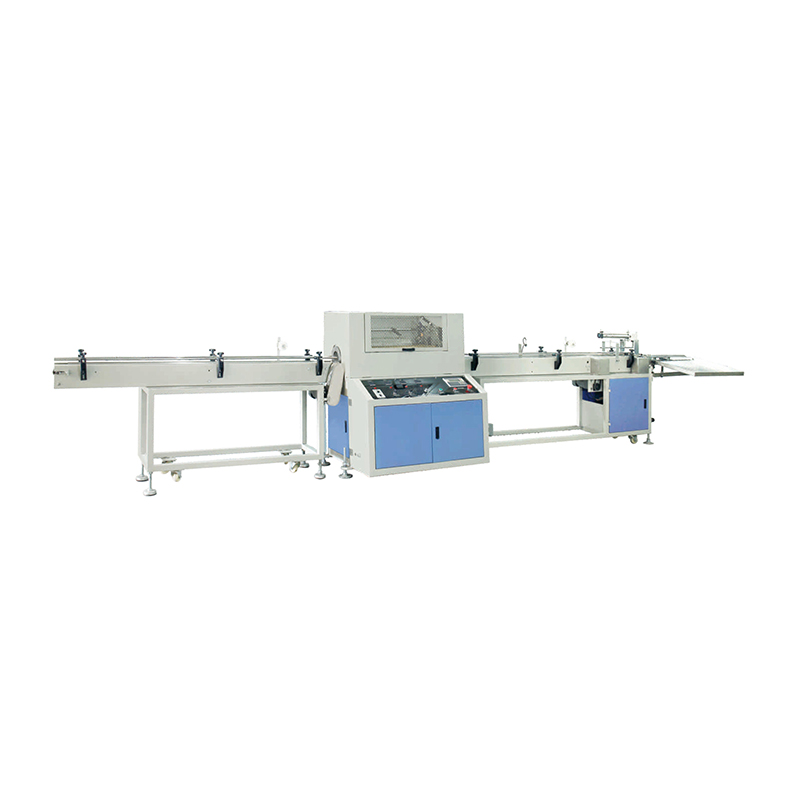
The selection of a plastic cup rim rolling machine is a critical capital investment decision for any manufacturer in the disposable packaging industry. The efficiency of the entire production line can hinge on the performance of this single piece of equipment. However, a common and costly mistake is assuming that a one-size-fits-all machine exists. The manufacturing process of the cups themselves—specifically, whether they are thermoformed or injection-molded—dictates vastly different requirements for the rim rolling process. Choosing a machine designed for the wrong process can lead to poor seal integrity, high rejection rates, and significant downtime.
To understand the machine requirements, one must first appreciate the core differences between the two cup manufacturing methods. These processes result in cups with distinct material properties, wall thicknesses, and dimensional behaviors, all of which directly influence the rim rolling operation.
Thermoforming is a process where a plastic sheet is heated to a pliable forming temperature, formed to a specific shape in a mold, and trimmed to create a usable product. Cups produced through this method typically have a non-uniform wall thickness, being thinner on the sides and thicker at the base and, most importantly for our purposes, at the rim. The material is often a single layer of materials like PP (Polypropylene), PS (Polystyrene), APET, or PLA. Thermoformed cups can be more flexible and are susceptible to heat, as they are made from a pre-heated sheet.
Injection Molding, in contrast, involves injecting molten plastic material under high pressure into a mold cavity. This process creates parts with highly uniform wall thickness and excellent dimensional consistency. The materials used, such as PP and PS, are often compounded with additives for strength and clarity. Injection-molded cups are generally more rigid, brittle, and have a higher degree of crystallinity. Their response to the heat and pressure applied during rim rolling is fundamentally different from that of their thermoformed counterparts.
This divergence in physical characteristics means that the plastic cup rim rolling machine must be engineered to handle these unique behaviors to form a consistent, leak-proof curl that is both functional for sealing and aesthetically pleasing.
A plastic cup rim rolling machine designed for thermoformed cups must account for their inherent flexibility, variable wall thickness, and heat sensitivity. The primary goal is to apply a controlled and consistent forming action without causing material webbing, deformation, or crystallinity breakdown.
Perhaps the most crucial feature for thermoformed cups is precision temperature control. Thermoformed materials have a specific heat window where they become pliable enough to be formed without burning, degrading, or becoming too glossy. The heating system must provide a consistent and evenly distributed thermal profile around the entire circumference of the rim. Ceramic or infrared heaters are often preferred for their stable and responsive heat output. The machine must allow for fine-tuning of the temperature, as even a slight deviation can mean the difference between a perfect roll and a malformed one. Since thermoformed cups are thinner, the heat application needs to be rapid yet gentle to avoid overheating the material, which can lead to a weak, brittle rim.
The chuck is the component that physically contacts the inside of the cup lip to form the roll. For thermoformed cups, the chuck design is paramount. A multi-stage forming process is highly advantageous. This often involves a pre-rolling station that gently initiates the curl, followed by a final rolling station that completes and sets the seal. This gradual forming reduces stress on the material, preventing cracking or tearing, which is a common risk with the more variable wall thickness of thermoformed rims. The chucks must be machined to exacting tolerances to ensure every cup is formed identically, compensating for minor variations in cup diameter that can occur in the thermoforming process.
Applying the correct amount of pressure is a delicate balance. Too much force will crush the cup or create an overly compressed roll that is prone to stress cracking. Too little force will result in a loose, incomplete roll that will not hold a seal. Therefore, a plastic cup rim rolling machine for thermoformed cups requires a system with adjustable and highly controllable pressure. Pneumatic systems are common, but the best machines offer precise regulator controls to dial in the exact force required. The machine’s mechanics must also ensure that this pressure is applied perfectly evenly around the entire rim to avoid an asymmetrical roll.
Thermoformed cups are generally lighter and more flexible, making them more susceptible to deformation during handling and processing. The infeed and outfeed mechanisms of the machine must be designed for gentle product handling. This often involves low-friction guides, soft grippers, or starwheel systems that securely but gently transport the cups through the rolling stations without marring the surface or distorting the cup body. A machine that jams or roughly handles cups will create a high rate of rejects, negating the benefits of automation.
The requirements for a plastic cup rim rolling machine destined for injection-molded cup production are distinctly different. The machine must be robust enough to handle the rigidity of the cups and capable of applying a more significant and immediate forming action.
Injection-molded cups are rigid and require a more decisive force to initiate and complete the roll. The machine must be built with a high-pressure forming system capable of overcoming the material’s inherent stiffness. The structural frame, bearings, and drive systems must be heavy-duty to withstand the constant high loads without deflection or wear. The forming action is often more direct and involves a single, powerful rolling station rather than a multi-stage process. The goal is to mechanically form the rim curl with authority, creating a strong, defined bead.
The hardness and abrasiveness of injection-molded materials mean that tooling wear is a significant concern. The chucks and rolling wheels must be constructed from high-wear-resistant materials, such as hardened tool steel or coated with durable materials like titanium nitride. These components must maintain a sharp, precise edge through millions of cycles to ensure a consistent roll profile. Unlike thermoformed tooling, which can be designed for gentleness, tooling for injection molding is built for strength and longevity under duress.
While heat is still used to soften the plastic for forming, the management of heat is different. Injection-molded materials have a higher melting point and can tolerate more heat. However, the critical factor is rapid and consistent cooling after the roll is formed. Because the material is more crystalline, setting the new shape quickly is essential to prevent spring-back—where the material tries to return to its original form—and to achieve long-term dimensional stability. Integrated air jets or water-cooling channels within the tooling are common features on machines designed for this purpose. This ensures the newly formed rim is quenched and set in place permanently.
Injection-molded cups are prized for their dimensional consistency. Therefore, the plastic cup rim rolling machine must exhibit exceptional mechanical precision and repeatability. Any play or variance in the machine’s indexing or forming head will be immediately apparent on the finished product. Servo-driven systems are often preferred for their unparalleled accuracy in positioning and motion control, ensuring each cup receives an identical forming action. The machine must be a match for the inherent precision of the injection-molded parts it processes.
The following table provides a side-by-side comparison of the key features to prioritize based on your cup production method.
| Feature | Thermoformed Cups Priority | Injection-Molded Cups Priority |
|---|---|---|
| Temperature Control | Critical: Precise, low-heat, even application. | Important: Higher heat tolerance, focus on cooling. |
| Forming Pressure | Adjustable, gentle, multi-stage process. | High-pressure, single-stage, robust system. |
| Chuck Design | Multi-stage, gentle curvature, stress-reducing. | Single-stage, durable, high-wear-resistant materials. |
| Tooling Material | Standard tool steel, polished surface. | Hardened tool steel, titanium nitride coatings. |
| Cooling System | Often passive or low-force air. | Active cooling (air jets/water channels) is critical. |
| Handling Mechanism | Gentle, low-friction, avoids deformation. | Secure, positive grip, handles rigidity. |
| Machine Frame | Standard duty. | Heavy-duty to withstand high cyclic loads. |
| Key Concern | Avoiding tearing, cracking, and heat distortion. | Overcoming rigidity, preventing spring-back, tooling wear. |
Beyond the specific requirements for cup type, several overarching features are essential for any high-quality plastic cup rim rolling machine. These factors impact operational efficiency, total cost of ownership, and long-term reliability.
Changeover Flexibility and Speed: Production lines often run multiple cup sizes and styles. A machine with a quick-change tooling system is invaluable for minimizing downtime during product transitions. Look for features like tool-less adjustments, digital preset recall for different cup settings, and easily accessible components.
Integration and Connectivity: In a modern smart factory, a machine cannot be an island. Seamless integration with upstream equipment (like cup printers or conveyors) and downstream equipment (like lid placers and packagers) is non-negotiable. The machine should support industry-standard communication protocols for data exchange and line synchronization. Features like automatic jam detection and rejection are essential for maintaining line flow.
Ease of Maintenance and Serviceability: Downtime is the enemy of productivity. A well-designed machine allows for easy access to service points, wear parts, and diagnostic systems. Clear documentation, available spare parts, and responsive technical support are critical factors that should be considered alongside the machine’s purchase price.
Output Speed and Efficiency: Ultimately, the machine must meet your production volume requirements. Evaluate the machine’s cycles per minute (CPM) and its reliability at sustaining that speed over a long production run. A faster machine that frequently jams is less efficient than a slightly slower, utterly reliable one.

 +8618621972598
  +8613917961988
  [email protected]
 No. 565, Xinchuan Road, Xinta Community, Lili Town, Wujiang District, Suzhou City, China
 Copyright © 2024 Thermoforming Machine/Plastic Cup Machine All Rights Reserved.Custom Automatic Vacuum Thermoforming Plastic Machine Manufacturers